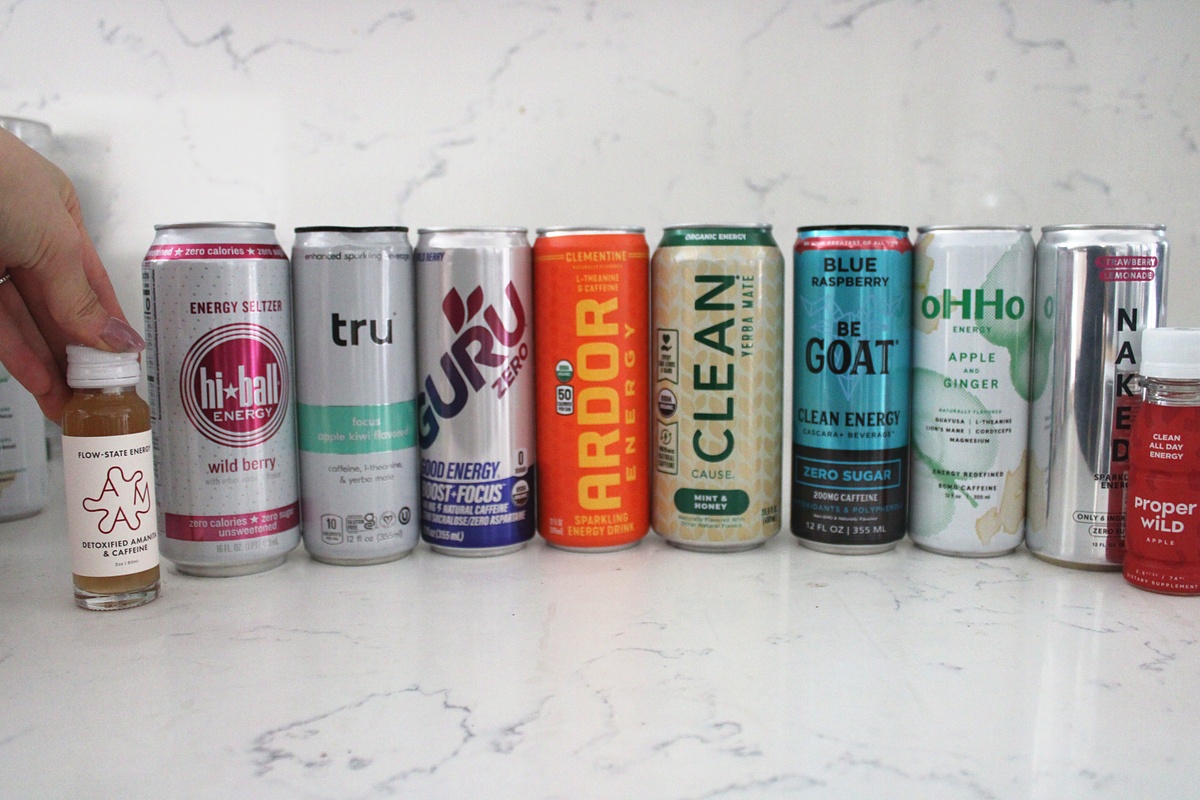
I’ve tried tons of energy drinks during my university days, and I’m sharing the healthiest energy drinks available today. The best energy drink is made with natural caffeine and without any artificial sweeteners, synthetic dyes, added sugars or questionable preservatives.

My testing method: To make sure I’m comparing apples to apples, I selected each energy drink by researching the source and amount of their caffeine, sugar per can, type of sweetener, and whether “natural flavors” are hiding in the formula. I’m rating their taste too. Whether you’re a surgeon working 20 hour shifts or a student cramming for exams, I’m sure you’ll find a drink you like in my curated list.
For me the healthiest energy drink with low caffeine is oHHo Energy Apple & Ginger and the best organic energy drink if you need strong caffeine is Clean Cause Organic Yerba Mate.

How to Pick the Healthiest Energy Drink
Here’s what to look for:
- Caffeine from plants: Green tea, yerba mate, guayusa, and guarana are the most common sources. The caffeine molecule is the same either way, but plant-based caffeine is less processed and often comes with L-theanine or antioxidants.
- A moderate, clearly labeled dose: Look for 80 to 160 mg per can, listed on the label. Avoid “proprietary blends” that hide exact amounts.
- Little or no added sugar: Many “organic” energy drinks still have 20 to 30 grams of cane sugar per can.
- No artificial sweeteners: No sucralose, aspartame, or acesulfame potassium (ace-K). Stevia and monk fruit are plant-based alternatives.
- No artificial colors or synthetic preservatives: No Red 40, Yellow 5, or sodium benzoate.
- Transparent flavoring: “Natural flavors” can be a mix of many compounds that brands don’t have to disclose. The cleanest drinks get their flavor from real fruit juice instead.

Ingredients to Avoid
- Sucralose, aspartame, and acesulfame potassium: Artificial sweeteners found in most “zero sugar” energy drinks.
- Artificial colors: Red 40, Yellow 5, and Blue 1
- Sodium benzoate: A preservative
- High added sugar: Some energy drinks have more than 50 grams of sugar per can, more than the American Heart Association’s daily limit for added sugar.
- Very high caffeine doses: Some drinks contain 300 mg per can, close to the daily limit for most adults in a single drink.
- Proprietary blends with undisclosed ingredients: Labels that list an “energy blend” without disclosing amounts make it impossible to know what you’re drinking.
Worst Energy Drinks
Red Bull
Monster Energy
Celsius
Alani Nu
GHOST Energy
C4 Energy
Bloom Sparkling Energy
ZOA Energy

I Tried oHHo Energy
oHHo Energy is the newest to launch in the healthy energy drink world and it’s packed with functional ingredients, only has 30 calories, no artificial sweeteners and tastes refreshingly light and sparkling. This one is my favorite so far because of how natural it tastes without that icky sugary taste of typical energy drinks, basically an energy seltzer. Each can gets its 80 mg of caffeine from guayusa, a caffeinated leaf from the Amazon that’s known for giving a smoother, steadier lift than coffee. It’s boosted with 100 mg of L-theanine to take the edge off, plus 1,000 mg each of lion’s mane and cordyceps mushrooms and 100 mg of magnesium glycinate. I love that oHHo lists the exact dose of every active ingredient right on the label, which is rare for functional drinks. It’s lightly sweetened with organic agave instead of stevia or sucralose, and has just 5 grams of sugar per can.
oHHo Energy Specs

I Tried BeGOAT Clean Energy Cascara Beverage
BeGOAT Clean Energy is the strongest energy drink in this list and they’re all zero sugar, non-GMO, vegan, and gluten-free. This gives a strong energy boost with a generous 200mg of caffeine from cascara, the fruit of the coffee plant, which is usually thrown away when coffee beans are harvested. BeGOAT uses the whole coffee fruit, including the husk and berry, so along with natural caffeine you get a healthy dose of antioxidants. Their cascara is Rainforest Alliance certified, and grown and processed in India. BeGoat comes in the widest variety of fun flavors I’ve seen in the healthy energy drink world, like Mandarin Orange, Watermelon Dragonfruit Strawberry Acai, Cascara Berry, and Jackfruit Coconut Mango.

BeGOAT Clean Energy Specs

I Tried Ardor Organic Energy
Ardor is one of the cleanest energy drinks in the game and has 100 mg of organic caffeine and 200 mg of L-theanine, both from organic green tea leaves, so you get smooth, focused energy without the jitters. The Sparkling Energy Waters have zero sugar, zero calories, and no sweetener at all, just purified water, organic flavor, and a pinch of sea salt for hydration. If you want something a little sweeter, the newer Sparkling Energy Drinks I tried are made with 20% organic fruit juice and a touch of cane sugar and monk fruit, with just 4 grams of added sugar and 50 calories per can. I can confirm Clementine tastes naturally orangey and not synthetic with a decent amount of sweetness without going overboard!

Ardor Organic Energy Specs

I Tried CLEAN Cause Organic Yerba Mate (non carbonated)
CLEAN Cause makes organic yerba mate energy drinks with a mission I almost never see – they donate 50% of its net profits to support addiction recovery. They make USDA organic Yerba Mate energy drinks that are organic, have 160 mg of natural caffeine, vegan, with no artificial sweeteners or preservatives. Sometimes I’m just not in the mood for a sparkling drink, so a still version is a refreshing change. I personally really love the slightly bitter herbal taste of yerba mate and the honey adds a decent touch of sweetness to it. The Mint & Honey, Lemonade & Tea, and Blueberry flavors are sweetened with organic cane sugar, while the Peach flavor also uses organic erythritol to cut down on sugar. It comes in a generously sized 15.5 oz can and my only complaint is that it has a higher 90 calories per can.

CLEAN Cause Organic Yerba Mate Specs

I Tried GURU Organic Energy Zero Sugar
GURU has been making organic energy drinks in Canada since 1999, and its Zero Sugar line is a great pick if you want a classic energy drink taste without any sugar and only 15 calories. I will say this is on the too sweet side for me, and there’s no aspartame, but the taste of organic erythritol still isn’t my cup of tea. Each can has 140 mg of natural caffeine from green tea, plus organic coconut water and prebiotic organic blue agave inulin. I love that it’s one of the few energy drinks out there that’s certified organic and made without sucralose, aspartame, synthetic caffeine, or artificial flavors. It IS sweetened with organic erythritol, so it has just 15 calories and zero sugar per can.

GURU Organic Energy Zero Sugar Specs

I Tried Hiball Energy Seltzer Wild Berry
Hiball is one of the original clean energy drinks, and it’s still a great pick if you want something that tastes as close to seltzer water with zero sweetness. To me this is caffeinated sparkling water – I can hardly detect any flavor to it and it takes pretty much like carbonated water, which may be a good or bad thing for you. It’s got great clean ingredients like organic caffeine, organic guarana, and organic Panax ginseng, plus B vitamins. There’s no sugar and no calories, and it’s lightly flavored, so it tastes more like a flavored seltzer than a typical energy drink. At 160 mg of caffeine in a 16-ounce can, it gives you a solid boost.
Hiball Energy Specs

I Tried AMA Flow-State Tonic
AMA’s Flow-State Tonic is the most interesting healthy energy shot I’ve come across and it’s made with AME-1, AMA’s detoxified extract of Amanita muscaria, a mushroom that’s functional and natural. It’s got a great kick to it and tastes so similar to a ginger shot! It’s part of a proprietary blend with 100 mg of caffeine from green coffee, L-theanine, and capsaicin. The rest of the ingredient list is short and simple: water, honey, lemon juice, kola nut, cacao, and vanilla extract. It’s designed to give you “focus without urgency” and “energy without burnout,” making it a nice alternative to a second cup of coffee before a busy work session. It’s third-party tested and made in the USA. It’s not recommended if you’re pregnant or breastfeeding, and you have to be 18 or older to buy it.
AMA Flow-State Tonic Specs

I Tried TRU Energizing Sparkling Water (gentle!)
If you’re sensitive to caffeine or just want a gentle boost of energy, TRU Energizing Sparkling Water has the lowest amount of organic caffeine in this list, only 10 calories AND they’re widely available at Costco. The Energizing line is certified organic, with 70 mg of organic caffeine per can, about what you’d get in a cup of coffee, and it’s made with just seven simple ingredients, including organic apple and lemon juice. It’s sweetened with organic stevia and monk fruit, with no added sugar, no sugar alcohols, and no artificial colors, flavors, or preservatives, and it has only 10 calories. I personally don’t like the taste of stevia so this doesn’t get a high taste rating from me, and it’s a little too sweet, but the ingredients are great.
TRU Energizing Sparkling Water Specs

I Tried Naked Sparkling Energy
Naked Nutrition is known for its minimal-ingredient protein powders, and their Sparkling Energy has just six ingredients, a big punch of organic caffeine and is vegan, gluten-free, and non-GMO. The caffeine comes from organic unroasted coffee beans, and it’s sweetened with Reb-M, a sweetener made from fermented rice, so there’s no sugar and only 5 calories per can. At 200 mg of caffeine, it’s great for long grueling days or for a workout. I personally don’t like the taste of RebM and this is the most aspartamey tasting drink in this list to me.
Naked Sparkling Energy Specs
LivReal Clean Energy Drink
LivReal natural energy drink is widely available at Sprouts grocery stores and made with real squeezed fruit juice instead of artificial flavors or sweeteners. Each can has 125 mg of caffeine from organic green tea, about the same as a double espresso, plus L-theanine for smooth energy without the jitters. Electrolytes, vitamin C, and B vitamins round out the formula. There’s no added sugar, just natural sugar from the fruit, and it’s only 40 calories per can.
LivReal Specs
I Tried RIOT Energy
RIOT Energy is one of the cleanest energy drinks I’ve tried, and it’s sweetened only with real fruit juice, with no added sugar, stevia, or sucralose. The ingredient list is short and simple: sparkling water, fruit juice, natural flavors, green tea extract, and vegan B12. Each 16-ounce can has 160 mg of plant-based caffeine from green tea plus 100 mg of L-theanine for smooth, focused energy without the jitters. Since it’s sweetened with juice, it does have about 16 grams of natural sugar per can and a higher number of calories at 80 per can.
RIOT Energy Specs

I Tried Proper Wild Energy Shot Apple
If you prefer a quick shot over a full can and one that tastes like real fruit juice, Proper Wild’s Energy Shots are a great clean alternative to the usual energy shots. Each 2.5-ounce shot has a strong 100 mg of natural caffeine from green tea and 120 mg of L-theanine. The Apple flavor really tastes like apple juice to me! They’re made with fruit juice and a touch of organic cane sugar and monk fruit, with no artificial sweeteners, flavors, or stevia. They’re vegan, gluten-free, and third-party tested, and they’re even HSA and FSA eligible.
Proper Wild Energy Shot Specs
Frequently Asked Questions
What is the healthiest energy drink?
For the cleanest ingredients, LivReal and Hiball Sparkling Energy Water stand out. LivReal uses only real fruit for flavor, and Hiball has no sugar or sweeteners at all.
Is natural caffeine better than synthetic caffeine?
The caffeine molecule is the same either way, so your body processes it the same. Plant-based caffeine is less processed, and sources like green tea come with L-theanine, which can make the energy feel smoother.
How much caffeine is too much?
The FDA says up to 400 mg of caffeine a day is generally safe for healthy adults, which is about two to three of the drinks on this list. If you’re pregnant, the American College of Obstetricians and Gynecologists recommends staying under 200 mg a day. Energy drinks aren’t recommended for children or teens, and remember to count coffee, tea, and soda toward your daily total.
Are zero-sugar energy drinks healthy?
It depends on the sweetener. Most zero-sugar energy drinks use sucralose or aspartame. Look for drinks sweetened with stevia or monk fruit, or unsweetened drinks like Hiball.
What are “natural flavors” in energy drinks?
They’re flavorings made from plant or animal sources, but they can contain many compounds and additives that brands don’t have to list. Drinks flavored only with real fruit juice are more transparent.
Are energy drinks bad for you?
Conventional energy drinks with lots of sugar, artificial sweeteners, and very high caffeine aren’t great for daily use. Cleaner energy drinks in moderation are a reasonable alternative to coffee for most healthy adults.
Related posts:
7 Best Non-Toxic Mouthwashes I've Tried (and Hydroxyapatite Alternatives)
Best Non Toxic Period Underwear (Tested by a Heavy Flow Gal)
I tried Non Toxic Slow Cookers (what I liked and didn't)
I Tried 8 Best Non Toxic Air Fryers (what I liked and didn't)
The Best Non Toxic Yoga Mat I've Tried 2026
Best Non Toxic Cleaning Products I've Tried (5 Years of Testing)
Andrea is a clean beauty expert born in Los Angeles, California with 10 years of experience in natural skincare and organic living. She writes for Organic Beauty Lover using her expertise to guide readers in choosing the best natural products. Andrea graduated from the University of Southern California’s Marshall School of Business and has worked at NBC Universal, Four Seasons Hotels and Resorts, and The Travel Corporation while freelancing for small businesses. As a multi-citizen, she considers herself a global citizen of the world, belonging nowhere and everywhere, and has lived across Europe, US, Asia and South America. She currently resides in Orange County since 2026 and loves yoga, coffee and exploring the desert. Connect with her @organicbeautylover.
JOIN OUR NEWSLETTER! No spam ever.








Leave a Reply