
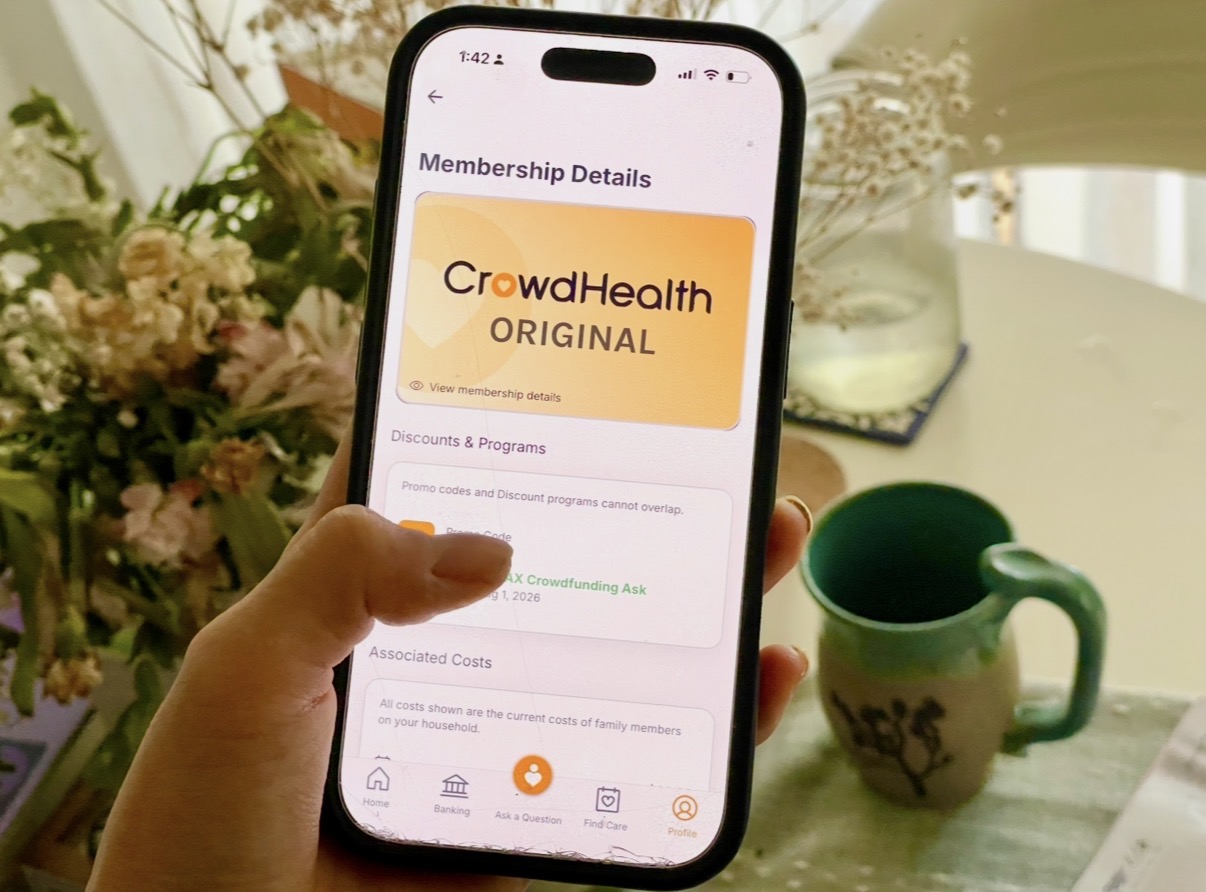
I switched to CrowdHealth and I’m sharing my brutally honest review, the most realistic up-to-date look at how it works, my complaints, and the fine print you need to know.
Crowdhealth works best for those who are uninsured or underinsured because of unemployment/part time worker/freelancer, healthy, understand how it actually works, understands the risks, keep thorough records, stay hands-on with the process, is comfortable with using an app and are willing to act like a cash pay patient ie negotiating and paying directly, rather than defaulting to insurer handling.
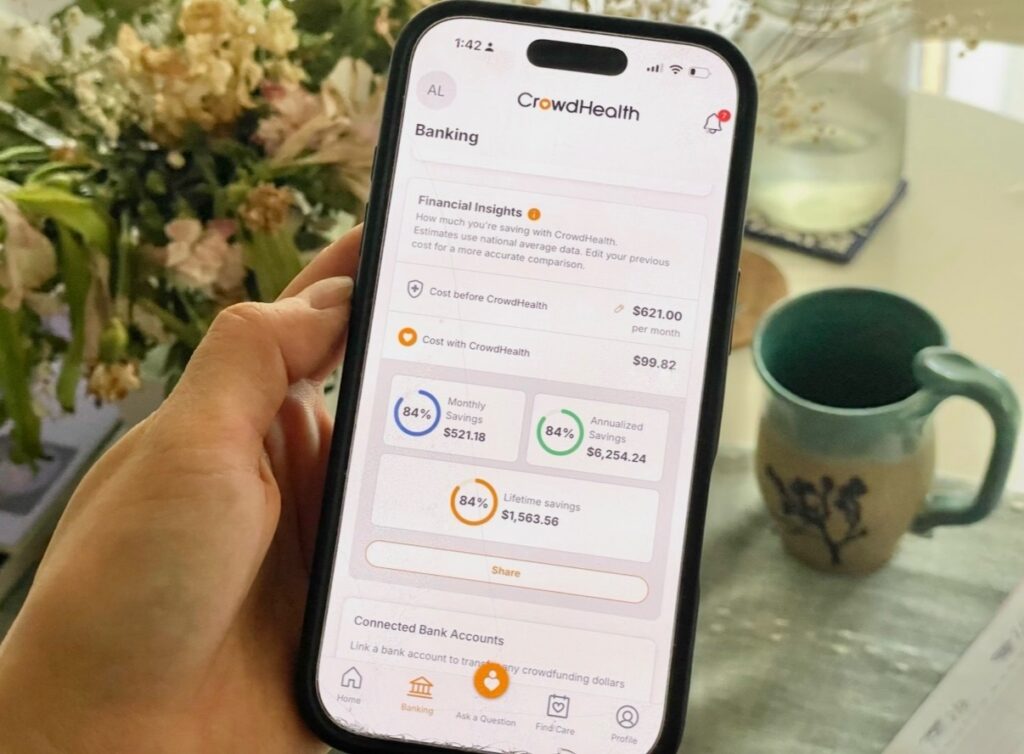
Table of Contents
Why I Switched to CrowdHealth
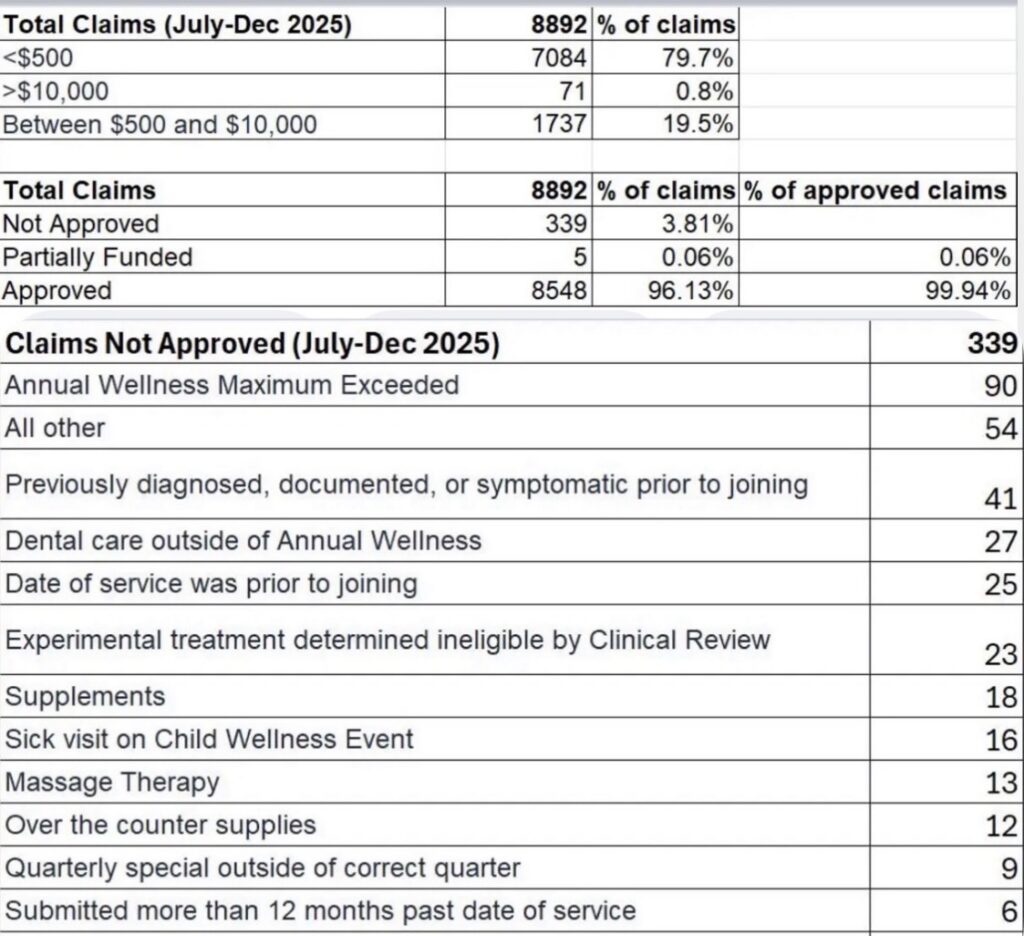
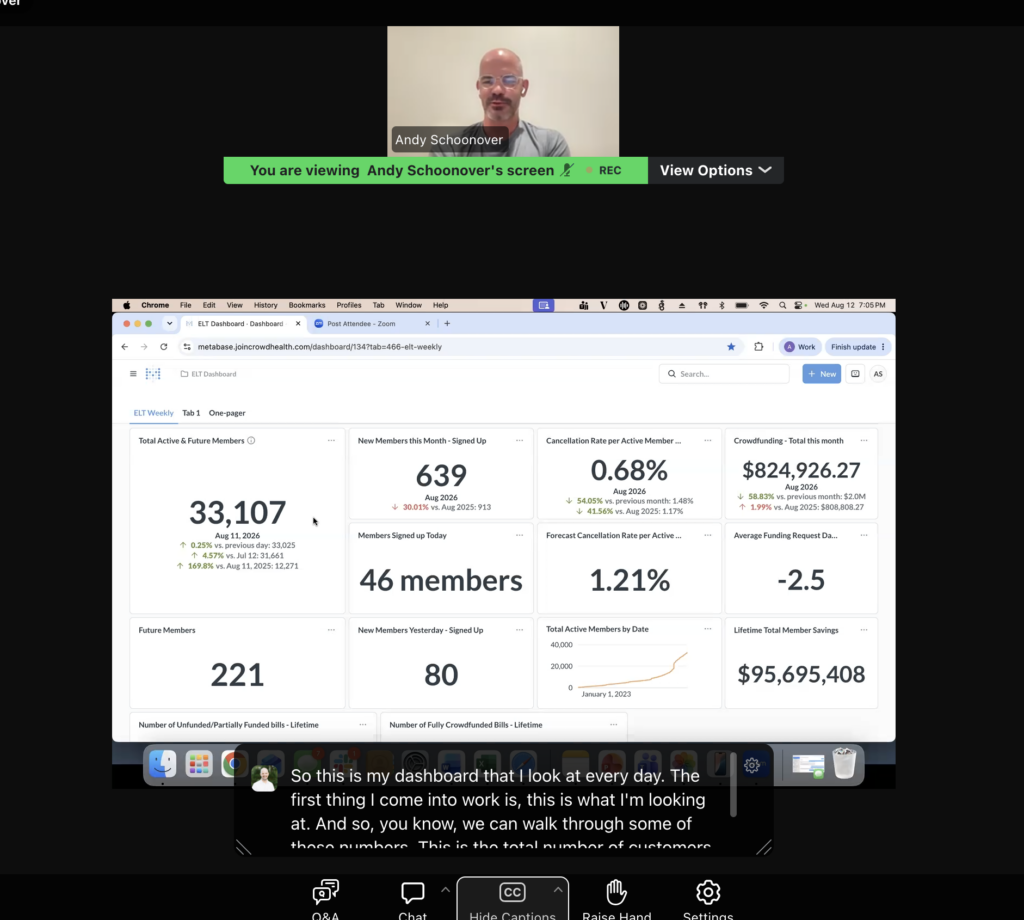
I’ll be honest I was super skeptical before joining. I decided to cancel traditional health insurance and switch to CrowdHealth because I’m young and healthy, a self employed freelancer and independent contractor with no benefits and the reviews seemed overall positive across BB, Reddit, Google and Trustpilot. Insurance is getting so bad and is going to increase 14% in 2027. When I digged deeper during my research, I found their track record looked very good. In their lifetime, they’ve crowdfunded 53,877 bills total and only 32 were unfunded / partially funded, and for claims not approved there was a reasonable reason for each, which I felt was pretty darn good. I’d feel a lot safer signing up now than when they first started in 2021. What stood out to me was how transparent the company is in showing what they’re working on internally and what the numbers are.
None of my friends or family had ever heard of them, but I was so tired of paying a $500 costly premium for a high-deductible plan, when I never even visited the doctor. When you’re insured, bills are overinflated on purpose, and I’d always worry my insurer would refuse to cover things. It’s bonkers how when you’re self pay, prices drop dramatically. I went to the emergency room, and they told me it would cost $600 to start with, and when I said I was cash self pay, they immediately told me $250. That’s less than half of what they would’ve charged to an insured person!
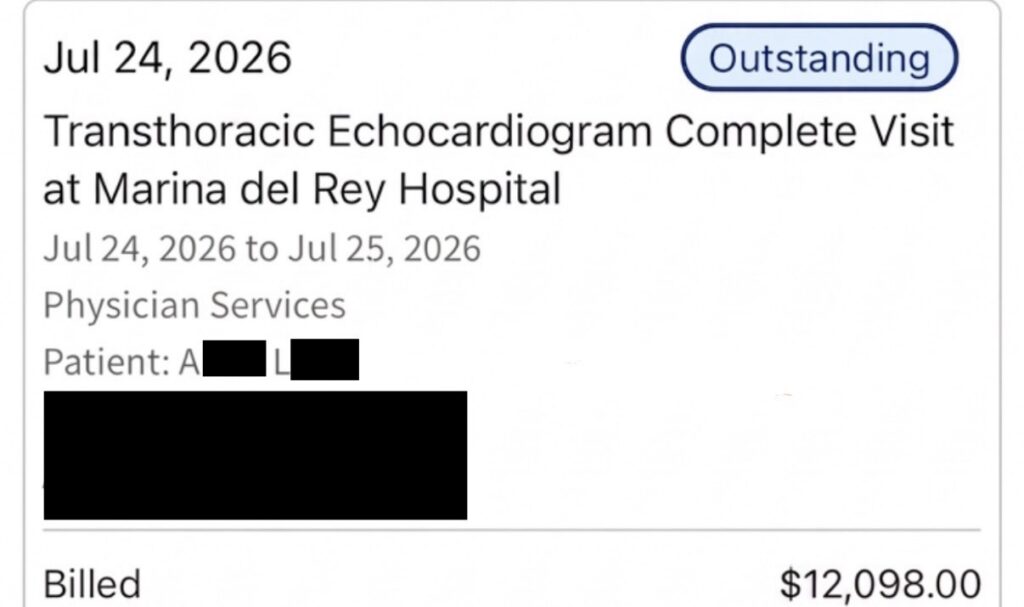
A friend had a Cedars Sinai Emergency Room visit in Los Angeles that came out to $30,000 and her out of pocket was $10,000. She could’ve saved $8k with CrowdHealth. The cost of an echocardiogram test alone was $12k..
The traditional system feels pretty broken in a lot of ways, and there was something that appealed to me about opting out of it and pooling resources directly with a community instead of being at the mercy of an insurer that profits from denying claims and bankrupting families left and right. I stopped hemming and hawing about it, and decided to just give it a go, see if CrowdHealth is actually legit, and cancel anytime without penalty if I didn’t like it.
What is CrowdHealth and Does It Actually Work?
CrowdHealth is a peer to peer healthcare cost-sharing platform, not an insurance company. They’re very very different from both healthcare and healthshare. Members pay a $60 monthly Advocacy Fee (a subscription fee) plus a variable monthly “crowdfunding ask” (capped at $140/month for an individual under 55, more for older members or families) to help fund other members’ bills.
In exchange, when you have a qualifying claim, you pay a fixed “member commitment” (a premium of $500) and CrowdHealth submits the rest to the crowd for crowdfunding. It’s a whole lot cheaper than traditional health insurance for young, healthy people, and it has a strong track record of funding bills so far. You must go in with your eyes wide open though and fully understand the risks.
How Much Does It Cost per Month
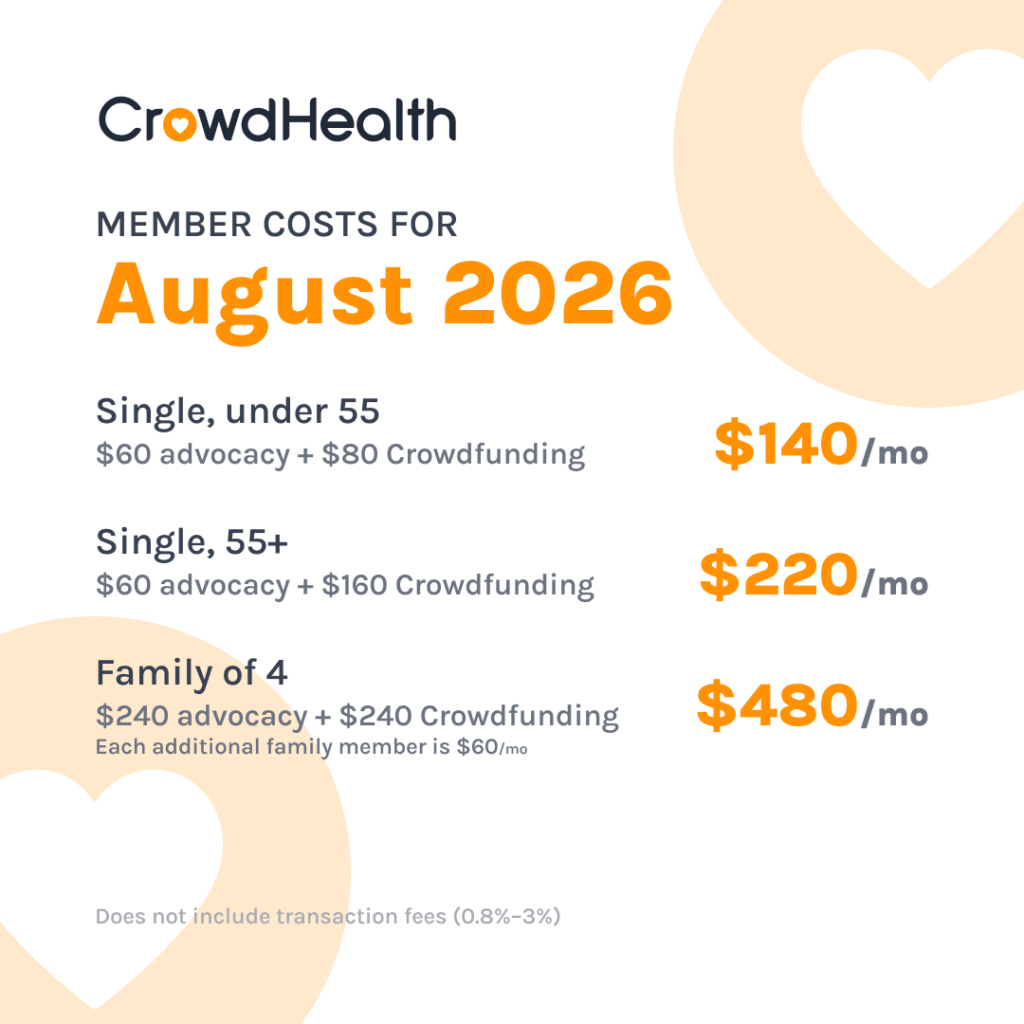
CrowdHealth costs a $60 monthly base cost plus a monthly cost to help cover other member’s bills ($25-$420 depending on your plan). As an individual under 55 years, the max you will ever have to pay for your membership is $200 per month total, but it’s most likely you’ll pay around $140 monthly. So far I’ve never had to pay the max. My total contribution ask each month has never been more than $100 to date.
Monthly total cost breakdown:
- Advocacy Fee: This is my fixed monthly subscription fee of $60 per person, per month, regardless of claims activity. It’s your subscription fee to be a part of the Crowd and goes towards their costs to run CrowdHealth.
- Monthly Crowdfunding Ask: A separate, capped monthly amount of:
- up to $140/month for an individual under 55
- up to $280/month for ages 55–64
- up to $420/month for a family of four or more.
- You’re never asked for more than your cap in a given month, but you can be asked for the full cap repeatedly. So far I’ve not been asked for the max yet.
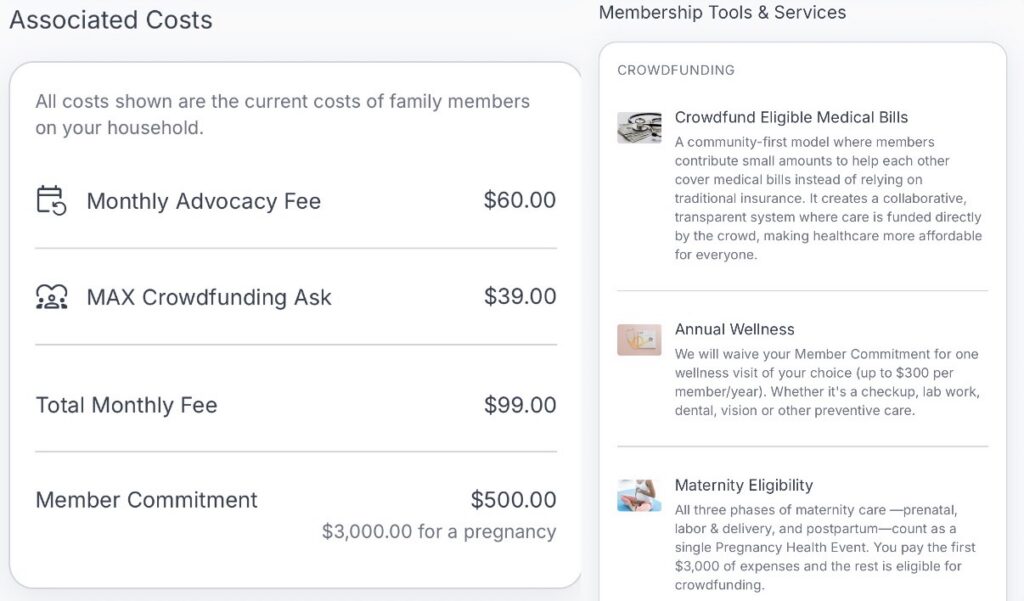
- Member Commitment for a Health Event: Your own out-of-pocket amount per health event before crowdfunding kicks in is $500 for a standard event, $3,000 specifically for maternity care, or $15,000 if you’ve chosen the lower-cost Major Medical tier instead of Full Service.
Here’s an example: an individual under 55 on the regular plan pays $60 advocacy + up to $140 crowdfunding ask = up to $200/month in a bad month, or as little as $60 in a month with no active bills in the crowd. If you have a $20,000 emergency room visit, CrowdHealth negotiates the bill down first, you pay the first $500, and the rest goes out to the crowd for funding.
They have a lower cost catastrophe-only Major Medical tier called Black Swan that costs $85 total each month ($60 base + $25 crowdfunding ask) and is built specifically for high-cost major emergencies. The downside is it doesn’t give you many of the usual benefits like the low $500 Member Commitment, Maternity and unlimited free Healthtap visits and therapy. In my opinion, it’s not worth getting over the regular membership.
Cost of CrowdHealth vs Traditional Insurance For Me
In 2026, if I went with Kaiser Permanente’s cheapest plan Bronze 60 HMO 7500 it would cost me $370 per month. It comes with a $7,500 annual deductible which would also be my out of pocket max.
In a year with no health events, the cost difference looks like this:
- Kaiser Permanente: $370 per month = $4,400 a year
- CrowdHealth:
- $60 Advocacy Fee with a max monthly contribution of $140: $200 per month or $2,400 per year.
- In reality, I’ve never been asked for the max amount so it looks more like $1,440 per year.
- The downside is California has an insurance mandate so I have to pay a fine to the state, but if I didn’t the total savings would be roughly $3,000 a year.
Let’s say, knock on wood, I actually have a major health event happen and I get a bill from the hospital of $30,000, which would actually be over $60,000 if I were insured. The cost difference would break down like this:
- Kaiser Permanente: $7,500 (my deductible) + $4,440 (premiums) = $11,940
- CrowdHealth: I pay the $500 Member Commitment with the rest of the bill funded by the community. Plus the $200 monthly membership cost.
- The total potential savings is around $10,000.
My No BS CrowdHealth Review
I’m diving into the nitty gritty of what I like and don’t like about using Crowdhealth as an alternative to health insurance so far. No BS here.
Submitting my claims in practice
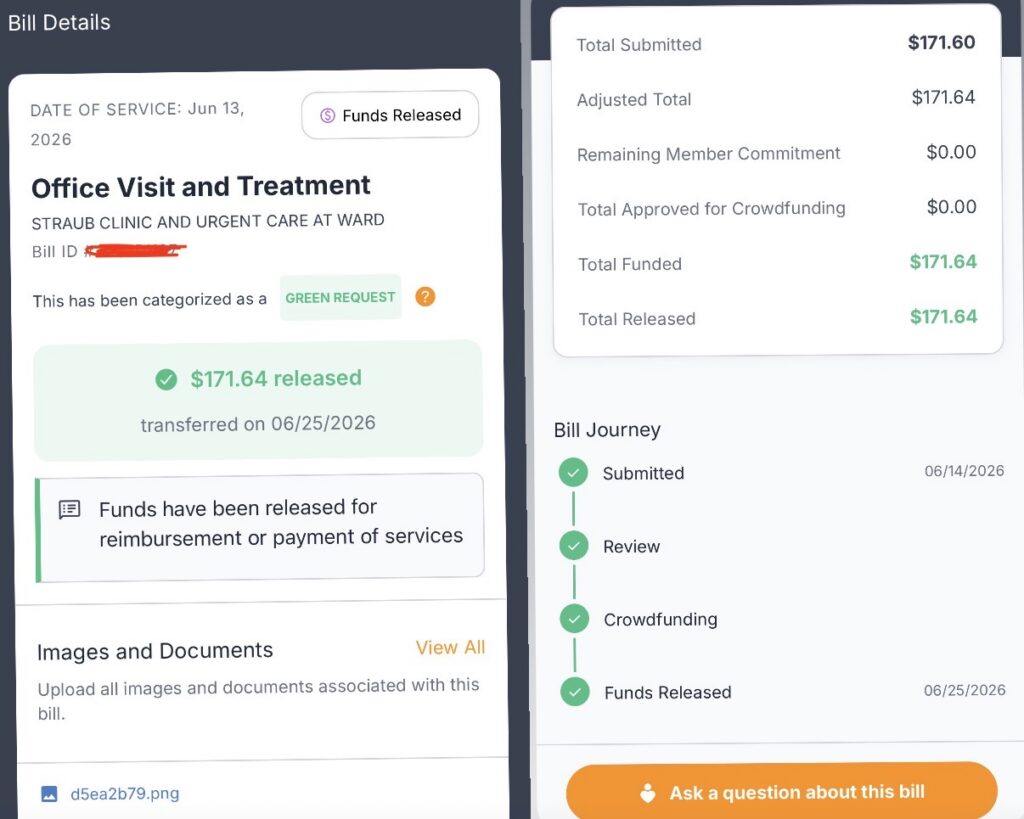
When I first joined, wondering if my claims / bills would actually get crowdfunded was the most nerve wracking part! From the moment I first submitted my bill to when the funds were transferred to my bank account took eleven days total. It seems most people’s experiences have been similar to mine. I was definitely nervous and opened the app everyday to check on the progress!
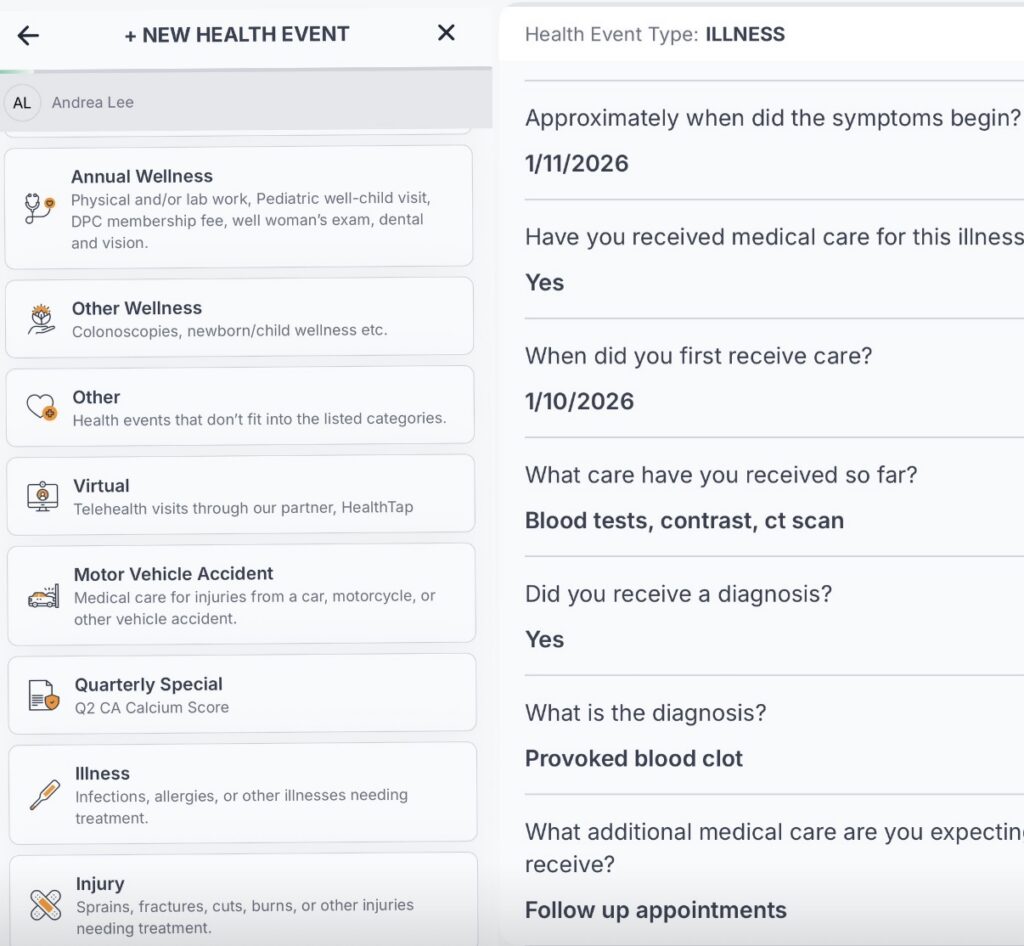
Submitting a claim is a total cinch and takes me a few minutes tops. The process looks like this:
1. I create a “Health Event” in the app and answer all the questions regarding the event (my symptoms, care I received, diagnosis).
2. Upload pictures of the bill
3. Crowdhealth reviews the bill before approving it for crowdfunding (it takes around a week for my bills to get approved).
4. The Crowd (other members) fund my bill after I cover the first $500.
It was so unbelievably easy, straightforward and painless. And as a self pay patient, the hospital cuts my bill down by nearly 60% of what the insured rate is.
There’s a few awesome perks I particularly love and one is the annual wellness event they allow per member per year. It’s the only event you don’t have to pay your usual $500 commitment and can have up to $300 crowdfunded. This can go towards a primary care physical exam (including naturopathy), pediatric child visits, direct primary care (DPC) membership fee, a gyno exam and labs, dental exam or cleaning, or vision exam. Dental and vision are NOT covered outside of a Wellness Event. I considered using it for a Function health test but ended up using it for an overdue TDAP.
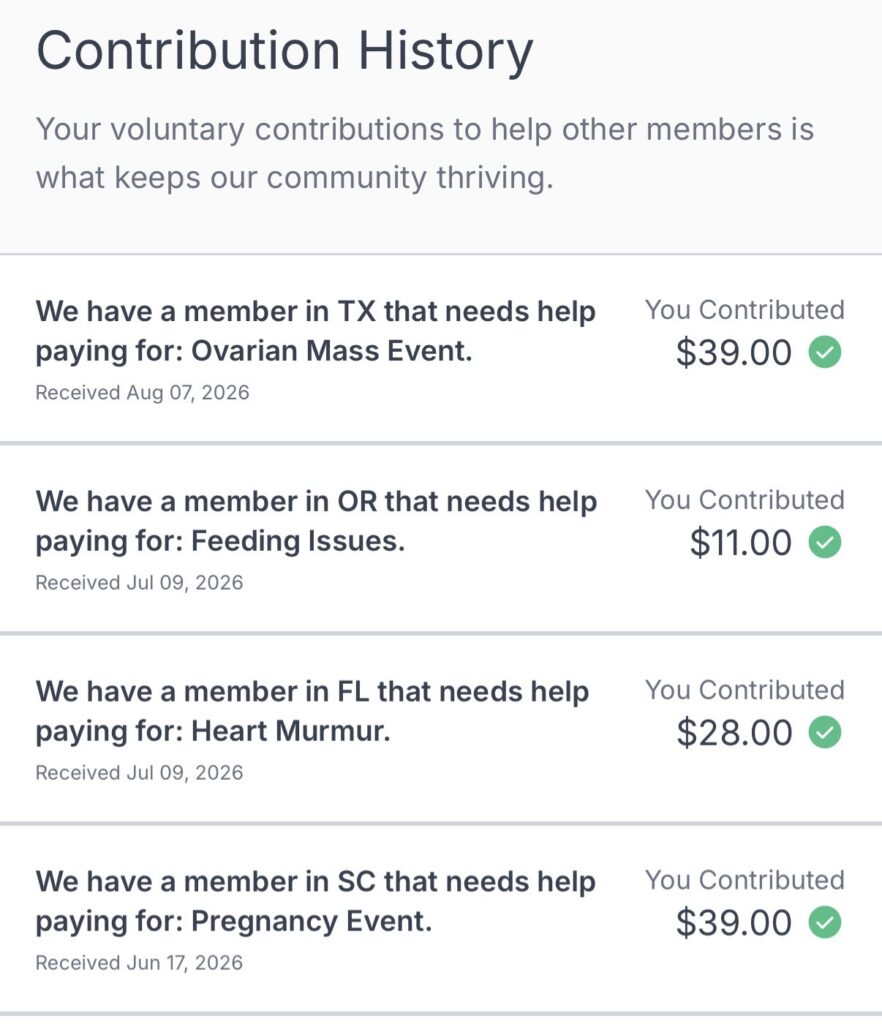
I can see exactly where and what my money is helping pay, like this month I helped a woman in Texas help pay for an Ovarian Mass Event and last month I helped a member in Florida pay for a Heart Murmur.
Crowdfunding other people’s bills
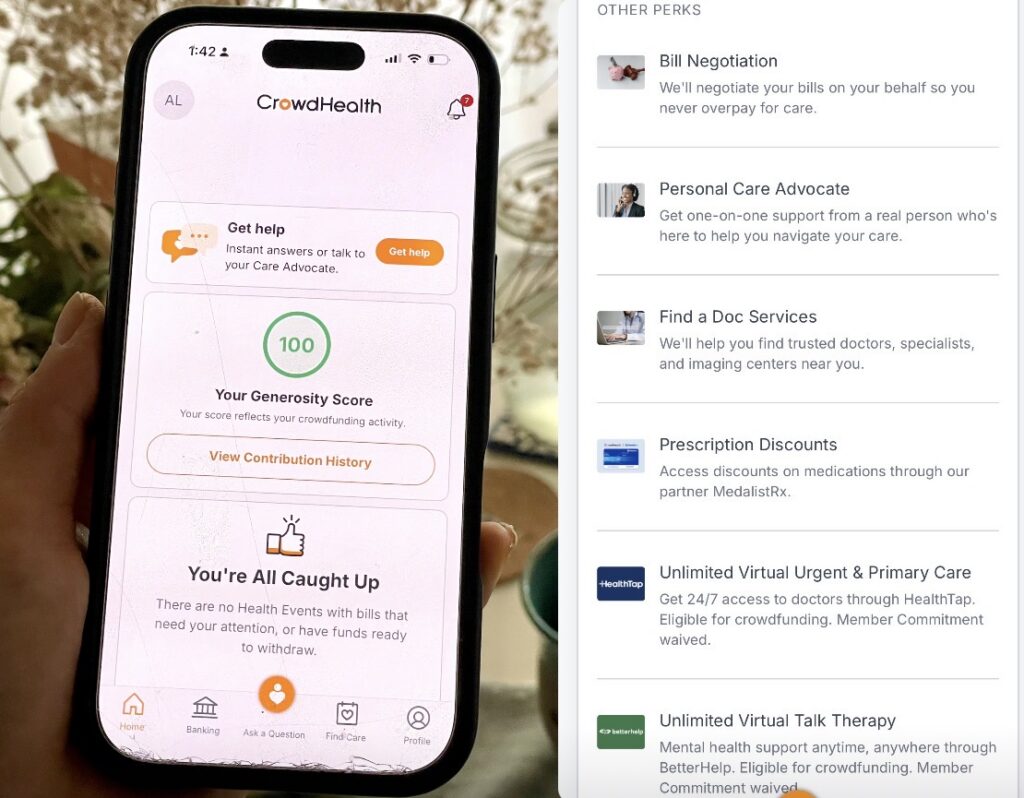
So the max ask for me as an individual is $140 per month, but I haven’t been asked for the max amount yet. Other people’s crowdfunding requests that are sent your way are either categorized as a Green or Red Event. In your settings you can set it to either immediately or manually approve / decline crowdfunding requests sent your way. I set mine to manual, so CrowdHealth sends me an email letting me know who needs my help for what each month and, unless I decline it within 48 hours, the payment goes out automatically. I’ve never manually denied a request, so my generosity score is a perfect 100, which, in turn, helps my chances of getting my own bills fully funded. If you decline paying repeatedly, you risk not having your claims funded.
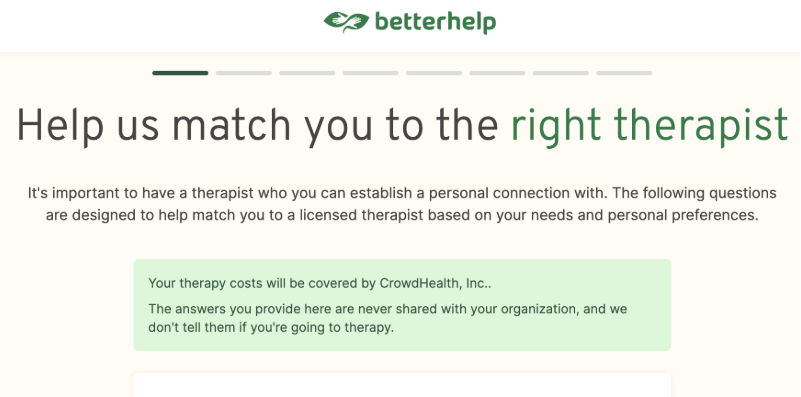
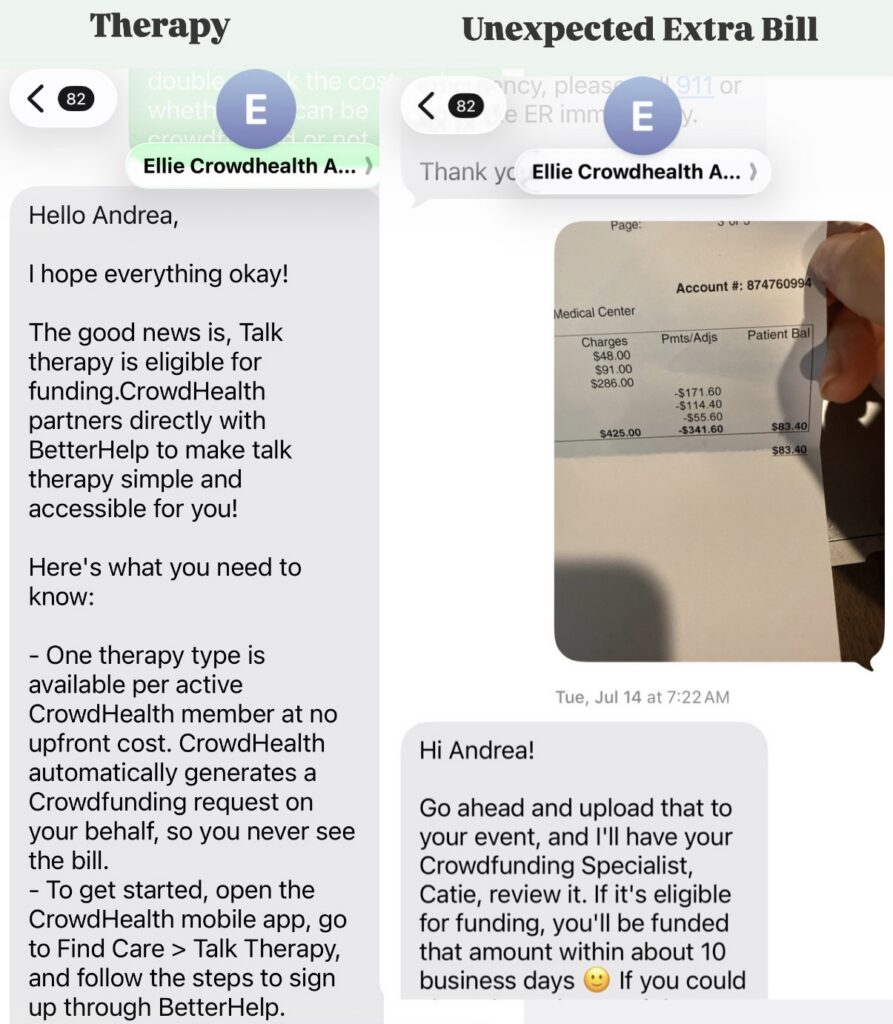
CrowdHealth pays for all my therapy sessions
My membership pays for itself multiple times over thanks to the free Betterhelp therapy sessions and it made signing up for CrowdHealth totally worth it. I used to be signed up directly with Betterhelp and paid $90 per week and now I never even see a bill for it. I was going through a tough life transition and it was great not having the financial stress of paying for therapy separately, which can be super expensive!
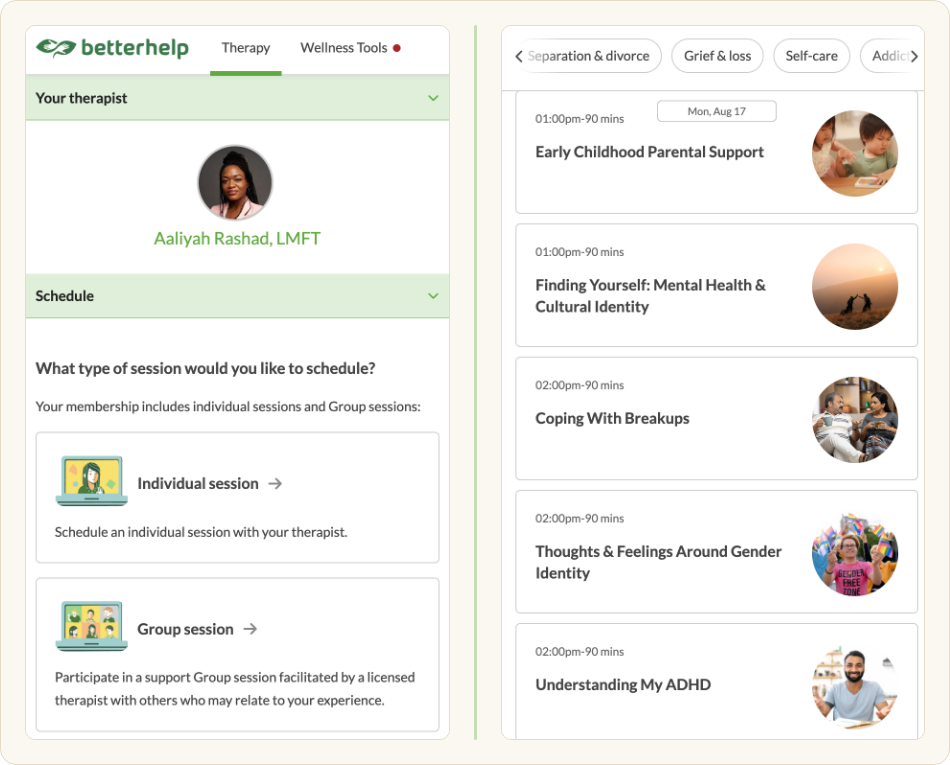
It’s actually even better than having a standard BetterHelp subscription, because you can do unlimited sessions as a CrowdHealth member but only one session per week as a regular BetterHelp member. They also now offer nearly 50 different free Group therapy sessions running daily on every kind of topic imaginable (parenthood, LGBTQ, BIPOC, relationships, grief, Christianity, loneliness, fertility, aging, communication, divorce, caregiver, self help improvement and so much more). Group therapy is amazing because you gain perspective from hearing other people’s stories who are in a similar boat as you and learn new tools, skills and knowledge from a different therapist. Just this morning I did a “Build Your Best Self” 90-min group therapy with Michael Ecuyer, LCSW. So unlimited individual or couples therapy sessions and weekly Group therapy.
My Personal Care Advocate Ellie is Awesome!
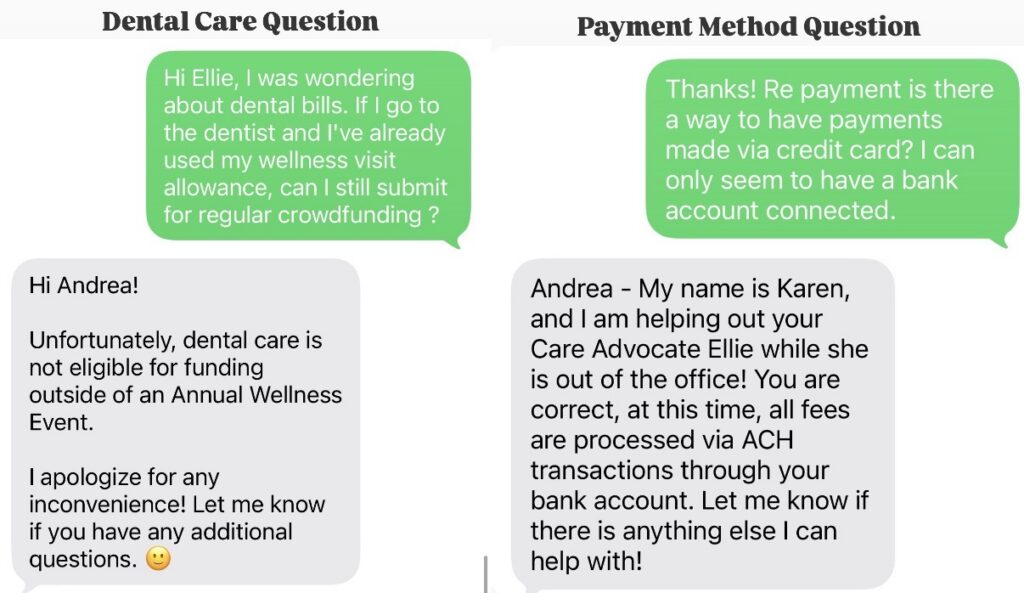
Shoutout to Ellie, my personal care advocate, who immediately answers all my texts and questions over the phone. I can’t tell you how nice it is to have a real human being dedicated to helping me one-one-one like a personal concierge, especially since I was nervous joining. It feels like low-key 5 star service. I’m always surprised at how quickly she responds (I’m talking within minutes!), and it feels strangely cool to be able to casually text her like she’s any friend or family member in my contacts. Any email that I’ve sent to the general support email has always been replied to by a real human in a timely manner.
Pregnancy Coverage
Yes, CrowdHealth covers everything for pregnancy after a $3,000 Member Commitment. My partner is a professor so he’s on a great plan, but since we plan on getting pregnant in the next few years, sticking to CrowdHealth or being added to his plan is something we’ll eventually have to consider. Most members are 34 or 35 years old so there are a lot of Crowdhealth babies being born and their bills, even the NICU ones, are getting funded, so I feel confident sticking with them should I decide to.
My Pros and Cons
This is what I personally like and don’t like about CrowdHealth. I’m sure it varies from person to person, so this list is not exhaustive.
What I like:
- Substantially cheaper than anything I could find on Covered California
- Five year solid track record of funding claims
- No provider network restrictions — any doctor or hospital is usable
- I can cancel anytime
- Free unlimited therapy with the same platform that used to cost me $360/month
- The customer service is top tier and support via email, text and phone is always quick and with a real human being
- Submitting a claim is easy and painless and my bills have been crowdfunded so far.
- I’ve never had to pay the max Crowdfunding ask so far
- A community-first feel and they actively build upon that with live Town Hall meetings with CEO Andy Schoonover and informative sessions by notable members like Tyler Todt.
- Technology-forward and years of unique internal data on the best doctors and fair cash pay pricing at my fingertips
Cons (My Complaints):
- No legal guarantee my bills will be funded. Contribution from other members is entirely voluntary. CrowdHealth is not health insurance – it’s health cost sharing based on a good faith system.
- No dental or vision care outside of the Annual Wellness Event that covers $300. Knock on wood, I don’t have any teeth or eye problems right now so this wasn’t a dealbreaker for me, but I can imagine it could be if I did.
- Prescription meds coverage is a bit iffy. CrowdHealth covers prescription medications tied to an eligible new health event for up to 12 consecutive months, but NOT for one tied to an Annual Wellness Event. Pre-existing conditions, routine maintenance meds needed before joining, or prescriptions past a 12-month limit are excluded from crowdfunding.
- My biggest complaint is having to pay an uninsured penalty to California, because CrowdHealth doesn’t meet my state’s Minimum Essential Coverage mandate.
- I can’t pay my monthly costs with a credit card (not a biggie but it would’ve been nice if I could).
So yes my review has its fair share of complaints, but overall I’ve had a fantastic experience so far and CrowdHealth was worth it for my personal situation. It’s a no-brainer to sign up if you’re totally uninsured and unprotected. And if you’re switching from a different provider, I think now is the ideal time. They’ve been around five years now, so it’s not so new that they have no track record, but they haven’t grown so big either that rules have become stricter or customer service has suffered. Right now, every new member is precious to them and they seem to treat each one so. It truly feels like by the people for the people.
Current State of the Crowd as of August 2026
As of August 11, 2026 there are 33,100 Crowdhealth members and 15k of that number signed up in the previous year alone, so I would say they’re growing quickly. By Jan 31, 2027 they expect to reach 50,000 members. The bigger they grow, the lower the costs become for each member. Costs are lower now than back in 2022. If Luigi Mangione weren’t in the slammer right now, he’d be all over this.
If you feel CrowdHealth is a good fit for you, you can have your maximum crowdfunding request reduced to $39 the first 3 months, so the TOTAL monthly cost goes down to $99.
Sign Up Hereuse OBL to save
CrowdHealth Membership Perks
Here’s the full list of perks.
Care & Advocacy
- A dedicated one-on-one Personal Care Advocate (a real person, not a bot) who helps you find care and manages your bills. I text mine directly and it feels like I’m texting a friend.
- CrowdHealth has built up years of internal data on service costs, doctors, and fair cash-pay pricing across the country. Members have access to this gold mine of information through Sara, their Virtual Care Advocate — instead of guessing what a procedure should cost, what the best place to get an MRI in New York is, or which orthopedic surgeon in Austin, Texas does 5x more surgeries than another surgeon.
- Bill negotiation on your behalf to make sure you’re not getting ripped off — they’ve even saved 70% to 90%+ off original hospital charges in some cases.
- “Find a Doc” service connecting you to a database of tens of thousands of vetted physicians nationwide. CrowdHealth’s goal is to get you to the best doctor for the lowest price.
Virtual Care
- Unlimited virtual primary and urgent care visits through HealthTap, available in all 50 states ($129 per visit) and 100% of the bill is eligible for funding
- Unlimited virtual talk therapy through BetterHelp (including teen and couples counseling), no upfront payment required. You can choose either individual or couples of therapy and it’s fully covered (I’ve never seen a bill sent my way for my therapy sessions).
Prescriptions
- A prescription discount card through a partnership with MedalistRx, with members reportedly seeing 25–85% off self-pay pharmacy costs
Wellness & Preventive Care
- Up to $300/year in funded preventive care (checkups, labs, gynecological exams) with the usual $500 member commitment waived
- Quarterly Specials — discounted access to tests like CAC (coronary artery calcium) scores, gut health testing, DEXA scans, and fitness assessments
- The “Exit Diabetes” pilot — a 6-month program aimed at reversing Type 2 diabetes
Cost-Reduction Programs
- Longevity Discount Program: up to 20% off your monthly contribution by passing one or two of three biomarker tests (fasting insulin, hs-CRP, or a DEXA visceral fat scan) during an annual testing window — 10% for one passed test, 20% for two
What Does CrowdHealth Not Cover
CrowdHealth doesn’t cover cosmetic procedures, fertility care, long. term prescriptions, and if you’re on the Black Swan membership tier, maternity. Procedures and treatments tied to a pre-existing conditions are not eligible for funding in the first and second years of your Membership, and funding is limited in subsequent years.
Dental and Vision Care: Dental and vision care is not eligible for funding outside of an Annual Wellness Visit which covers a max amount of $300.
What to Know Before Joining
Eligibility
- Tobacco users are declined entirely — defined as daily tobacco use for a year or more at any point in your life, not just currently. This is stricter than most health shares, which typically just charge tobacco users more rather than excluding them.
- Weight limits apply — roughly 220 lbs for women and 260 lbs for men, per Maryland’s advisory. This kind of underwriting is something ACA-compliant insurance is legally barred from doing.
- Pre-existing conditions are excluded for the first two years of membership entirely, then phase in at up to $25,000/year in year three onward.
- Cosmetic procedures, fertility treatment, and long-term prescriptions (12+ months) are not eligible for crowdfunding at all, and dental and vision care outside of an Annual Wellness Event.
Uninsured Penalty if You Live in a State with an Insurance Mandate
CrowdHealth does NOT meet state coverage mandates from California, Massachusetts, New Jersey, Rhode Island, and Washington D.C. Vermont also technically has a mandate but currently carries no penalty attached to it. If you live in a state with an insurance mandate you can still join CrowdHealth, but are subject to a penalty. Check your state’s laws.
No Legal Guarantee
Some view CrowdHealth as gambling because there is no legal guarantee your bills will be paid for by other members. The whole thing operates on good faith. You also don’t get ACA protections like guaranteed pre-existing condition coverage or an out-of-pocket cap, generally don’t have access to negotiated provider-network rates the way insured patients do, and face eligibility restrictions most insurance can’t legally impose.
Large Bills or Scheduled Procedures
There is no max amount to a bill you can submit for crowdfunding, but if it’s very large, what they’ll most likely do is split it into different months so other members aren’t overwhelmed. For really large bills, they advise you to not pay upfront and reach out to your Personal Care Advocate so they can negotiate the bill down on your behalf first. They want to see that detailed bill first to make sure you’re not getting ripped off. If you’re going to schedule labs or imaging, which can be insanely overpriced, you should contact them first so they can find you the best clinic at the lowest price.
Am I a Good Fit?
CrowdHealth makes the most sense for someone who is young, healthy, not managing a chronic condition, doesn’t smoke, doesn’t live in a state with a mandate requiring health coverage, and is either self-employed or doesn’t have access to employer-subsidized insurance. I’d only recommend it if you’re fully aware and understand that you’re opting out of legally guaranteed coverage in exchange for a much lower monthly cost and a strong (but not contractual) track record. Crowdhealth is better than nothing, especially if you’re an entrepreneur, independent contractor, or student who would be totally uninsured without it, but is not the same as health insurance.
CrowdHealth FAQ
How much does CrowdHealth actually cost?
A $60/month advocacy fee per person, plus a separate monthly crowdfunding ask that’s capped — up to $140/month for an individual under 55, more for older members or families. You’re never asked for more than your cap, but you can be asked for the full amount repeatedly.
Are pre-existing conditions covered?
Not right away. Conditions diagnosed or symptomatic within 5 years of joining aren’t eligible for funding in years one and two of Membership, then phase in with a $25,000/year cap starting in year three. (High cholesterol and high blood pressure are exceptions.)
Can I cancel my membership anytime?
Yes, cancel whenever you want and it takes effect at the end of your current billing cycle. The catch: if you rejoin later, there’s a mandatory 6-month (180-day) waiting period first.
Is CrowdHealth legit?
It’s a real, operating company with an A+ BBB profile and a strong history of funding submitted bills — not a scam. But “legit” and “guaranteed to pay” are different claims: funding is voluntary, not legally required.
Is it the same as a health care sharing ministry?
No. There’s no religious requirement, so it doesn’t have the legal exemption ministries like Medi-Share rely on in states with strict insurance mandates. CrowdHealth calls itself a healthcare crowdfunding platform instead.
Can I use CrowdHealth with an HSA?
No. Since it isn’t a high-deductible health insurance plan, membership doesn’t make you eligible to contribute to a Health Savings Account.
What if my bill isn’t fully funded by the crowd?
You’d owe the remainder yourself. There’s no regulator or contract obligating other members to fund your bill — only a strong historical pattern of them doing so.
Does CrowdHealth cover pregnancy?
Only on the Full Service tier, after a $3,000 member commitment for maternity care. The lower-cost Major Medical tier excludes pregnancy entirely.
How is funding for pregnancies handled?
Your whole pregnancy is bundled as one Global Pregnancy health event — prenatal care, labor and delivery, and postpartum are all covered under a single $3,000 Member Commitment. Your baby’s first six months of standard newborn care is a separate health event with its own $500 Member Commitment, included once the baby is added as a Member after birth. Any illness or complication at birth is treated as its own separate health event, apart from that newborn wellness coverage.
Does CrowdHealth cover care while traveling internationally?
Yes — international medical bills are eligible for crowdfunding for valid health events, reimbursed based on fair market pricing compared to a reasonable standard of care in the U.S. The one carve-out: international air ambulances and medical evacuations aren’t eligible.
Related posts:

Andrea is a clean beauty expert from Los Angeles, California with 10 years of experience in natural skincare and organic living. She writes for Organic Beauty Lover using her expertise to guide readers in choosing the best clean products. Andrea graduated from the University of Southern California in 2012 and has worked at multiple skincare companies, big and small. Connect with her @organicbeautylover.
JOIN OUR NEWSLETTER! No spam ever.








Leave a Reply