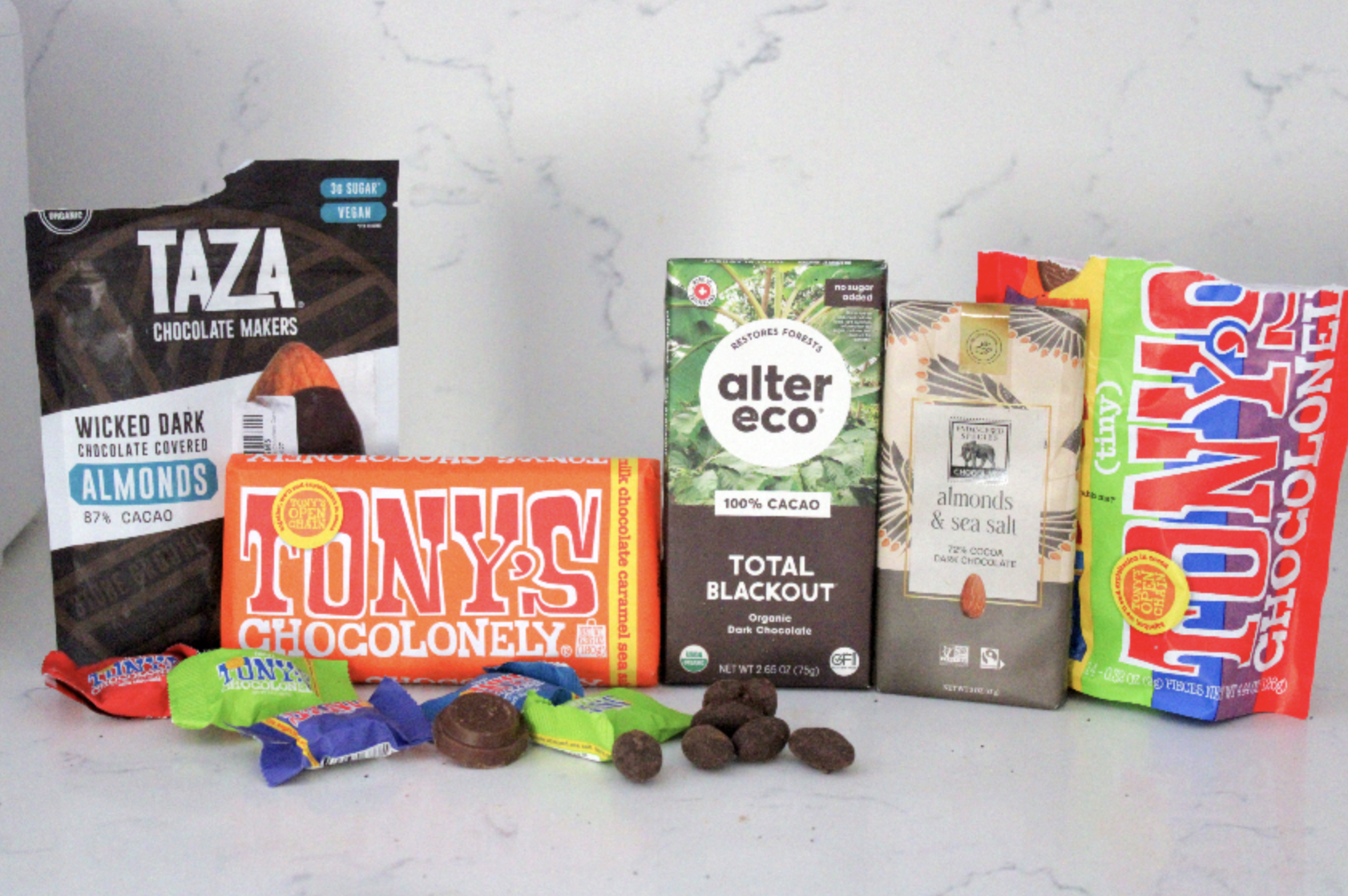
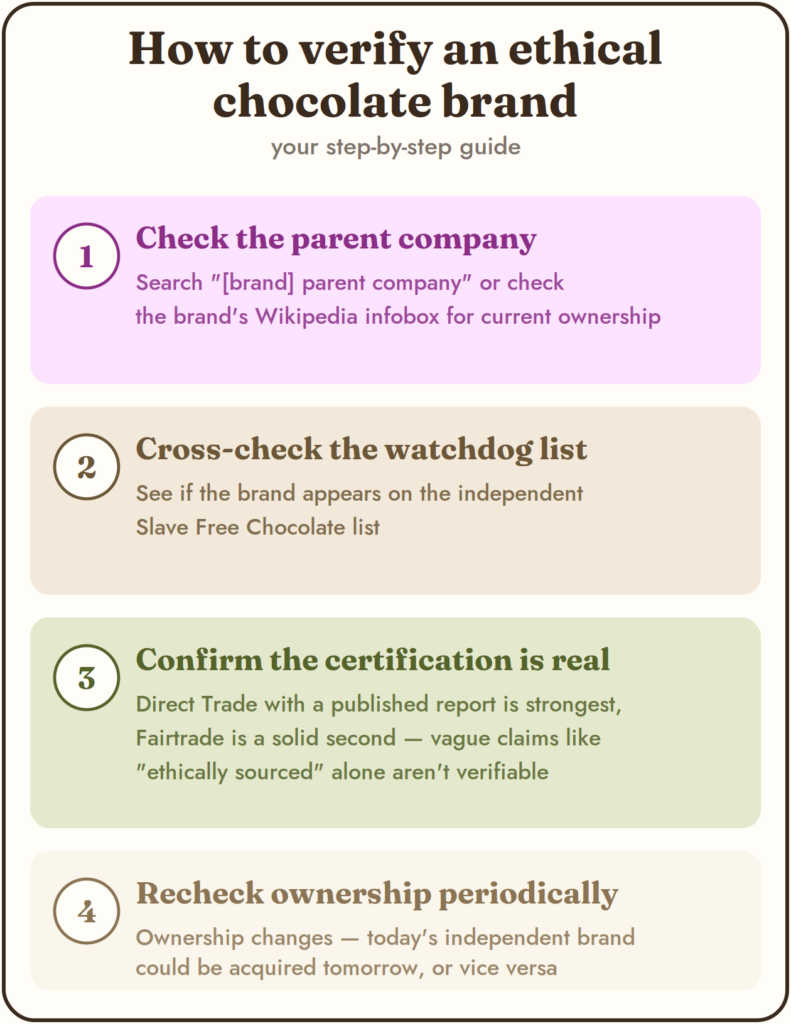
I tested the ethical and organic chocolate bars and I’m sharing the best ones since baking season and Halloween is here. The best ethical chocolate is organic, Direct Trade or Fairtrade certified.
Every company in this post is independently owned — not a subsidiary of any company under scrutiny for child labor — AND has a verifiable, audited ethical sourcing.
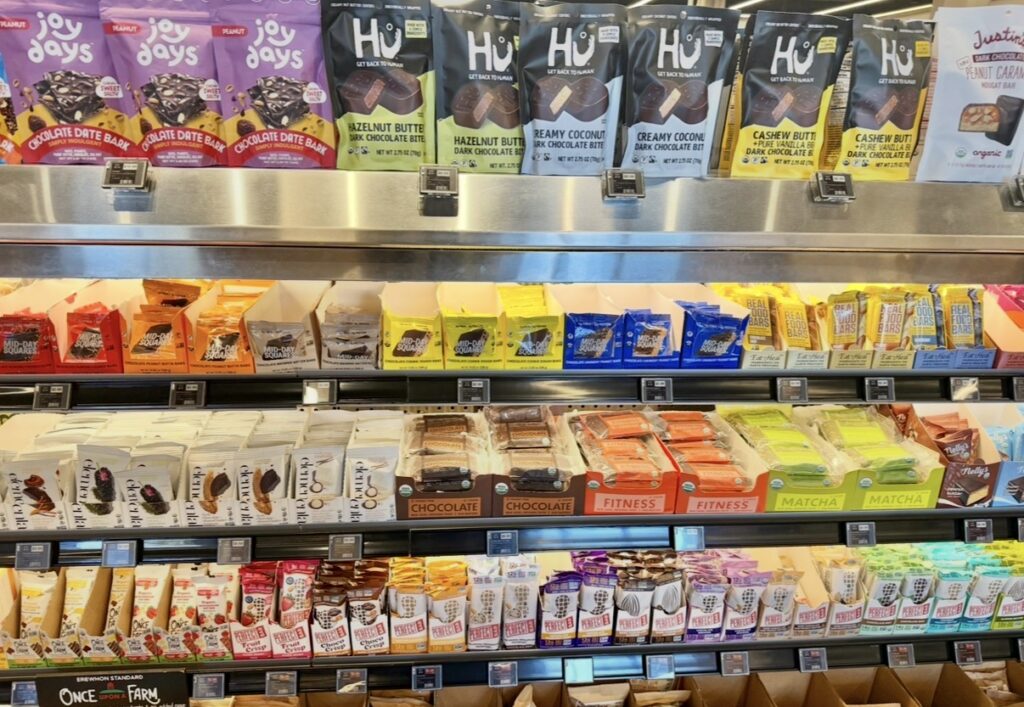
Why Ethical Chocolate Matters
Your favorite chocolate bars are all made with cocoa from Africa and cocoa has a real child labor problem. An estimated 1.5 to 2 million children work in hazardous conditions on West African cocoa farms, per U.S. Department of Labor data. In 2021, a federal lawsuit named eight major companies — including Nestlé, Mars, Hershey, and Mondelez — in connection with child trafficking allegations tied to their cocoa supply chains. Washington Post reporting separately found these companies can’t fully trace their own cocoa back to origin, meaning they can’t currently guarantee it’s free of child labor.
A lot of “clean label” chocolate brands are being bought up by these same conglomerates on purpose (Hu and Green & Black’s are both Mondelez-owned, for example, and KIND is owned by Mars). Hu used to be my favorite chocolate bar, but I cannot buy their bars anymore knowing what I know.
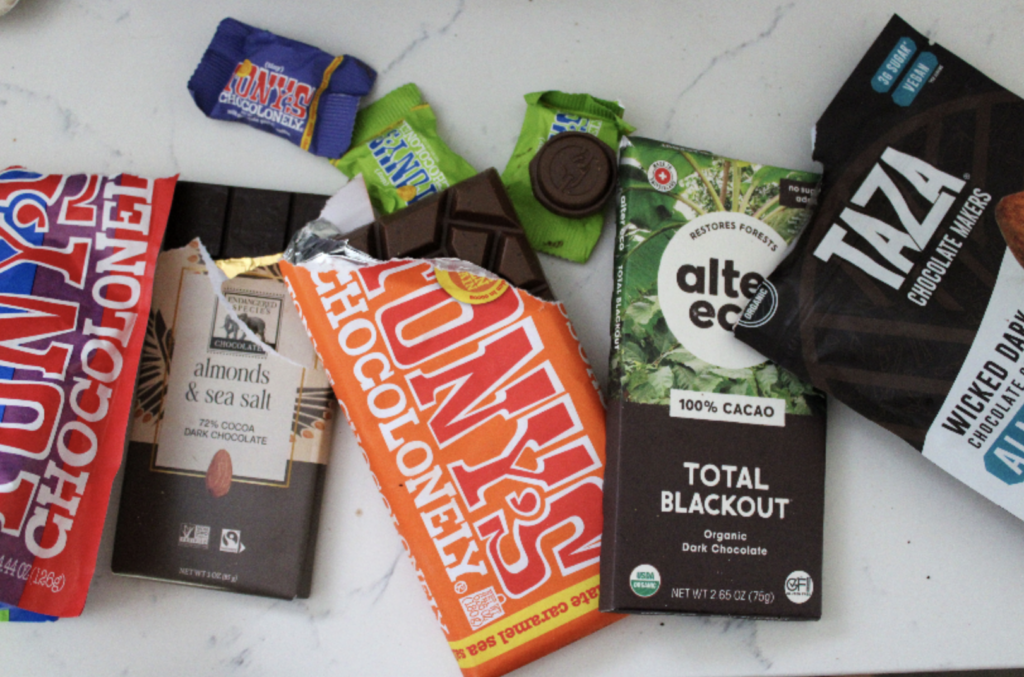
Does Fair Trade certified mean no child labor? No, it guarantees minimum prices and some labor standards, but it isn’t a guarantee of zero child labor. Brands like Tony’s Chocolonely or Alter Eco have direct, traceable sourcing which is where the difference lies.
Ingredients to Avoid in Chocolate
- Palm oil (unspecified/non-RSPO certified): used as a cheap cocoa butter substitute; linked to rainforest deforestation and habitat loss when not certified sustainable
- PGPR (polyglycerol polyricinoleate): a synthetic emulsifier used to cut costs by reducing the amount of real cocoa butter needed
- Vanillin (synthetic vanilla): an artificial flavor substitute for real vanilla, often derived from petrochemicals
- Soy lecithin: a cheap emulsifier; often from genetically modified, heavily processed soy
- Artificial flavors: an unregulated catch-all term that can mask a wide range of undisclosed synthetic chemicals
- Artificial colors (e.g., Red 40, Yellow 5): used in cheap candy-coated chocolate; linked to hyperactivity concerns in children and banned or restricted in several countries
- High-fructose corn syrup: a cheap sweetener sometimes used in place of real sugar in lower-quality chocolate coatings
- Hydrogenated or partially hydrogenated oils: a source of trans fats used to extend shelf life
- TBHQ (tertiary butylhydroquinone): a synthetic preservative derived from petroleum, used to prevent fats from going rancid
- Milk fat substitutes/vegetable fat blends: used in place of real cocoa butter or milk fat to cut costs, often lowering both quality and nutrition
- “Cocoa processed with alkali” (Dutch-process, unspecified): not harmful itself, but often signals a cheaper, less flavorful bean base being masked with processing
- Unlabeled or vague “natural flavors”: another catch-all term that doesn’t disclose the actual source or number of compounds used
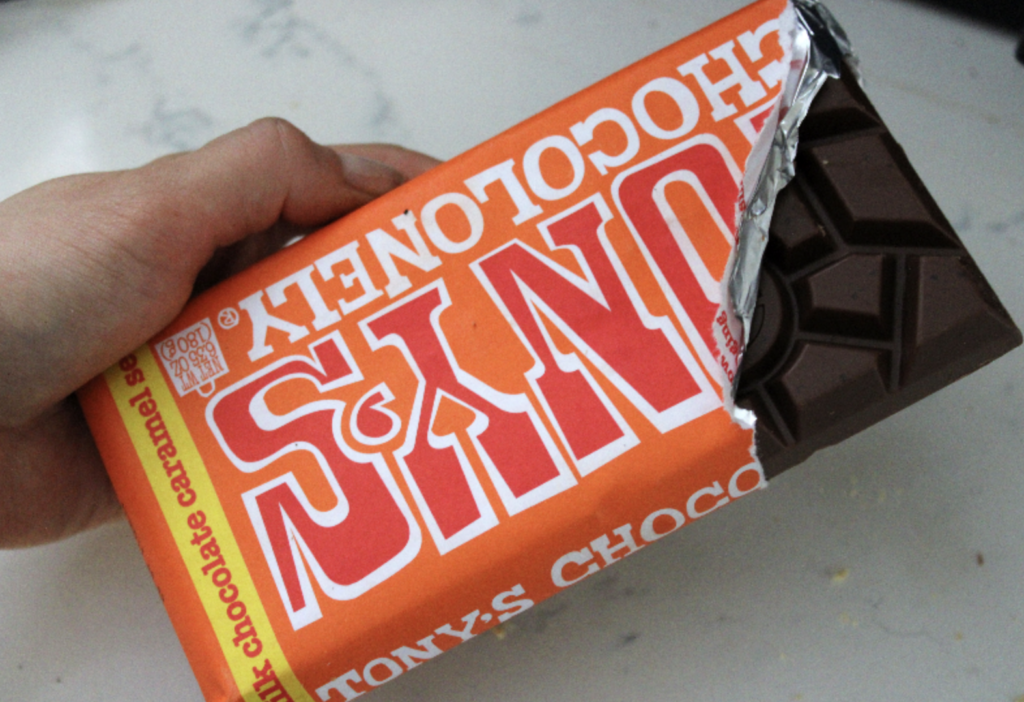
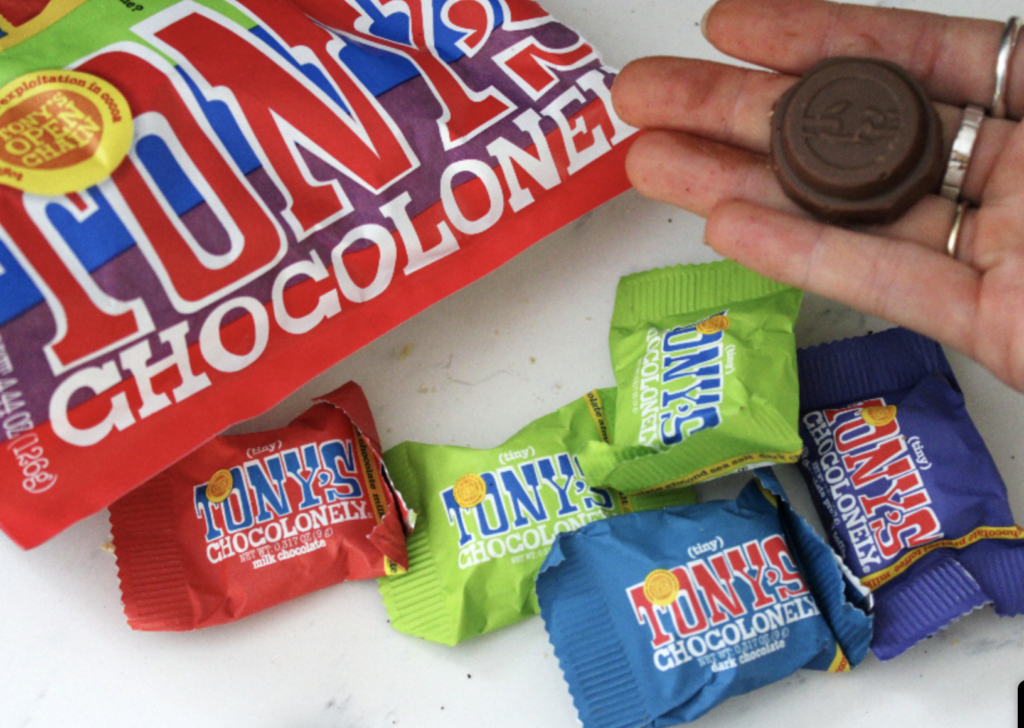
I tried Tony’s Chocolonely
Tony’s Chocolonely literally started as a human rights protest. Founded in 2005 by Dutch investigative journalist Teun van de Keuken, after a TV investigation into child slavery on West African cocoa farms left him unable to get major chocolate companies to change anything. He tried to get himself legally prosecuted for knowingly buying a product linked to slavery — the courts declined — so he made 5,000 Fairtrade, traceable chocolate bars himself instead, expecting a one-off protest. It’s now one of the best chocolate bar brands today and they still intentionally mold each into unequal, jagged segments as a physical symbol of the inequality in the cocoa industry. Tony’s Chocolonely bars are super thick and delish and their Assorted Chocolate Candy Pieces are perfect for giving out to Halloween trick or treaters and come with Belgian Milk & Dark Chocolate, Caramel Sea Salt, Almond Sea Salt, Honey Almond Nougat, and Pretzel Toffee. Today Tony’s is 100% Fairtrade certified, pays farmers above standard Fairtrade minimums, publishes fully traceable bean-to-bar sourcing reports, and is a Certified B Corp. Note that majority stake in the company (roughly 56%) is now held by Verlinvest, a Belgian investment firm, though Verlinvest currently has no lawsuits.
- Certifications: Fairtrade, B Corp · Price: ~$5/bar · Ownership: Majority-owned by Verlinvest (investment firm), founder remains involved as ambassador
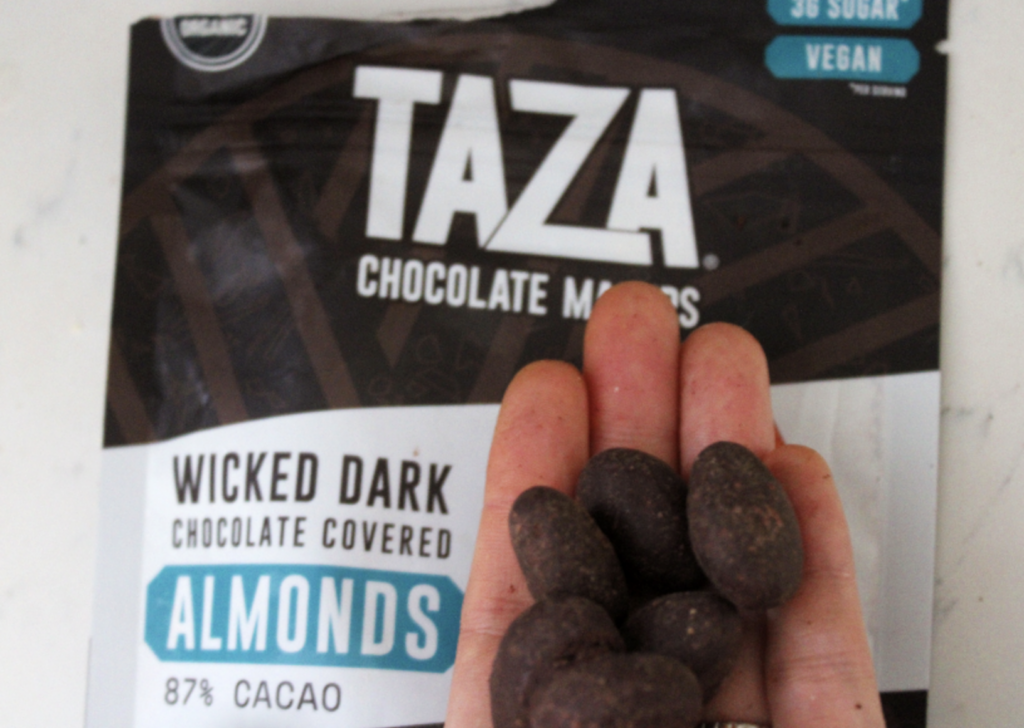
I tried Taza Chocolate
Taza Chocolate was the first U.S. chocolate company to launch a formal Direct Trade certification program, independently verified every year by Baystate Organic Certifiers. This means an outside body, not Taza itself, checks that the company is actually paying the premiums and meeting the standards it claims. Every bean is certified organic and the entire line is palm-oil-free. Taza is also one of the brands explicitly listed and endorsed by Slave Free Chocolate, the independent watchdog organization that vets supply chains for forced and child labor. Their bars have distinctive stone-ground, minimally refined texture (a nod to traditional Oaxacan chocolate-making) rather than the smooth, conched bars most American brands produce.
- Founded: Somerville, MA · Certifications: USDA Organic, Direct Trade (Baystate-verified), listed by Slave Free Chocolate · Price: ~$6–8/bar · Ownership: Independent, founder-led

I tried Alter Eco Chocolate
Alter Eco is probably the most mainstream organic and ethical chocolate brand in this list and widely available and accessible. It’s Independently owned and a Certified B Corp, meaning it’s been audited across labor, environmental, and governance practices, not just cocoa sourcing. Every bar in its chocolate line carries both USDA Organic and Fair Trade certification, and the whole lineup is palm-oil-free. Alter Eco has also built its identity around packaging: its truffle wrappers are compostable, and its boxes are FSC-certified. I love using Alter Eco for baking in my air fryer oven and breaking them down into smaller chocolate chips.
- Certifications: USDA Organic, Fair Trade, B Corp · Price: ~$4–5/bar · Ownership: Independent
I tried Beyond Good Chocolate
Beyond Good chocolate is Independently owned, and while most chocolate companies ship raw cocoa beans overseas to be processed into chocolate elsewhere, Beyond Good does both sourcing and manufacturing in Madagascar itself, working directly with roughly 90-plus local farmers. This means money circulates back to the local community and a larger share of the profit stays in the country where the cocoa is actually grown.
- Certifications: Direct trade (self-verified, not third-party audited) · Price: ~$6–8/bar · Ownership: Independent · Notable: Full production, not just sourcing, happens in-country
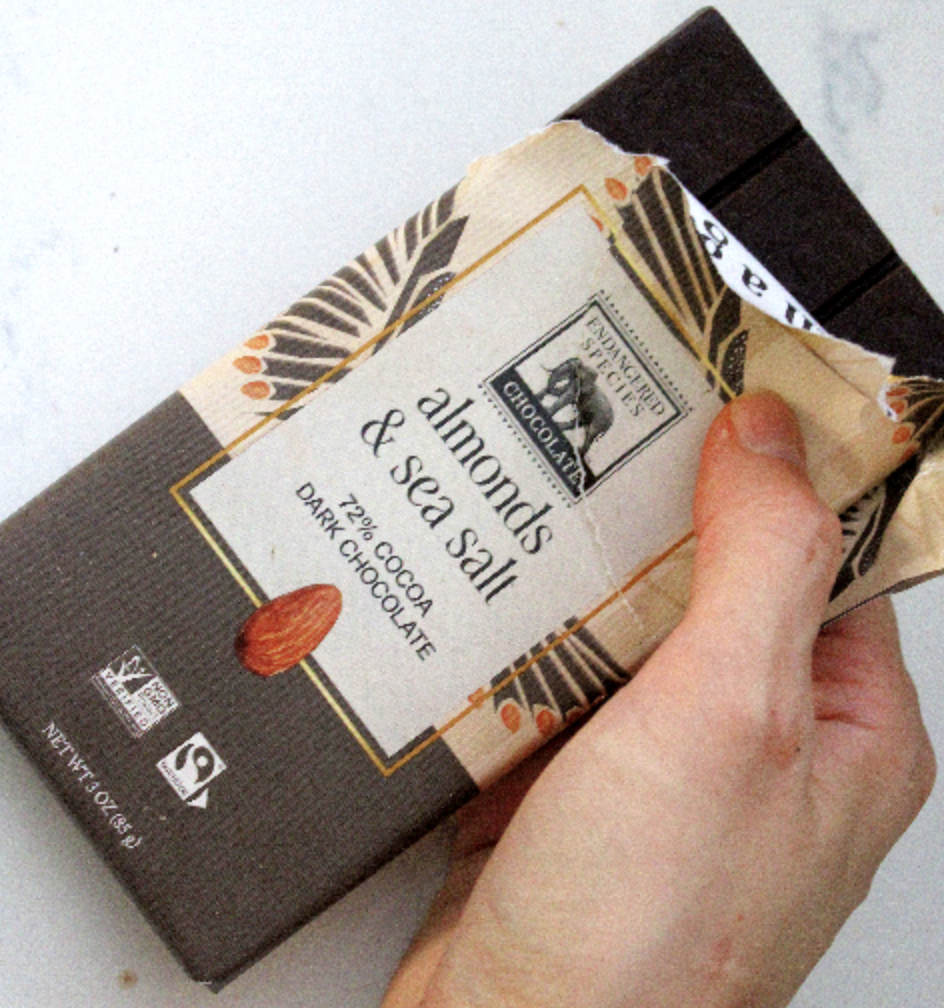
I tried Endangered Species Chocolate
Endangered Species Chocolate is Fairtrade certified across its cocoa sourcing, with some products also carrying Rainforest Alliance certification. The brand’s CEO has described Fairtrade as “a cornerstone” of the company’s ability to scale responsibly, and Endangered Species donates 10% of its annual net profits to wildlife and habitat conservation efforts, an amazing mission layered on top of its labor-sourcing standards. It was also the first chocolate brand to achieve Ocean Plastic Neutral status. The reason its cocoa isn’t USDA Organic certified, but that’s because the brand sources from small, family-owned cooperatives in West Africa that often lack the resources to pursue formal organic certification. A reminder that “not organic” doesn’t automatically mean lower-quality or less ethical sourcing. .
Certifications: Fairtrade, Rainforest Alliance (select products) · Price: ~$3–5/bar · Ownership: Independent (verify current, has changed hands via private equity in the past) · Notable: Donates 10% of annual net profits to wildlife conservation
Equal Exchange Chocolate
Equal Exchange is the only certified organic chocolate bar brand in this list that also offers baking chocolate chips. They’re a worker-owned cooperative, meaning the ethical model isn’t limited to how farmers are treated — the employees who run Equal Exchange’s operations share ownership of the company too. Certified Fairtrade and organic, with cocoa-sourcing relationships that in some cases go back decades.
- Certifications: Fairtrade, USDA Organic · Price: ~$4/bar · Ownership: Worker-owned cooperative
Divine Chocolate
Divine is the most structurally distinct brand on this list: Divine is 44% owned by Kuapa Kokoo, a farmer cooperative representing tens of thousands of cocoa farmers in Ghana. The cooperative holds actual equity and a seat on Divine’s board, meaning farmers share in the company’s profits and have a real say in its direction, not just a guaranteed minimum price for their beans. Fairtrade certified, and not owned by or affiliated with any conventional confectionery conglomerate.
- Certifications: Fairtrade · Price: ~$4–5/bar · Ownership: 44% owned by Kuapa Kokoo farmer cooperative (Ghana)
More Ethical Chocolate Brands
Askinosie Chocolate: Founded in 2007 by Shawn Askinosie, a former criminal defense attorney turned bean-to-bar chocolate maker, based in Springfield, Missouri. Askinosie pioneered direct trade sourcing in the American craft chocolate scene and backs it up with an annual, publicly posted Transparency Report — not a summary claim, but an actual accounting showing that over the past 16-plus years the company has paid farmers on average 43–54% above Fair Trade price, on top of a profit-sharing program that gives partner farms a direct cut of proceeds from the specific beans they supplied. The company also offers interest-free advance payments to farmers in roughly half its transactions, which matters in a crop cycle where farmers often have to sell early and cheap just to cover costs before harvest.
- Founded: 2007, Springfield, MO · Certifications: Direct Trade with published annual Transparency Report · Price:~$8–9/bar · Ownership: Independent, founder-led
Dandelion Chocolate: Founded in San Francisco, independently owned, and known in the craft chocolate world for radical price transparency: Dandelion publishes exactly what it pays per tonne for every single origin it sources, often $4,000–$8,000 per tonne — two to three times the Fair Trade minimum price. That’s a level of specificity most brands, even “ethical” ones, don’t offer; a lot of companies claim “direct trade” without ever disclosing an actual number. Dandelion’s sourcing relationships span named farms and cooperatives in Belize, Madagascar, Tanzania, and beyond, with staff visiting origin annually to assess quality and maintain the relationship in person.
- Founded: San Francisco, CA · Certifications: Direct Trade with published per-origin pricing · Price: ~$11–12/bar · Ownership: Independent
Runner Up: The Conscious Bar is a small, independent bean-to-bar brand making organic dark chocolate sweetened only with organic dates (no refined sugar). Founded by Yaniv Simpson. These date sweetened chocolate bars taste seriously good and the company seems focused on ethics and sustainability. They work directly with farmers, but there’s no third-party certifications currently.
Related posts:
7 Best Non-Toxic Mouthwashes I've Tried (and Hydroxyapatite Alternatives)
Best Solo Women's Wellness Retreats in 2026
Best Non Toxic Period Underwear (Tested by a Heavy Flow Gal)
The Best Non Toxic Pajamas I Actually Wear (Organic Cotton options)
Best Non Toxic Laundry Detergent I’ve Tried
I Tried a Beef Tallow Skincare Routine for 30 Days (my before and after)

Andrea is a clean beauty expert born in Los Angeles, California with 10 years of experience in natural skincare and organic living. She writes for Organic Beauty Lover using her expertise to guide readers in choosing the best natural products. Andrea graduated from the University of Southern California’s Marshall School of Business and has worked at NBC Universal, Four Seasons Hotels and Resorts, and The Travel Corporation while freelancing for small businesses. As a multi-citizen, she considers herself a global citizen of the world, belonging nowhere and everywhere, and has lived across Europe, US, Asia and South America. She currently resides in Orange County since 2026 and loves yoga, coffee and exploring the desert. Connect with her @organicbeautylover.
JOIN OUR NEWSLETTER! No spam ever.








Leave a Reply