
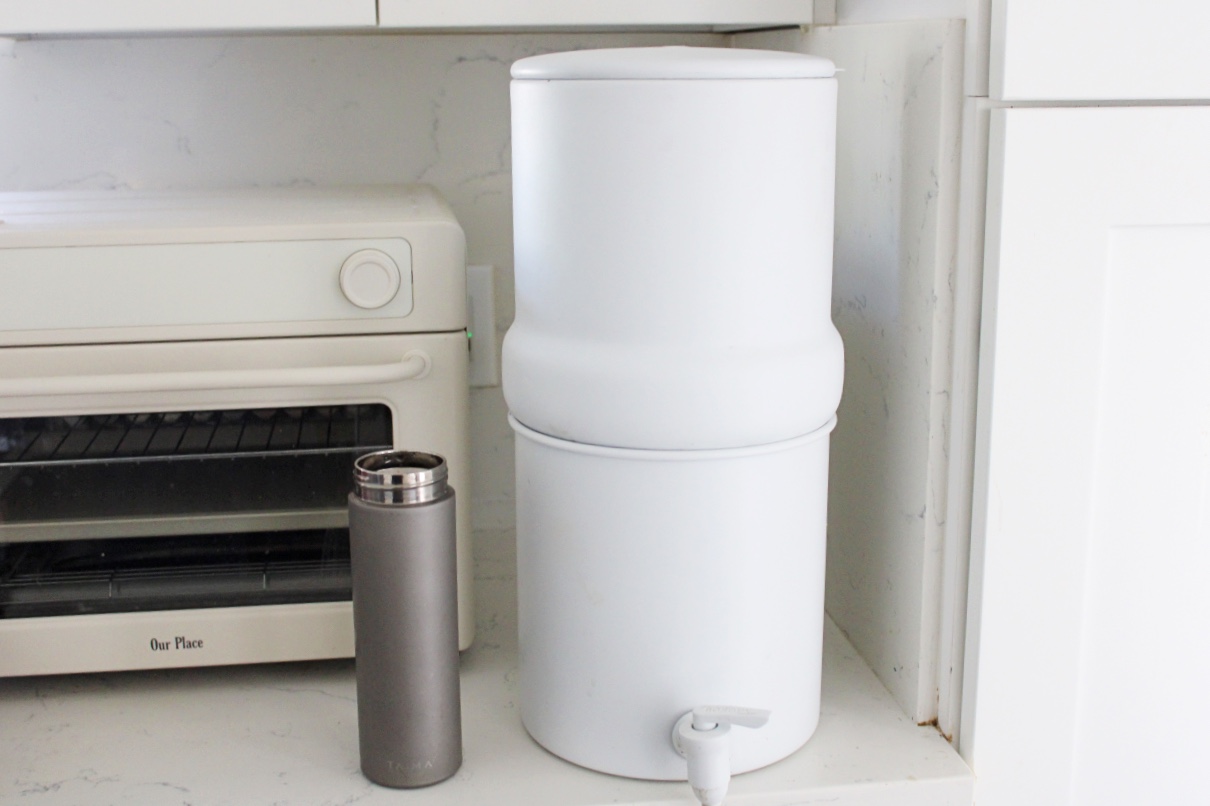
I bought the Boroux Water Filter myself earlier this year and I’m finally sharing my review. In light of the scandal around Ideal Living’s Peter Spiegel, CEO of AirDoctor and Aquatru, I’m sharing my brutally honest thoughts, so you can evaluate whether Boroux is a good fit for you and your household. For context, I used to use the Berkey years ago.
So is the Berkey alternative actually worth it? This review covers not just my personal review but also the company history, current pricing, certification data, independent lab test results (including the contaminants that weren’t fully removed), and a full Boroux vs. Berkey comparison.
Here’s my quick answer: Boroux is an NSF/ANSI-certified gravity water filter built by Berkey’s former top distributor after Berkey’s 2022–2023 EPA compliance dispute. Their Legacy system is a great pick for municipal-water households that want lead, chlorine, and PFAS reduction. But Id skip it if you’re on well or cistern water, since it isn’t certified for pathogen removal.
Boroux isn’t a random startup — it’s the direct result of a federal regulatory action against Berkey, one of the best-known names in gravity water filtration. That history shapes almost everything about how the Boroux water filter is built and marketed today, from its certifications down to the claims it deliberately avoids making.
This data in this post is based on Boroux’s published product and lab data, independent third-party testing (IAPMO R&T and WaterFilterGuru.com), and publicly available customer feedback — cross-checked rather than taken at face value. Sources are listed at the end.
What Is Boroux? Company Background
Boroux is made by James Enterprise Inc. (JEI), a company founded in the late 1990s by Todd Emerson. JEI wasn’t a newcomer to this space — it grew into the largest distributor of Berkey filtration systems in the U.S., running berkeyfilters.com and landing on the Inc. 5000 list three years running (2015–2017). On December 27, 2022, the EPA issued a Stop Sale, Use, or Removal Order against Berkey’s manufacturer, treating the company’s microbiological (pathogen-removal) claims as those of an unregistered pesticide device under federal law. After roughly a year of trying to help resolve the compliance issue, JEI cut ties with Berkey in 2023 and used its existing manufacturing relationships to launch its own line under the Boroux name.
Boroux’s “Foundation” filters are made by Clearbrook, the same manufacturer that produced Black Berkey elements, and Boroux filters are explicitly sold as drop-in replacements for Berkey, ProOne, Alexapure Pro, and Doulton systems. If you already own a Berkey, you can run Boroux filters in it. One important nuance: because of the EPA order, Boroux is careful not to make the same broad pathogen/microbial-removal claims Berkey made.
Boroux Pricing: Quick Snapshot
Boroux’s core offering is a stainless-steel, gravity-fed countertop system with two size options:
| Product | Price (regular) | Capacity | Notes |
|---|---|---|---|
| Legacy 3-Gallon System | $399 | 3 gallons | Best for households of 4+ |
| Legacy 1.8-Gallon (Compact) System | $369 | 1.8 gallons | Better for 1–2 people or small kitchens |
| Foundation Filters (set of 2) | $150 (as low as $119 with subscribe & save) | Up to 6,000 gal/filter | Required, sold in pairs |
| Foundation Filters (set of 4) | $300 | Up to 12,000 gal (4-filter config) | For higher-volume households |
| Proactive Fluoride Filter | Sold separately | ~1,000 gallons | Optional add-on, alumina-free |
| Shower Filter System | Sold separately | ~1,585 gal / ~3 months | Tool-free install, up to 98% chlorine reduction |
Finishes include polished stainless steel, white, black, and sage green, plus optional wood or steel stands. Boroux frequently runs promotions (20%-off codes, an “open box” clearance section, and bundle discounts), so it’s worth checking current pricing before buying at full price — several review sites and Boroux’s own site have listed the 3-gallon unit anywhere from $250 (open-box) to $399 (retail) over the past year.
Both systems carry a lifetime warranty on the housing itself; filters are covered for roughly a year and need periodic replacement regardless of remaining capacity claims (more on that below).
Boroux Certifications Explained
Here’s the clearest current picture, cross-referenced across independent testing sources:
- NSF/ANSI 42 (Particulate Class I) — Foundation Filters are WQA-certified to this standard, which covers chlorine, taste, and odor reduction plus particulate filtration.
- NSF/ANSI/CAN 401 — Certified for microplastics reduction (0.5–1 micron range).
- NSF/ANSI/CAN 372 — Certified lead-free, meaning the hardware itself won’t leach lead into water. This is a materials certification, not a performance one, but it’s a real advantage over Berkey, which never held this certification.
- Proactive Fluoride Filter — not independently certified. Boroux advertises “up to 99.9% fluoride reduction,” but as of this review, that specific filter has not passed third-party performance certification the way the Foundation filters have. Treat that number as a manufacturer claim rather than a verified figure.
Independent lab testing (via IAPMO R&T, an ISO/IEC 17025-accredited lab) of the Foundation Filters reported strong reduction rates across categories: roughly 99.97% for volatile organic compounds, 99.95% for pesticides/herbicides, 99.68% for disinfection byproducts, 99.55% for industrial/plastic-related chemicals, 99.5% for pharmaceuticals, and 99.36% for heavy metals as a category — against a published list of 75+ tested contaminants including lead, mercury, chromium, glyphosate, and various PFAS compounds.
Two caveats that may matter:
- The Foundation Filters do not meaningfully reduce fluoride. You need the separate, uncertified Proactive filter for that.
- In California and Iowa, state regulations restrict what Boroux can legally claim its filters remove — in those states, marketing is limited to chlorine, chloramine, microplastics, and particulates, regardless of what the filter may do elsewhere. That’s a compliance detail worth knowing if you live in either state.
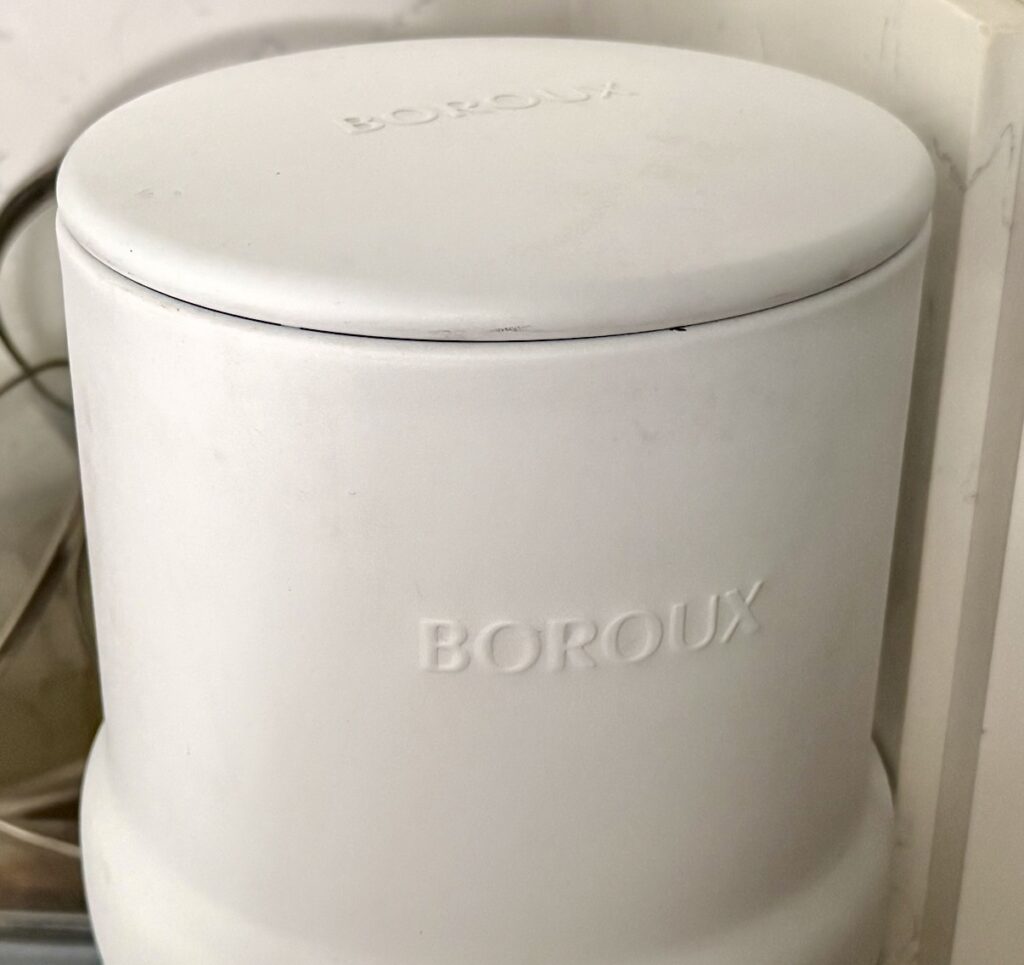
Boroux Test Results: Independent Lab Findings
Beyond certification paperwork, deeper third-party testing (the kind done by dedicated water-filter labs rather than the manufacturer) has turned up a few results worth flagging:
- Trace cobalt leaching. Testing detected cobalt at roughly 6.9 µg/L in water passed through Foundation Filters — meaning the filter itself introduced a trace contaminant it wasn’t marketed as adding. It’s a small number, but worth knowing.
- Trace benzene and toluene with the Fluoride Filter. When the optional Proactive Fluoride Filter was tested, trace benzene and toluene (about 2.45 ppb each) showed up in the output water, even as fluoride itself was reduced.
- Flow rate is genuinely slow. Expect roughly 0.75–0.9 gallons per hour depending on which filters are installed. Filling the full 3-gallon upper chamber took independent testers over two minutes just to pour, and a full gravity cycle can take a couple of hours — normal for this filter category, but worth knowing if you’re used to instant filtered-water taps or pitcher filters.
- Setup has improved significantly. Boroux’s newer automatic priming pump cut initial filter setup from roughly an hour of manual priming (the traditional Berkey-style process, which frustrates a lot of first-time buyers) down to about six minutes. This is a genuine, measurable upgrade over older Berkey-style systems and over Boroux’s own earlier version.
One aggregate data-quality score from a dedicated filter-testing site put Boroux’s Legacy system at 8.31 out of 10, with high marks for design (10/10), maintenance, and company transparency, and lower marks for contaminant reduction consistency and flow rate — placing it as a strong but not top-tier contender against benchmarks like British Berkefeld.
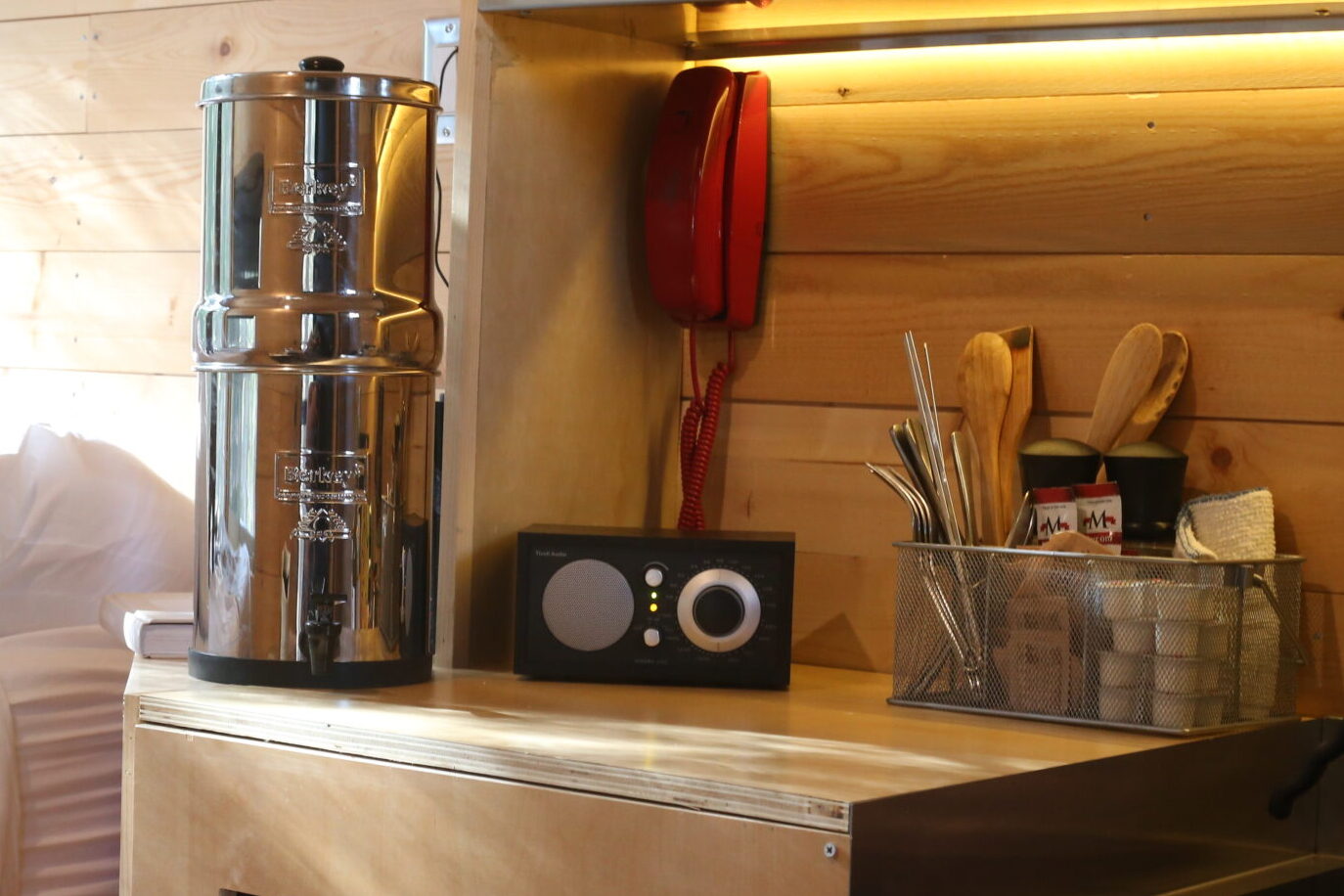
Boroux vs. Berkey Comparison
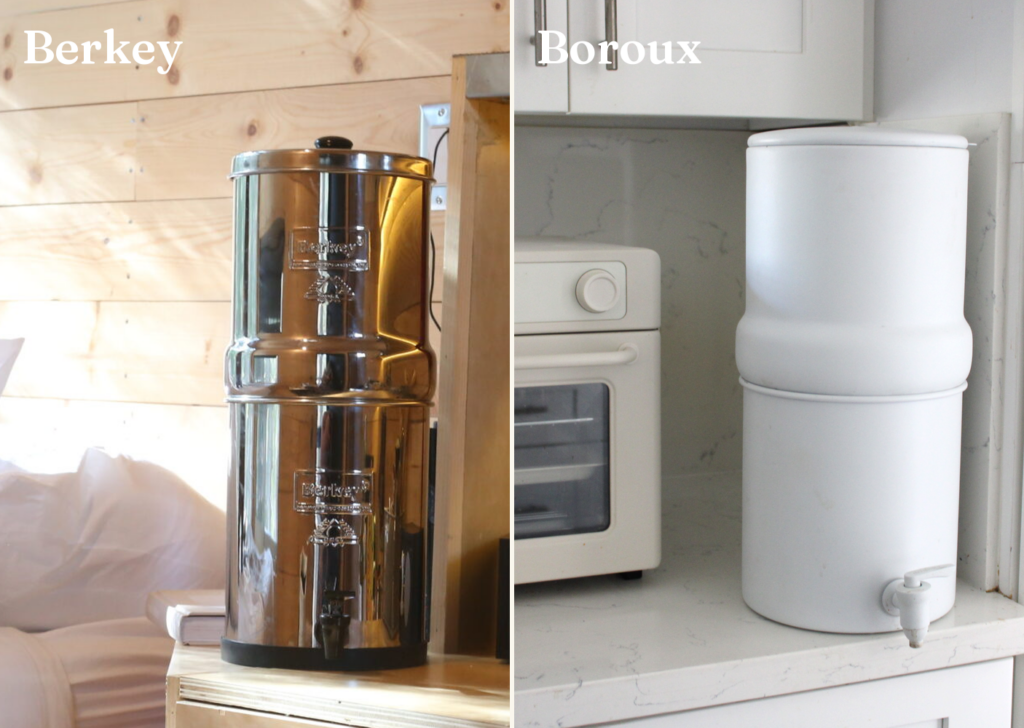
Because Boroux was built specifically to replace Berkey in people’s kitchens, this comparison comes up constantly:
| Factor | Boroux | Berkey |
|---|---|---|
| Price | ~$369–$399 | ~$367 (Big Berkey) |
| Lead-free certification (NSF/ANSI/CAN 372) | Yes | No |
| Particulate certification (NSF/ANSI 42) | Yes | No |
| Fluoride removal | Partial (uncertified add-on filter) | More complete, but PF-2 filters have reported aluminum leaching |
| Filter interchangeability | Fits Berkey systems | Fits Boroux systems |
| Manufacturer | Clearbrook | Clearbrook |
| Pathogen/microbial removal claims | None (post-EPA order) | Formerly claimed; subject to the 2022 EPA order |
The short version: both systems come from the same manufacturing lineage, but Boroux is the more regulatory-cautious, better-certified version of the same hardware — while Berkey still edges it out on fluoride reduction.
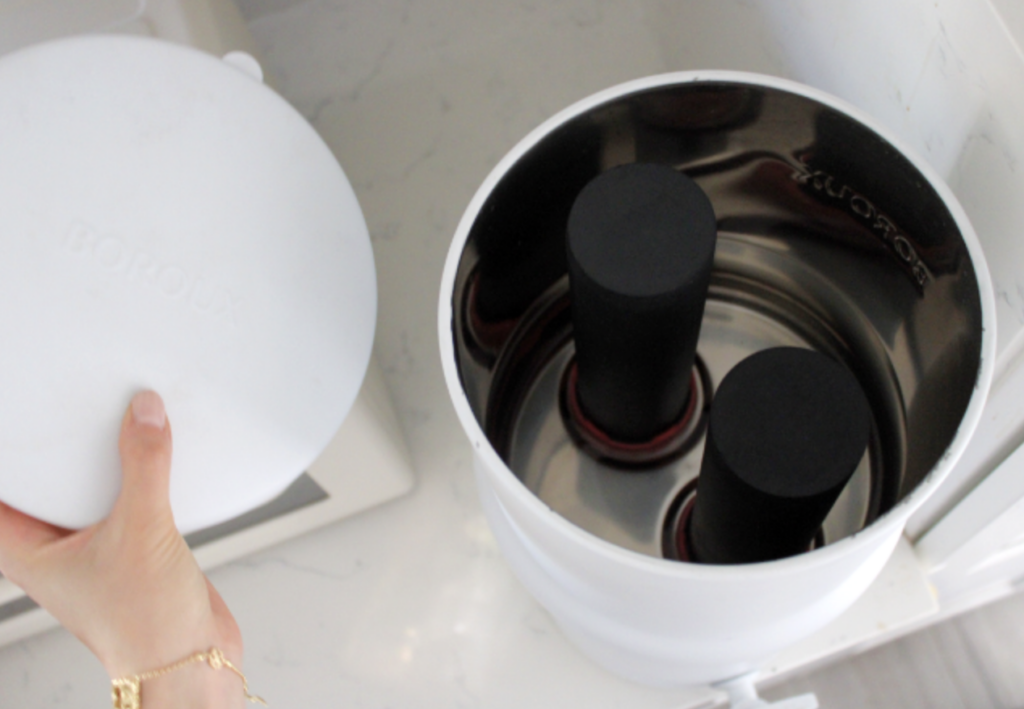
My Experience using Boroux Water Filter
After my Berkey I went back to using water filter pitchers and am very happy I switched to Boroux. My water tastes clean and I no longer have to always lift and pour from pitchers that I’m also constantly filling up. There’s NO plastic coming into contact with the water.
Size and capacity: Overall, I feel that the 1.8 gallon is a decent size for my small household albeit I wish the capacity were just slightly bigger (2 gallon would have been better). Between all the water and coffee I drink daily and filling up my non toxic coffee maker I do need to refill it every two days, but my kitchen is small so I didn’t want something huge taking up a lot of space. A larger family should definitely go for the 3 gallon full size system, otherwise you’ll be filling it up constantly. If the color matters, I did need to wait for the white color to be back in stock and jumped on it quickly since I noticed it sells out very fast.
Setup: The filters feel very sturdy and stable and setup went smoothly. I think for the average dude, setup is probably a cinch, but I did find it kind of complicated and tedious. So if possible, definitely ask your partner to help you because it is a lot of convoluted (to me) instructions and tests to make sure the water is filtering properly. Plus, it’s the most important part!
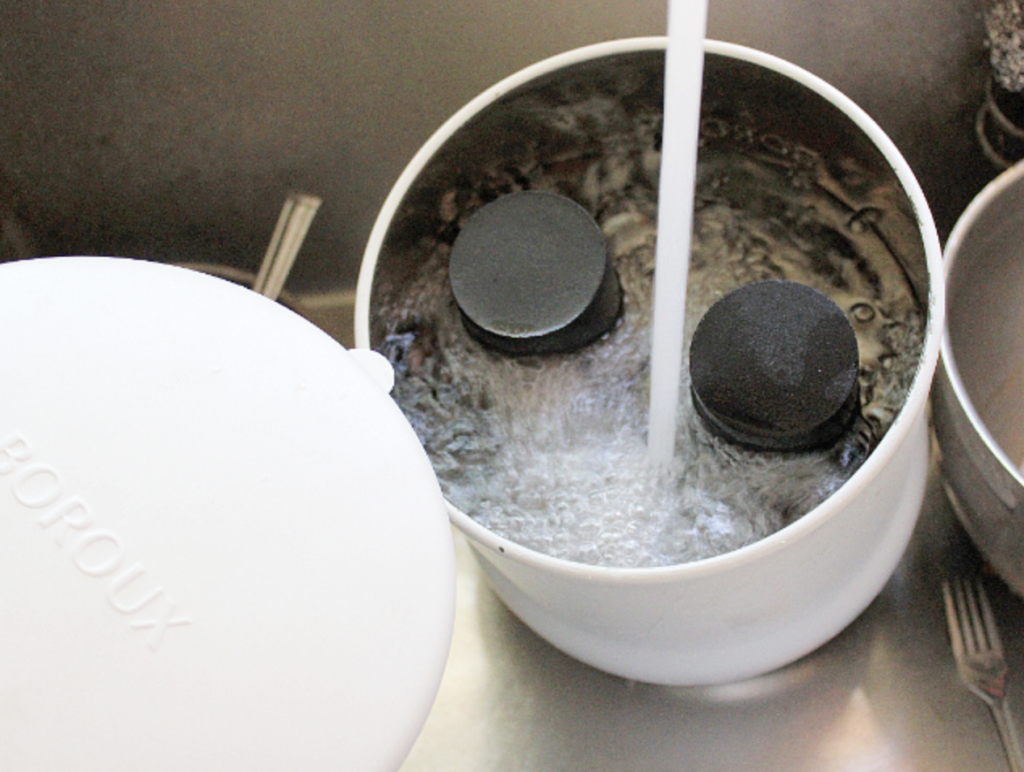
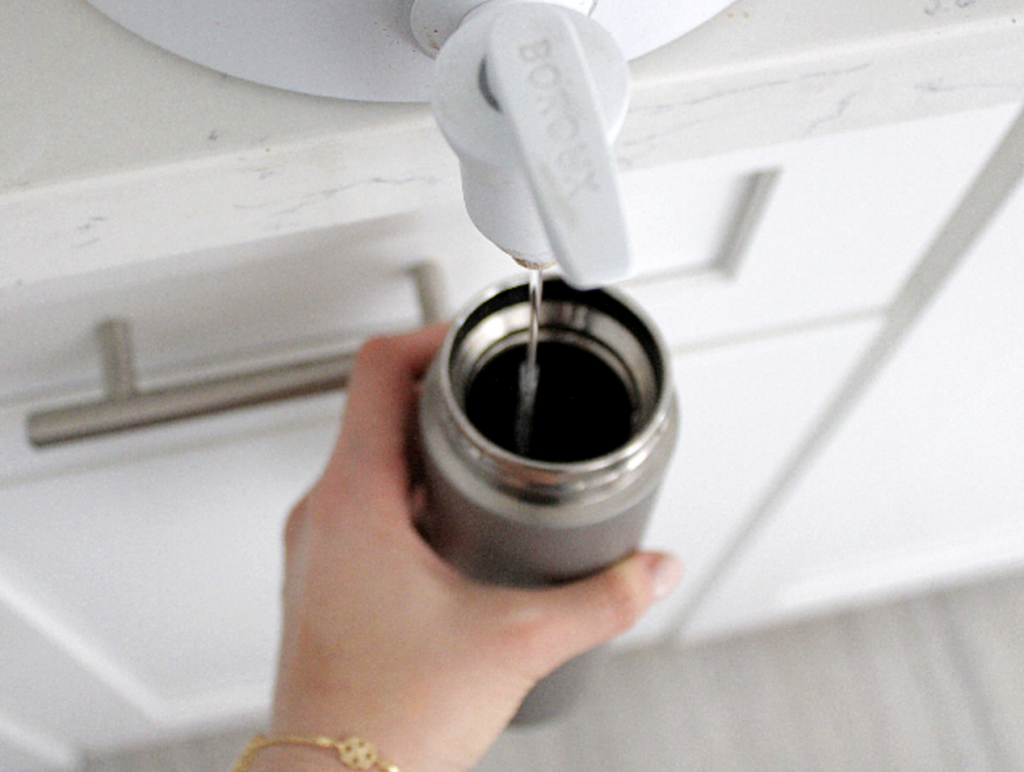
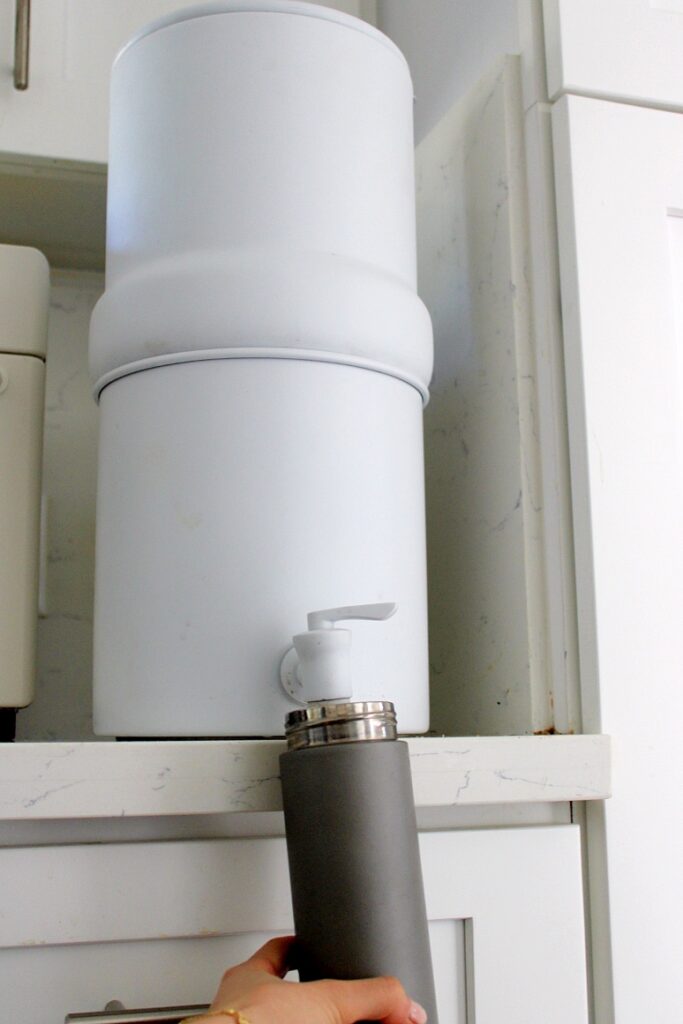
Ease of use: Relatively very easy to hold, handle, carry and fill up since I keep it near the sink and my kitchen isn’t that big. I would find it tedious if it were placed on some opposite counter end of a huge kitchen. With the spout spigot I can easily pour it into my non toxic water bottle without spills.
Complete breakdown of materials used:
- Chambers and spigot: 304 food-grade stainless steel (no plastic in contact with the water there)
- Spigot: stainless steel with a ceramic valve, not plastic
- Stem Saver and hole plugs: BPA-free food-grade plastic (small structural/sealing parts, not in the main water path)
What I love:
- I love how clean my water tastes after it filters through the Boroux
- The sleek minimalistic matte white look and appropriate size
- The rigorous testing and certifications behind the filtering
- 1.8 gallon size is relatively easy to grip and not too heavy to handle and carry
- Is easy to clean and stays relatively clean on its own
What I don’t love:
- The spout mechanism is not that great. You twist it left and right to close and open it instead of up and down. I sometimes forget to twist it closed all the way it water will leak onto the floor while I’m not paying attention.
Pros and Cons
What Boroux does well:
- Real, verifiable certifications (NSF/ANSI 42, 401, 372) that its main competitor lacks
- Transparent, published third-party lab data — including the numbers that aren’t flattering
- Faster setup than older gravity systems thanks to the automatic priming pump
- Stainless steel and ceramic components minimize plastic-water contact
- Filters are interchangeable with existing Berkey (and similar) systems
- Lifetime warranty on the housing; HSA/FSA eligible
- Lower per-gallon filter cost than pitcher filters or bottled water over time
Where it falls short:
- Trace cobalt (Foundation filters) and trace benzene/toluene (Fluoride filter) detected in independent testing
- The Proactive Fluoride Filter is not independently certified, despite a specific “99.9%” marketing claim
- Slow flow rate (roughly 0.75–0.9 GPH); a full fill-and-filter cycle takes hours
- Tall unit height (23–29 inches) makes filling awkward without a step stool for some users
- Not certified or marketed for pathogen/microbial removal — not a substitute for a certified purifier if your water source may be biologically contaminated
- High upfront cost relative to pitcher filters, even if cheaper per gallon long-term
Is Boroux Worth It? Final Verdict
Boroux is a legitimate, meaningfully improved successor to Berkey rather than a copycat — it has real certifications that Berkey never obtained, faster setup, and transparent (even if a smidge unflattering) third-party test data. It’s a very solid choice for municipal-water households that want lead, PFAS, chlorine, and heavy-metal reduction without electricity or plumbing modifications, and it’s a low-friction option for existing Berkey owners.
Shop Hereuse OBL for -15%
Who Should (and Shouldn’t) Buy Boroux
Good fit: City or municipal water users concerned about chlorine, heavy metals, PFAS, pharmaceuticals, or general taste/odor issues; current Berkey owners who need replacement filters or want to upgrade hardware; people currently buying bottled water or replacing pitcher filters often, since Boroux’s per-gallon filter cost is meaningfully lower over a year of use; anyone who wants an off-grid, no-electricity filtration option.
Skip it if: You’re on well water, cistern water, or any water source where biological contamination (bacteria, parasites, viruses) is a realistic concern — Boroux does not currently market or certify these filters for pathogen removal, which is precisely the category of claim that got its predecessor in regulatory trouble. It’s probably not ideal if you travel frequently or only need water filtration seasonally (a vacation home, RV), since the unit’s size and setup favor a permanent kitchen counter spot over portability.
Frequently Asked Questions
Is Boroux the same as Berkey? No, they’re separate companies, but they share a manufacturer (Clearbrook) and Boroux filters are designed to be physically compatible with Berkey systems. Boroux was created by Berkey’s former largest distributor after Berkey lost an EPA compliance dispute in 2022–2023.
Is Boroux legit? Yes — it’s an operating company with a documented business history (formerly James Enterprise Inc.), published third-party lab testing, and real NSF/ANSI certifications on its core filters. That doesn’t mean every marketing claim should be taken at face value; the fluoride filter’s performance claim, in particular, isn’t independently certified yet.
Does Boroux remove fluoride? Not with the standard Foundation Filters. You need the separate Proactive Fluoride Filter, and its “up to 99.9%” reduction claim has not been independently certified the way the core filters have.
Does Boroux remove bacteria and viruses? Boroux does not currently market its filters as certified for microbiological (pathogen) removal. If your water source might contain bacteria or parasites — common with untreated well or cistern water — this system is not an appropriate solution on its own.
How long do Boroux filters last? Foundation Filters are rated for up to 6,000 gallons per filter (or roughly 12 months of typical household use, whichever comes first), and the company recommends annual replacement regardless of exact gallon usage. The Fluoride Filter is rated for about 1,000 gallons, and the shower filter for about 1,585 gallons or three months.
How much does it cost per year to maintain? Figure roughly $60–$150 annually for Foundation Filter replacements depending on household water usage and whether you use the subscribe-and-save pricing, plus additional cost if you’re also replacing the fluoride or shower filters.
Related posts:






Andrea is a clean beauty expert born in Los Angeles, California with 10 years of experience in natural skincare and organic living. She writes for Organic Beauty Lover using her expertise to guide readers in choosing the best natural products. Andrea graduated from the University of Southern California’s Marshall School of Business and has worked at NBC Universal, Four Seasons Hotels and Resorts, and The Travel Corporation while freelancing for small businesses. As a multi-citizen, she considers herself a global citizen of the world, belonging nowhere and everywhere, and has lived across Europe, US, Asia and South America. She currently resides in Orange County since 2026 and loves yoga, coffee and exploring the desert. Connect with her @organicbeautylover.
JOIN OUR NEWSLETTER! No spam ever.








Leave a Reply