
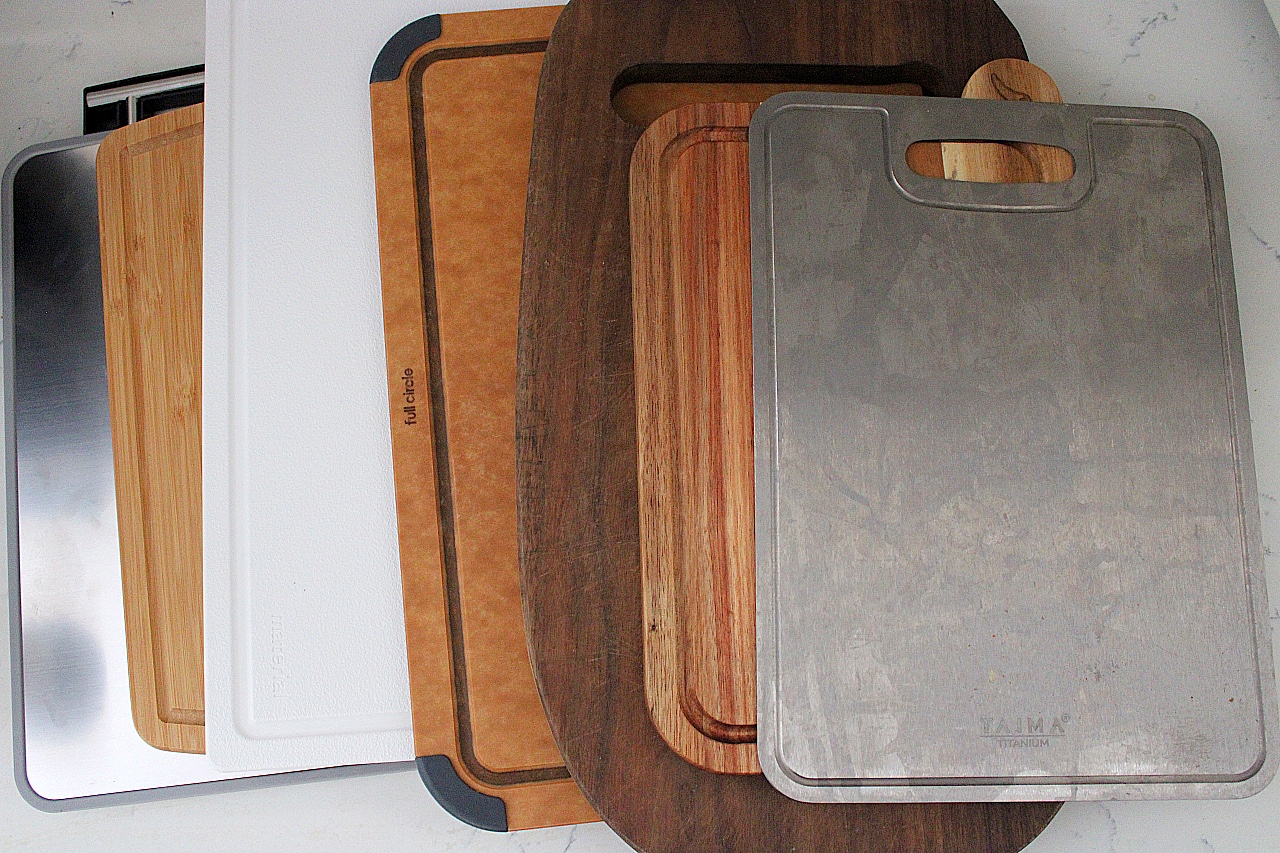
I bought and tested non-toxic cutting boards and I’m sharing the best ones, plus how to pick the right one for YOU. The best non toxic cutting board is made with a solid slab of wood or titanium and without any microplastics, nanoplastics, BPA, harmful glues, adhesives, melamine or phthalates.
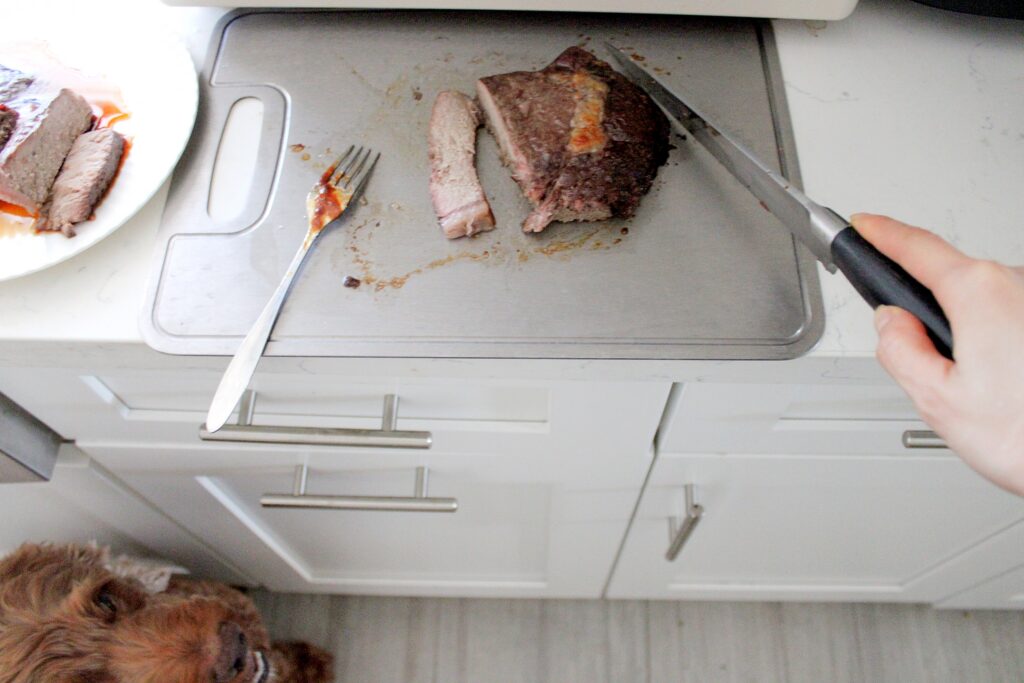
My testing method: I personally tested these boards daily for meats, chopping fruits and veggies with both titanium and stainless steel chef’s knives. I also had a professional chef relative test them out for their expert insight. For those who want to cut to the chase, Taima Titanium Cutting Board won out in both our experience.
Wait, My Cutting Board is Toxic?
Yes, the board you use everyday could be leaching harmful materials into the food you eat.
- Microplastics: chopping releases anywhere from a handful to thousands of particles per cutting event depending on the study
- Phthalates (plastic/TPU boards): even trace contamination is a concern
- Bisphenols (BPA, BPS, BPF) (plastic boards): used in some plastics and linked to endocrine disruption
- Triclosan and Microban additives (“antibacterial” plastic boards): this has been banned from hand soaps in 2016 but still turns up in kitchenware
- Melamine-formaldehyde resin adhesives (bamboo boards): leaching increases with heat or acid exposure, and most brands don’t disclose their adhesive
- Polyurethane, acrylic finishes, and chemical wood stains (treated or decorative wood): not food-safe for direct hot or wet contact
- PAHs (polycyclic aromatic hydrocarbons): unrefined mineral oil used on wood boards)
- Phenol-formaldehyde resin (composite boards like Epicurean and Richlite): can off-gas formaldehyde unless Greenguard Gold certified to be low-VOC
- Trace metals (cadmium, antimony in some silicone boards): generally considered low risk, but the risk is still present
- Contaminants from recycled plastic: recycled-content boards carry a higher risk of unknown contamination across the board

How to Pick the Right Non-Toxicx Cutting Board
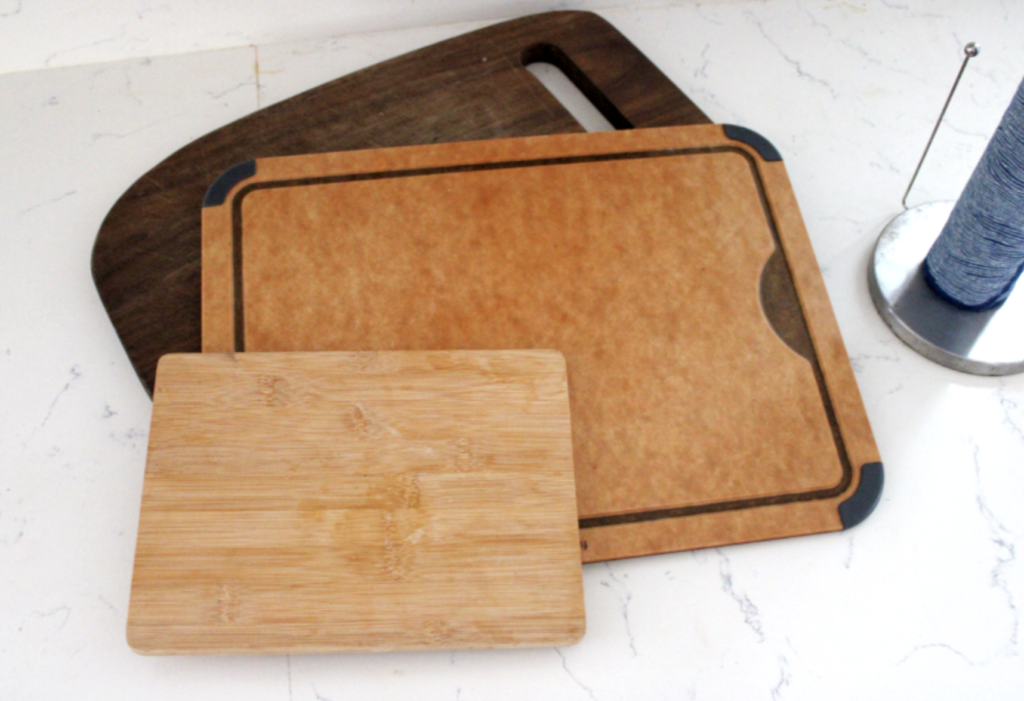
Here’s what to look for when picking the right cutting board for YOU. Solid hardwoods like maple, walnut, sapele and hinoki are fantastic and titanium cutting boards are like the noble red wine of cutting boards.
1. Materials Used in Cutting Boards (pros and cons)
Best in ClassSolid Wood
Pros
- Truly non-toxic when it’s a solid, single slab with no glues or resins
- Naturally antibacterial
- Won’t dull your knives
- Moisture-resistant and long-lasting when oiled regularly
Cons
- Needs monthly oiling to prevent cracking or warping
- Hand-wash only — never dishwasher safe
- Spendy
Titanium
Pros
- Zero chemicals or safety issues — doesn’t leach, absorb odors, or harbor bacteria
- No maintenance required
Cons
- Harder than knife steel, so it dulls blades fast
- A bit clacky
- Genuine solid titanium boards can be pricey)
Bamboo
Pros
- Renewable and eco friendly material
- Genuinely non-toxic when it’s organic and bonded with a food-safe, formaldehyde-free glue
Cons
- Cracks easily
- Most boards are strips bonded together with adhesive, often formaldehyde-based
- Harder on knife edges than softer hardwoods like cherry or walnut
- Formaldehyde-free labeling isn’t always disclosed, so it’s worth confirming before you buy
Glass
Pros
- Completely non-porous — nothing to leach or off-gas, so it’s genuinely non-toxic
- Very easy to sanitize and disinfect
Cons
- Hard enough to dull — or chip — your knife blades quickly
- Can get clacky and noisy to cut on
- Carries a shatter risk if dropped, scattering sharp glass into food
- Better suited as an occasional serving board than a daily prep surface
Wood Composite
Pros
- Made from compressed wood fibers — a sturdy use of wood byproducts
- Dishwasher-safe and low-maintenance
Cons
- Bound with a plastic-based resin or adhesive — typically wood fiber or wheat straw plus a plastic binder
- The weakest link on non-toxicity — resin type and adhesive safety are often undisclosed by manufacturers
- Cutting or scoring the surface can shed the plastic binder as microplastics, since the resin is literally a plastic matrix holding the fibers together
Paper Composite
Pros
- Greenguard-certified with low formaldehyde off-gassing once fully cured
- Non-porous, dishwasher-safe, and very low in bacteria retention
- A reasonable middle-ground option for most households
Cons
- Made by bonding paper fibers with a phenolic (phenol-formaldehyde) resin
- Formaldehyde smell or emissions can reappear when heated — near a hot pan, or during a dishwasher’s heated dry cycle
- Best avoided if you’re highly formaldehyde-sensitive
- Going wood or bamboo? Choose solid, one-piece construction where possible, or confirm the glue or resin is formaldehyde-free and food-safe.
- Check for third-party certifications if you want total peace of mind, especially with composite and coated boards.
- Want the most durable and NO maintenance option? Titanium is hands down the safest, most durable and zero maintenance material in this list.
2. Size
Pretty straightforward – look for the size you need. Boards run anywhere from small paring boards (around 8 x 11 in) to large chef’s boards (15 x 20 in or bigger). Go bigger if you want raw meat and produce to have their own space on the same board, or if you batch-cook — go smaller if counter or storage space is tight, or you mostly need it for quick jobs.
3. Maintenance & Care
- Titanium: Dishwasher safe.
- Wood Composite: Dishwasher safe.
- Paper Composite: Dishwasher safe.
- Solid Wood: Hand-wash only and dry standing up — never soak it or run it through the dishwasher.
- Bamboo: Hand-wash only and dry standing up — never soak it or run it through the dishwasher.
- Whatever you choose: Keep a separate board for raw meat and wash it apart from your produce board to avoid cross-contamination.
Quick Guide to Cutting Board Certifications
Third-party certifications are a good way to know that the board has been tested and confirmed to be free of harmful materials.
- FDA Food-Contact Compliant: Confirms the material itself is approved safe for contact with food (doesn’t require independent testing or audits)
- NSF Certified: Means it was third-party lab testing plus had annual, unannounced factory inspections to verify ongoing compliance.
- TSCA Title VI / CARB Phase 2 Compliant: Caps formaldehyde emissions from engineered wood (plywood, MDF, particleboard)
- FSC Certified: Confirms the wood was sourced from a responsibly managed forest with a traceable chain of custody.
- USDA Certified Biobased: Tthird party lab tested to verify the percentage of the product that’s made from renewable plant, marine, or forestry material rather than petroleum.
Quick Comparison of Wood Used in Cutting Boards
If you find all the types of hardwood out there confusing, I’m breaking down the pros and cons of each type in an easy-to-understand way for everyday people.
Maple
Pros
- Most popular choice and widely available for a reasonable price
- Hardness (~1,450 Janka) is ideal, durable yet soft on knives
- Resists moisture and bacteria
Cons
- Needs regular oiling and thorough drying between uses to avoid decay
- Can look blotchy if ever stainedl
Cherry
Pros
- Softer profile (~950 Janka) is very gentle on knives
- Fine, even grain with a smooth surface that resists deep grooving
- Rich reddish-brown color is beautiful
Cons
- Pricier and less common
- Dents and knife-scars faster than harder woods under heavy daily use
Oak
Pros
- White oak has better water resistance than red oak
- Great moderate hardnesss
- Has a natural antimicrobial quality from tannins
Cons
- Tannins can cause dark staining over time
- Needs more consistent oiling than maple to maintain its moisture seal
- Feels heavier than other wood
Sapele
Pros
- Naturally rot-resistant, moisture-resistant, warp-resistant, and crack-resistant
- Tough enough to resist gouging, yet soft enough not to dull knives
Cons
- Has larger pores that are less tightly packed than maple
Hinoki
Pros
- Very gentle on knives
- Strong natural antimicrobial properties and naturally water resistant
- No finish needed usually
Cons
- Shows dents over time since it’s a softer wood
- Needs more frequent oiling than harder woods
- Less durable against heavy daily chopping than harder woods like maple or sapele
Acacia
Pros
- Harder than maple (1,800+ Janka)
- Very water and warp resistant
- beautiful cascading colors from honey to chocolate
Cons
- Dulls knives a bit faster than maple
- Quality varies, cheaper boards can warp or crack if poorly dried
- Requires regular oiling to prevent surface cracking
Walnut
Pros
- Softer than maple or oak (~1,010 Janka) and super gentle on knives
- Dark color hides stains well and needs no staining
- Naturally decay resistant
Cons
- Priciest out of all the cutting board hardwoods
- Softer hardness means more visible knife grooving over time
Teak
Pros
- Durable, low maintenance and VERY water resistant with little to no oiling required
- Rot, fungus, and warp resistant
Cons
- Contains natural silica, which dulls knifes faster
- Spendy, premium prices
- Look for FSC-certified plantation teak
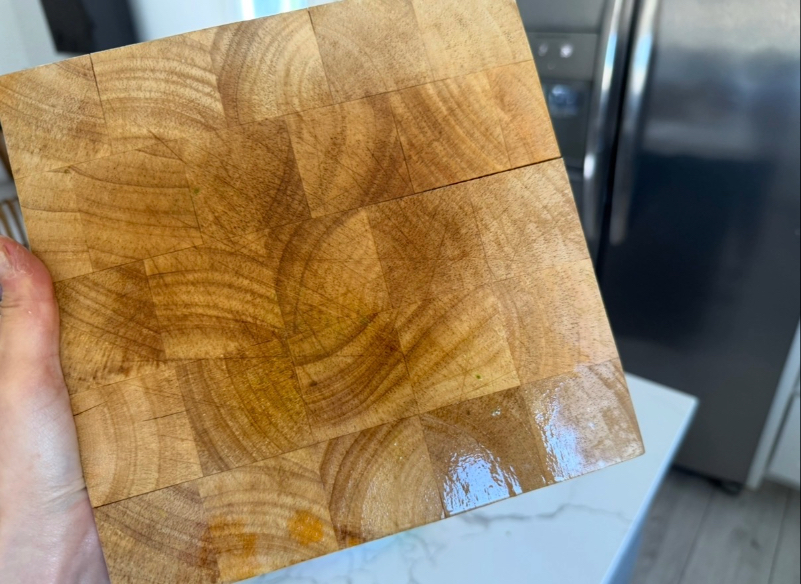
I tried Caraway Prep & Serve Butcher Block
Caraway’s Butcher Block is the most high-end truly non-toxic wood cutting board I’ve tried and one of the only ones on the market that’s been third-party tested for over 200 types of PFAS and 20+ heavy metals. It’s a versatile single block, dual sided board with a grooved prep side for carving on one side and a dished serve side for presentation on the other, recessed handles and raised edges. It’s made entirely from responsibly sourced, USA-grown edge-grain wood to resist cracking, is naturally antimicrobial and the walnut is particularly soft on knives.
Generally walnut, oak and cherry woods are high in tannins, which are organic compounds found in solid wood that have natural antimicrobial benefits to help kill bacteria on your kitchen cutting board. Caraway uses edge grain hardwood finished with food-safe oil and wax for a naturally clean and smooth surface and needs to be oiled monthly. I love how beautiful, durable and hefty this cutting board is. It’s ideal for chopping large amounts of food and raw meats or creating charcuterie boards. Keep in mind that this is a thick and heavy board that weighs around 5-6 pounds for the 12″ by 12″ and around 8 pounds for the 12″ by 17″ board. It’s also offered in maple but I prefer walnut for a wooden cutting board. I’m so impressed by how well this has held up but it IS quite spendy.
Type: Walnut or Maple wood (single block) Price: $135 for 12″ x 12″ in Maple | $295 for set
Shopuse OBL for 15% off
I tried Ziruma Acacia Cutting Board Set (budget!)
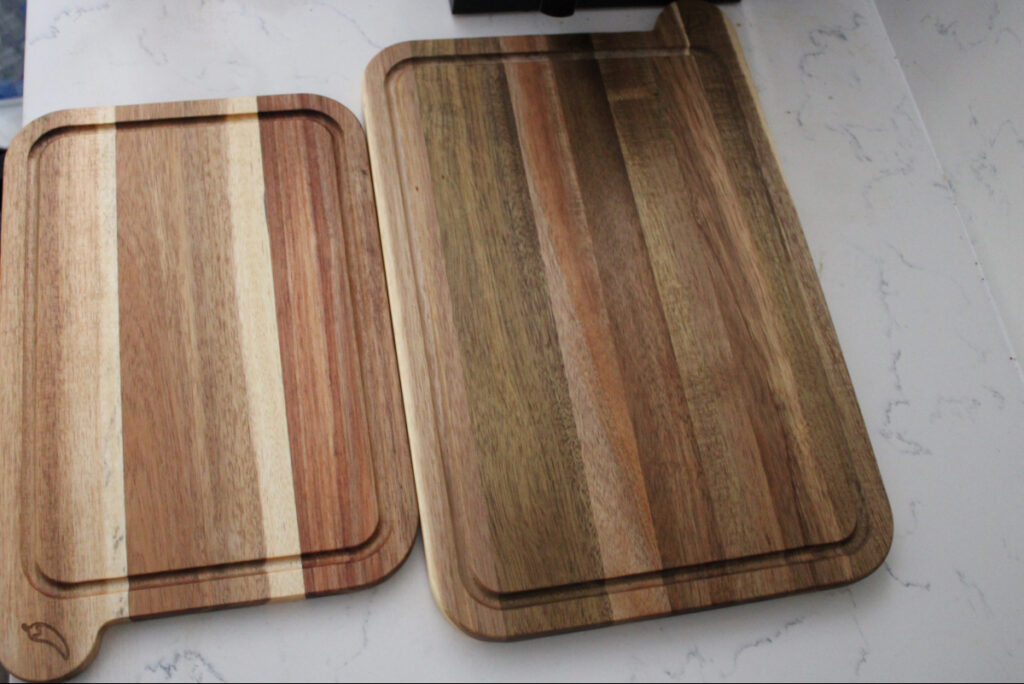
Ziruma’s Acacia Cutting Board Set offers the best value for money for a wooden cutting board free of toxins, mineral oils and microplastics. It’s made of 100% FSC-certified acacia wood without any plastic, glue, BPA, forever chemicals or petroleum based mineral-oil finishes. Instead it uses a blend of beeswax, flaxseed oil, and lemon oil and acacia is known for being durable and moisture resistant. This is hefty but isn’t overly heavy and has a juice groove, but no handle. I like that each board has a meat or veggie/fruit symbol carved in so I know which board is for which without having to think about it. Overall, a great everyday non-toxic cutting board if you ned something affordable. I’ll continue to update this post with any new findings on how it holds up.
Type: Acacia wood Price: $39 for set of 3 boards (Large (16” x 11”), Medium (13” x 9”), Small (10” x 7”))
Shop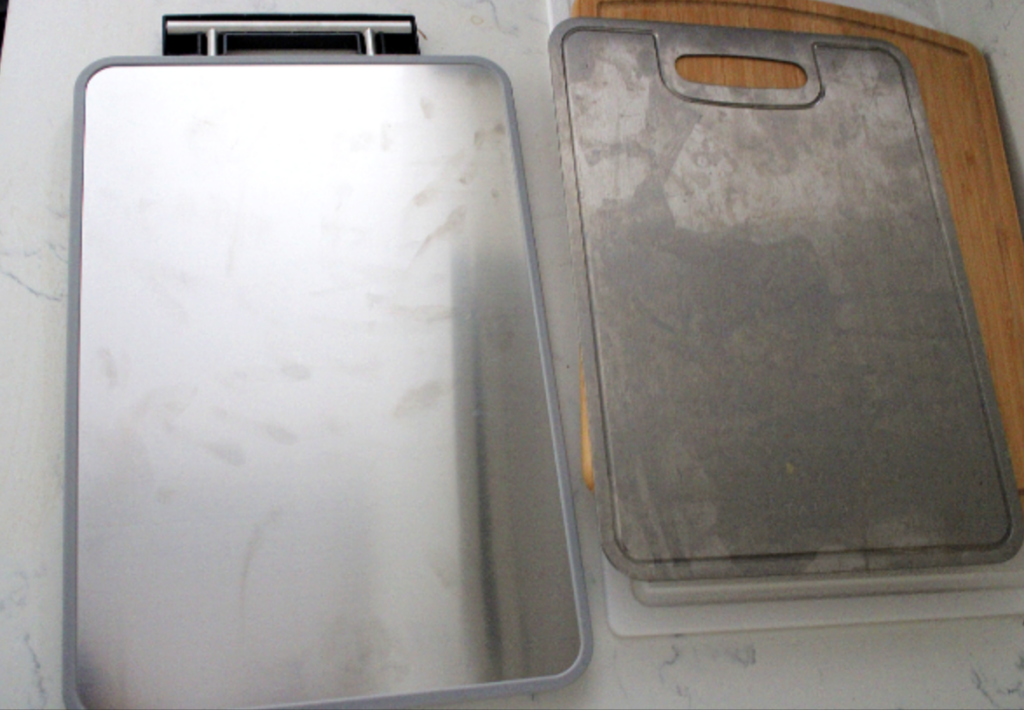
I Tried Taima Certified Pure Titanium Cutting Board V2 (third-party lab tested)
Taima Titanium is hands down the safest, sturdiest and most antibacterial cutting board that’s dishwasher safe on the market. It’s the first and only certified, FDA-compliant 99.89% pure titanium cutting board with self sterilizing Tito-Nano surface technology. Taima uses Grade 1 titanium that’s medical grade and FDA compliant to be food-contact safe. There’s NO microplastics, lingering smells, or staining. I find this to be a great cutting board for meat, and there’s a juice groove to catch liquids. It gives off more of a high-pitched clacky sound if you’re doing some intense chopping, but bearable. It’s super thin, lightweight, easy to handle and doesn’t take up much space. I find it does eventually show knife marks and isn’t immune to them but aren’t as noticeable as on wood.
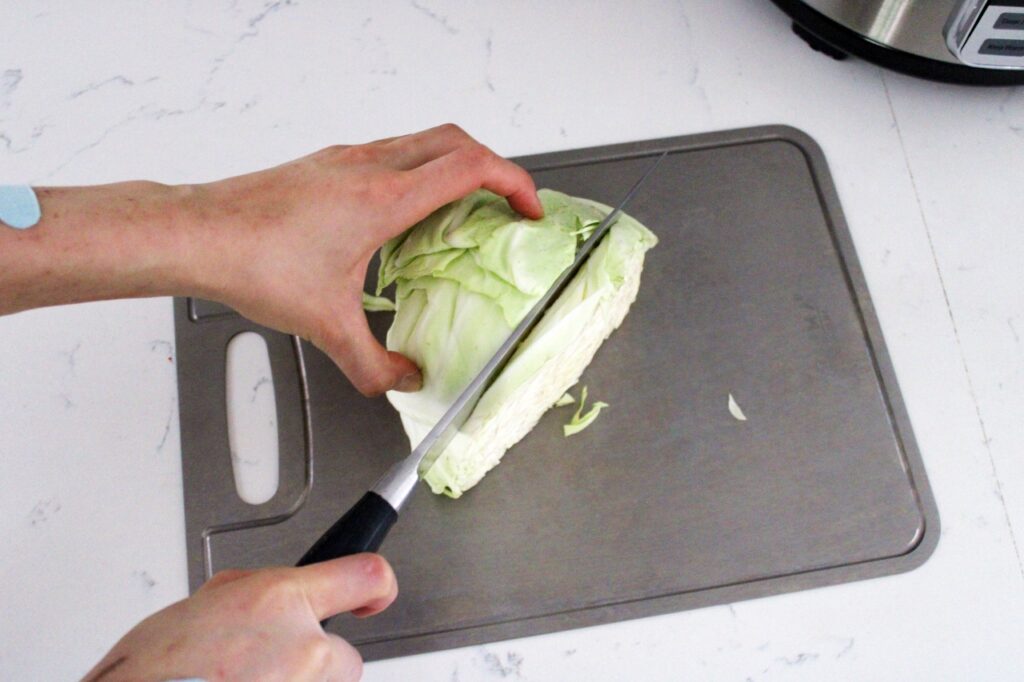
Type: Grade 1 Titanium Price: $99 for Small 10″ x 8″ | $299 for set | Dishwasher safe
I tried Hilmon Double Sided Titanium and Wood Cutting Board (budget!)
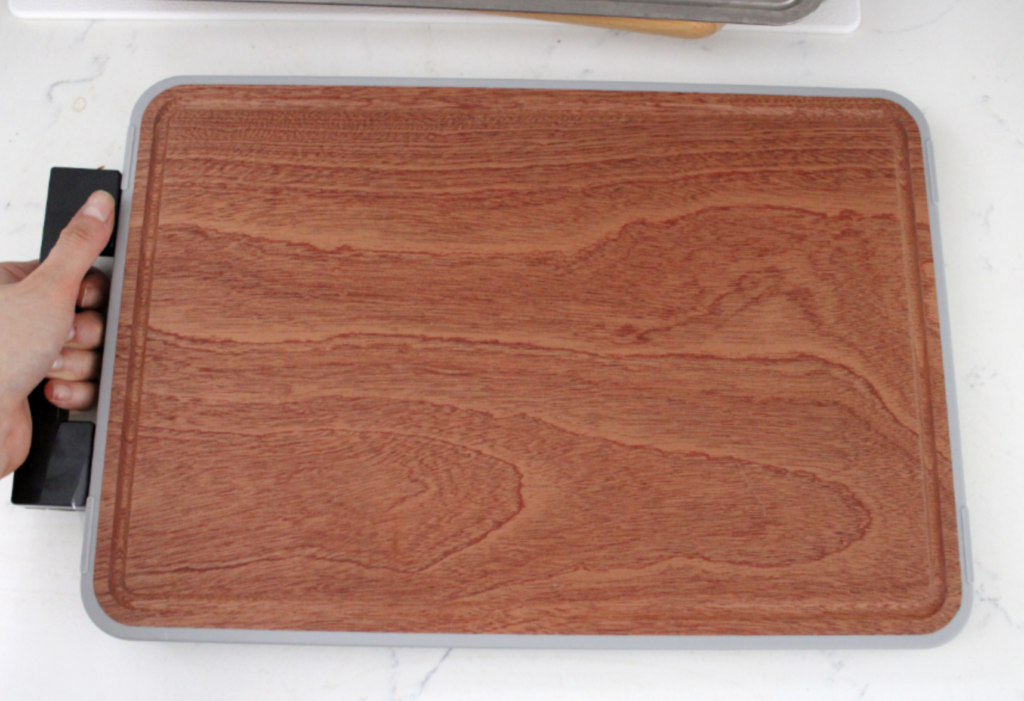
Hilmon is the most versatile cutting board I’ve tried that offers the best of both worlds with titanium on one side and wood on the other. One side is made of food-grade 99.9% pure titanium and the other decade-aged African ebony wood. You can use one board for both raw and cooked food instead of designating separate boards for each. The brushed titanium surface staying grippy and stable on the counter and the ebony side handles knives well. Overall, a very sturdy board. My main qualm is Hilmon is an Amazon only brand, so you should take their marketing with a grain of salt as it’s unverified. This is probably not Grade 1 Titanium as it looks nothing like my Taima Titanium cutting board. The main downside is it takes up a lot of space and isn’t dishwasher safe.
Type: African ebony wood and pure titanium Price: $29.99 Dimensions: 15 in x 10 in x 0.8 in
Shop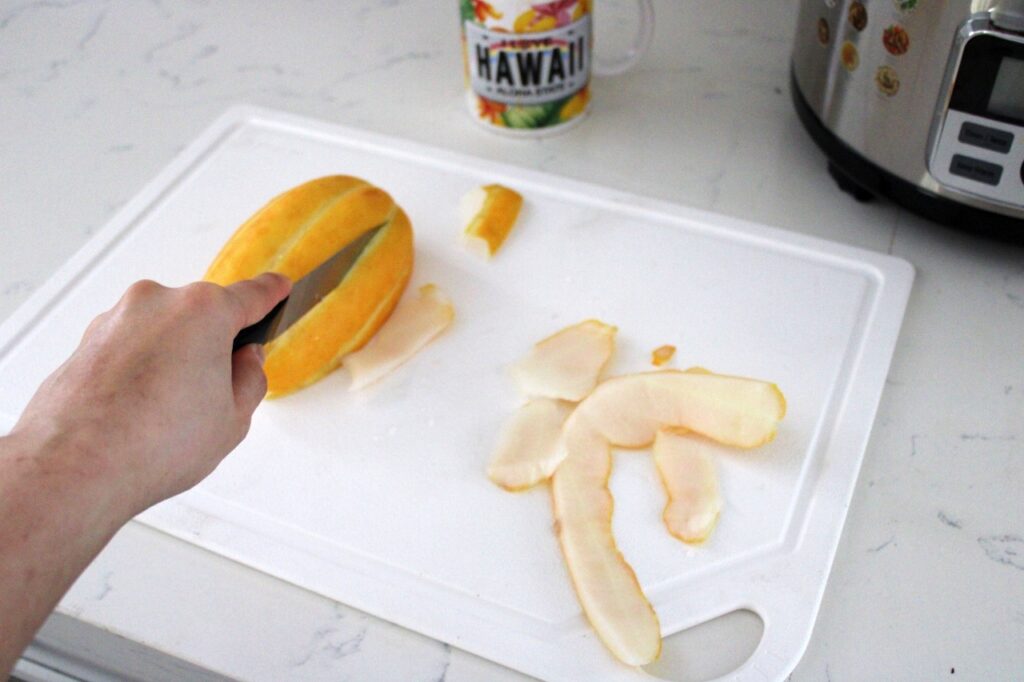
I Tried Material The MK Free Board
Material Kitchen’s The MK Free Board is made from 100% USDA Certified Biobased Content including a plant-based biocomposite of clay minerals and biodegradable biopolymers. There’s no fossil fuels, PFAS or food allergens and it’s made in Finland. I find it to be highly resistant to knife scratches and staining and love that it’s dishwasher safe. The MK Free Board has a textured surface and is very lightweight and easy to handle. Love that it requires no maintenance and will never crack or mold. For people who want to avoid plastic but find the maintenance and price tag of truly non-toxic cutting boards unrealistic, this is a good in between option. Not perfect, but better.
Type: Composite Price: $52 Dimensions: 17.5″ x 12″ x .25″ | Dishwasher safe
Shop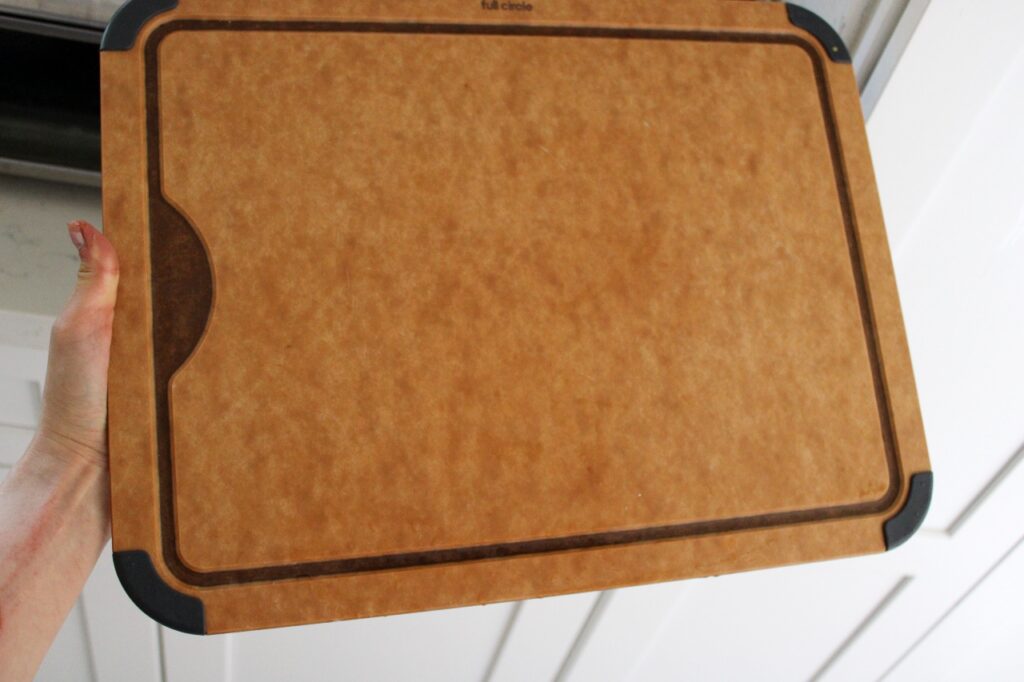
I Tried Full Circle Home Better Than Wood Cutting Board
Full Circle’s Better Than Wood Cutting Board is made of a wood composite combined with a food-safe, fortifying resin. This is a zero-maintenance, budget-friendly option that’s dishwasher safe, naturally antibacterial, and built to last. The main advantage of these boards, even though they’re not the most non-toxic option, is they’re more durable than traditional wooden cutting boards, won’t splinter, crack, or mold, and don’t require oiling or maintenance. Mine looks exactly the same as the day I got it! Full Circle’s is also very modern looking and on the thinner side, so very lightweight. This is probably my most stylish cutting board and It’s completely resistant to staining and knife scratches – so affordable too.
Type: Composite Price: $19.99 for small | $105 for set | Dishwasher safe
Dimensions: Small 8” x 10” Medium 11” x 14” Large 13” x 17”
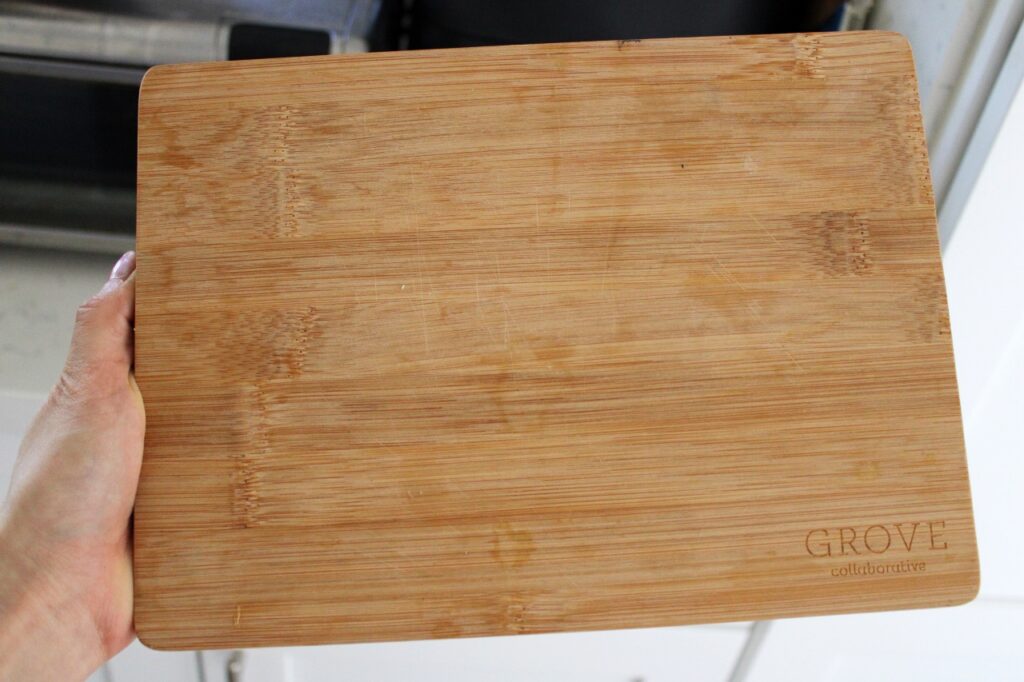
I Tried Grove Co Bamboo Prep Board
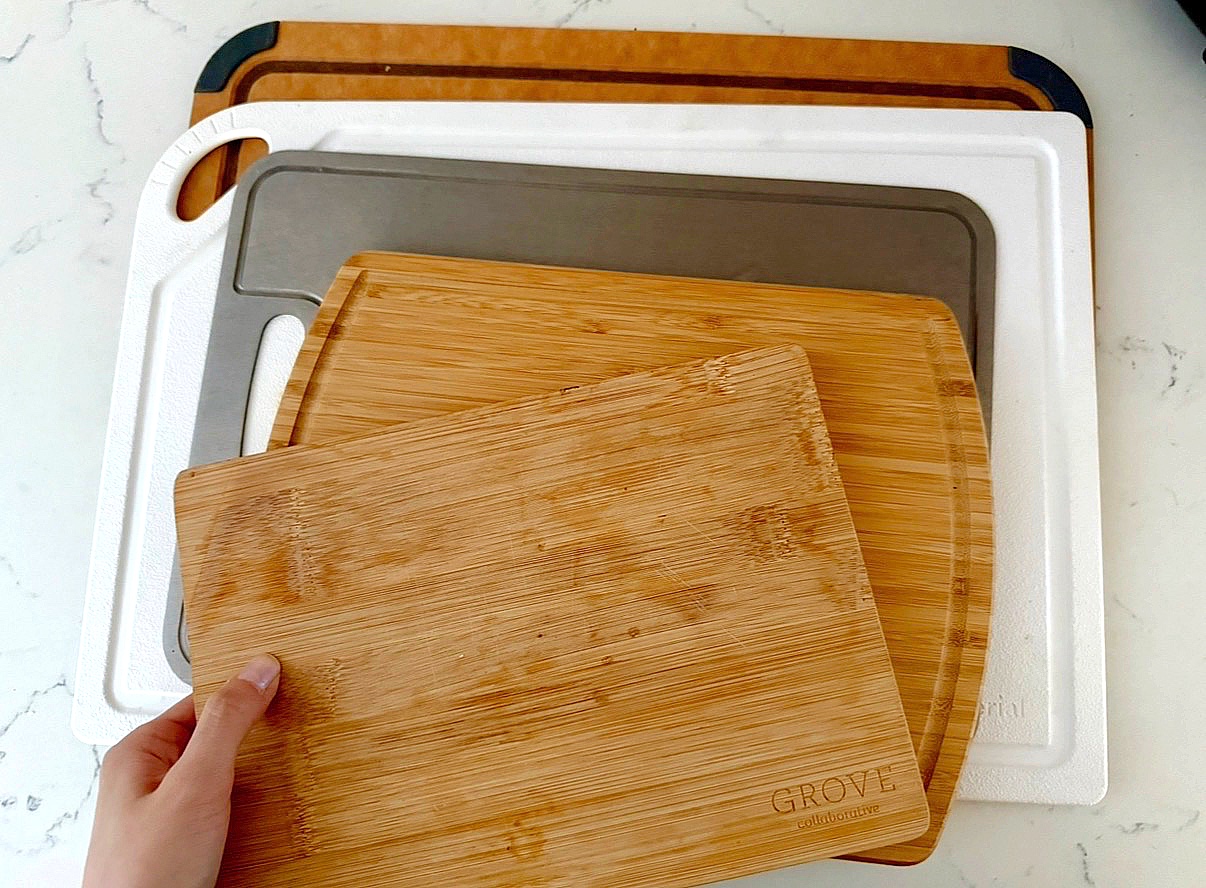
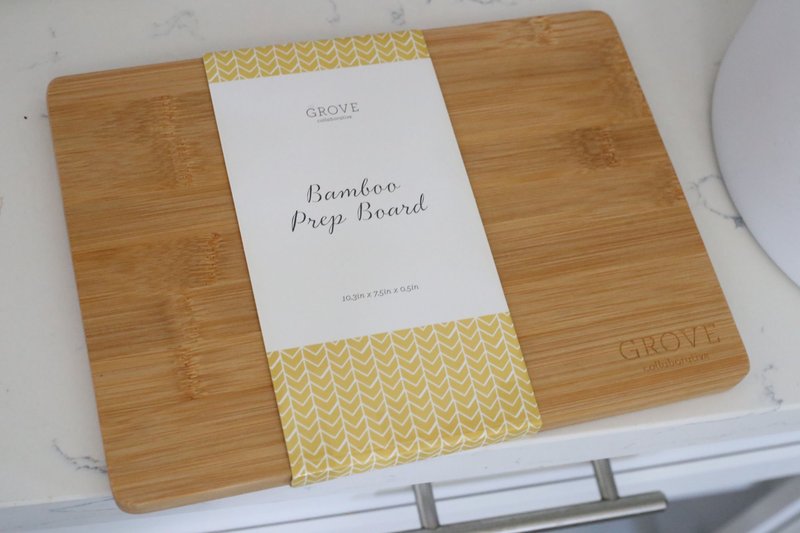
Grove Co’s prep board is under $15 and is a small board for chopping small amounts of food. This looks beautiful and high-end at first glance, but keep in mind it isn’t heavy duty. So far this has been great for chopping up small amounts of fruits, veggies and herbs. I do not use raw meats on this. I’ve been making sure to oil this so it lasts longer, but so far so good. I will update this post if and when the board cracks. Personally, bamboo cutting boards would be my last choice, because they break apart quickly and are prone to mold growth, and almost always contain glues and adhesives. They’re very conveniently lightweight though.
Type: Bamboo Price: $13.99 Dimensions: 10.3in x 7.5in x 0.55in
Shop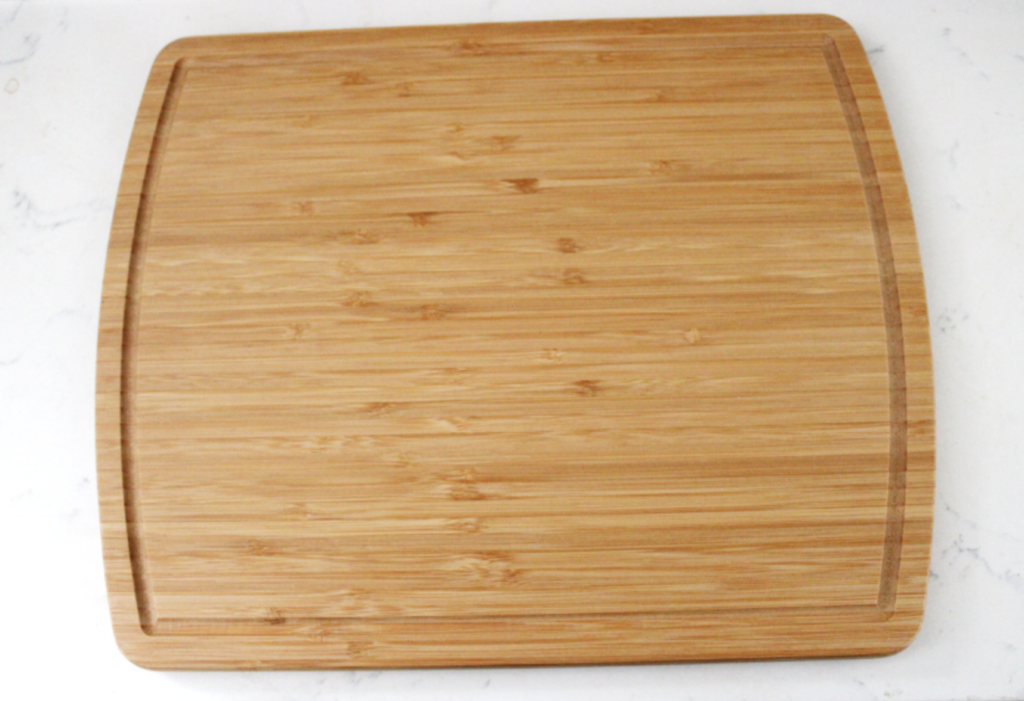
I tried Greener Home Organic Bamboo Cutting Board
I bought Greener Home’s 3-pack of organic bamboo cutting boards for a ridiculously cheap price. This feels a little more durable and heavier duty than Grove Collaborative’s and has a juice groove all around. The surface layer is pressed without synthetic bonding agents touching food, but there’s still an adhesive used to hold the three bamboo layers together internally. So it’s not fully glue-free, but is glue-free at the cutting surface. As far as the organic, there is no certification for it so take that with a grain of salt.
Type: Organic Bamboo
Shop
Caring for Wood or Bamboo
Oil once a month (or whenever it looks dry) to stop the wood from cracking or warping, and stick to gentle, food-safe ingredients when you clean it.
✅ Use
- Fractionated coconut oil — plant-based, won’t go rancid.
- Organic (raw) linseed oil — pure and unboiled, food-safe.
- Beeswax / board butter — seals the wood and adds water resistance.
- Carnauba wax — plant-based, adds hardness and shine.
- Baking soda — scrubs out stains and odors without harsh chemicals.
- Lemon + salt — natural deodorizer and light sanitizer.
❌ Avoid
- Mineral oil — made from petroleum.
- Walnut oil — risky if anyone has a nut allergy.
- Boiled linseed oil — contains metallic driers, not food-safe.
- Tung oil — often blended with solvents not meant for food contact.
- Vegetable oils (olive, canola, etc.) — turn rancid and sticky over time.
- Varnish / polyurethane — traps moisture and isn’t food-safe.
- Rubbing alcohol — too harsh, dries out and cracks wood.
- Bleach — soaks into the grain and leaves residue behind.
Cutting Board Care and Safety FAQ
The most common questions on keeping your cutting board clean, sanitary, and lasting as long as possible.
When should I replace my cutting board?
Once a board has deep knife grooves, cracks, chips, warping, or a stain and odor that won’t clean out, it’s time to replace it — those damaged spots trap moisture and bacteria that can’t be fully sanitized. There’s no fixed expiration date, but if it can no longer be cleaned effectively or it’s visibly warped or cracked, it’s done. (For solid wood, deep grooves can usually be sanded out instead of tossing the whole board — see below.)
How do I sanitize my cutting board?
For non-porous boards (plastic, glass, composite), mix 1 tablespoon of unscented liquid chlorine bleach per gallon of water, let it sit on the surface for 1–2 minutes, then rinse and air dry — a 3% hydrogen peroxide soak for a couple of minutes works as a bleach-free alternative. For wood or bamboo, skip the bleach soak — spray on undiluted white vinegar or 3% hydrogen peroxide, let it sit a few minutes, then rinse and dry thoroughly before re-oiling.
Can I put my wood cutting board in the dishwasher?
No — solid wood and bamboo boards should always be hand-washed. The dishwasher’s prolonged heat and water exposure makes wood swell, warp, and crack, and for bamboo or wood composite boards (built from glued layers), it breaks down the adhesive and causes the layers to separate.
Are wood cutting boards really more sanitary than plastic?
This traces back to research from UC Davis, which found bacteria died off quickly on wood but survived and multiplied on plastic, especially once the plastic had knife scarring. That said, it comes with nuance: results depend on the wood species (fine-grained hardwoods like maple perform best), and most food-safety experts today recommend plastic for raw meat — since it can be sanitized in the dishwasher — and wood for produce or bread, rather than calling one universally better.
How often should I oil my wood cutting board, and what does it actually do?
Oil it about once a month, or whenever the wood starts to look dry or dull, using food-grade mineral oil or a mineral-oil-and-beeswax conditioner — never a regular cooking oil, which will turn rancid and sticky. Oiling is purely protective: it seals the wood’s pores against water so it doesn’t crack or warp. It doesn’t kill bacteria or replace sanitizing.
Do I really need separate boards for raw meat and produce?
Yes — this is a standing FDA and USDA recommendation. Raw meat, poultry, and seafood can carry pathogens like Salmonella, Campylobacter, and E. coli that transfer onto anything cut afterward, including produce that’s often eaten raw. If you only have one board, prep produce first, then wash the board thoroughly with hot soapy water before and after cutting raw protein.
How do I get rid of odors or stains on a wood or bamboo board?
Scrub in a paste of 3 parts baking soda to 1 part water, then rinse — or use coarse salt with lemon juice, scrubbed in and left for a few minutes before rinsing. Undiluted white vinegar wiped on and left to sit also freshens the board while sanitizing. Always dry the board fully afterward and re-oil once it’s dry.
Can I sand down deep knife grooves instead of replacing the board?
Yes, for solid wood boards this is a legitimate, low-cost fix. Sand with progressively finer grits — starting around 80-grit to remove the grooves, then working up through 120, 150, and 220 — lightly dampen to raise the grain, sand once more, then re-oil. It’s not an option for boards with a factory finish that can’t be re-oiled, or ones that are badly warped or cracked.
Is it safe to cut directly on glass, stone, or marble?
It’s food-safe in the sense that these surfaces are non-porous and easy to sanitize, but they’re hard on your knives — the rigid surface dulls (and can even chip) blade edges quickly, and the slick surface makes for less control and a louder chopping sound. Glass boards also carry a shatter risk if dropped. Most experts recommend these for occasional light tasks rather than as a primary everyday board.
How long do titanium cutting boards last, and are there any downsides?
Titanium boards are very durable and non-porous, resisting odor and bacteria buildup for the long haul structurally. The real downside is that the hard metal surface dulls knives noticeably faster than wood, bamboo, or plastic — second only to glass in blade wear — and the smooth, thin build can slide around and produce a metallic clatter while you cook.
Related posts:
Best Flameless Candles I've Tried (real wax options)
Best Organic Bath Towels I've Tried

The Best Non Toxic Pajamas I Actually Wear (Organic Cotton options)
Best Non Toxic Mattress (7 Years of Testing)

I tried Keap Candles (plus Interview with Founder Henry Doull)
Best Non Toxic Laundry Detergent I’ve Tried

Andrea is a clean beauty expert born in Los Angeles, California with 10 years of experience in natural skincare and organic living. She writes for Organic Beauty Lover using her expertise to guide readers in choosing the best natural products. Andrea graduated from the University of Southern California’s Marshall School of Business and has worked at NBC Universal, Four Seasons Hotels and Resorts, and The Travel Corporation while freelancing for small businesses. As a multi-citizen, she considers herself a global citizen of the world, belonging nowhere and everywhere, and has lived across Europe, US, Asia and South America. She currently resides in Orange County since 2026 and loves yoga, coffee and exploring the desert. Connect with her @organicbeautylover.
JOIN OUR NEWSLETTER! No spam ever.









Leave a Reply