
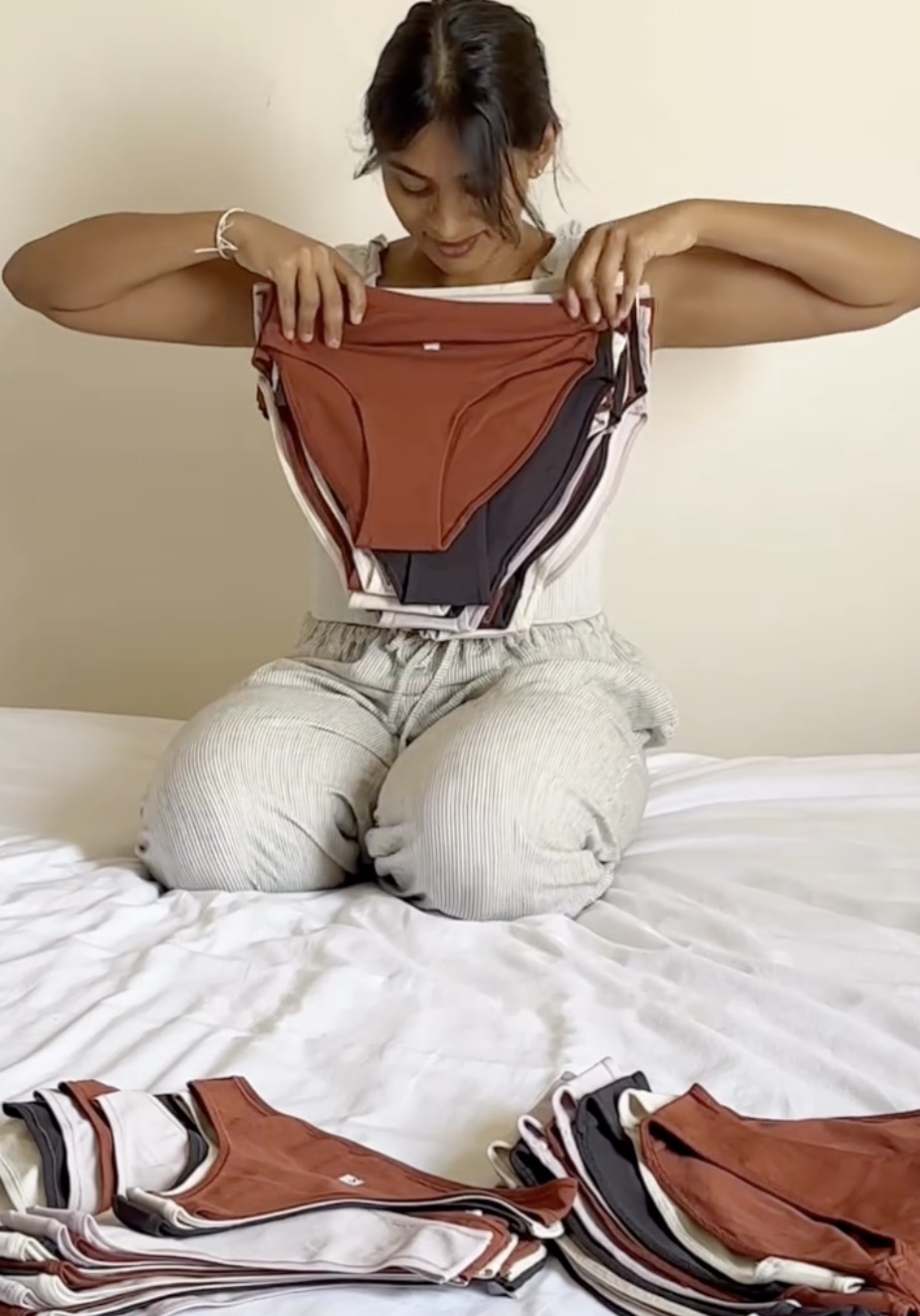
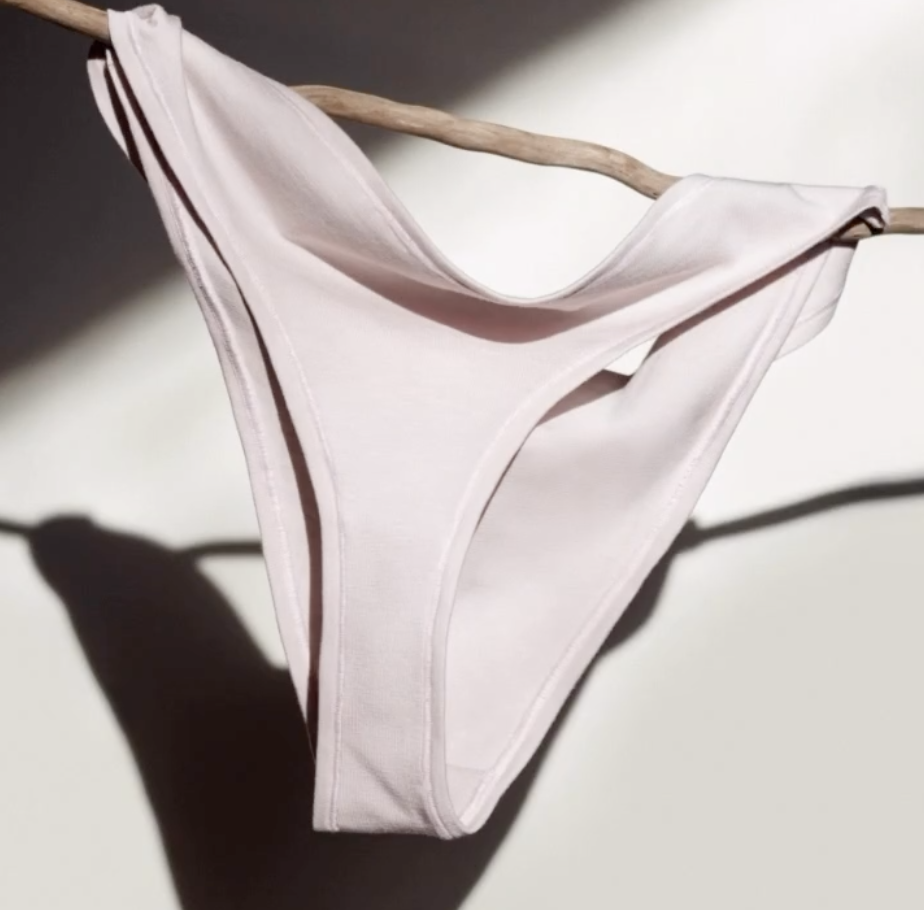
I’m so excited to bring you into the world of sustainable fashion, and specifically non-toxic underwear. It’s a corner of clean living that doesn’t get nearly enough attention. We read the labels on our skincare and our food, but the pieces we wear closest to our skin (and our coochies!), every single day, rarely get the same scrutiny. I sat down with Kiseau‘s founder, Nethmie Hetti, to talk about what “clean” clothing actually means, why we should be wearing our skincare, what women managing hormonal conditions should know about their clothes, and how she’s building a brand rooted in humanness in an industry obsessed with the bottom line.
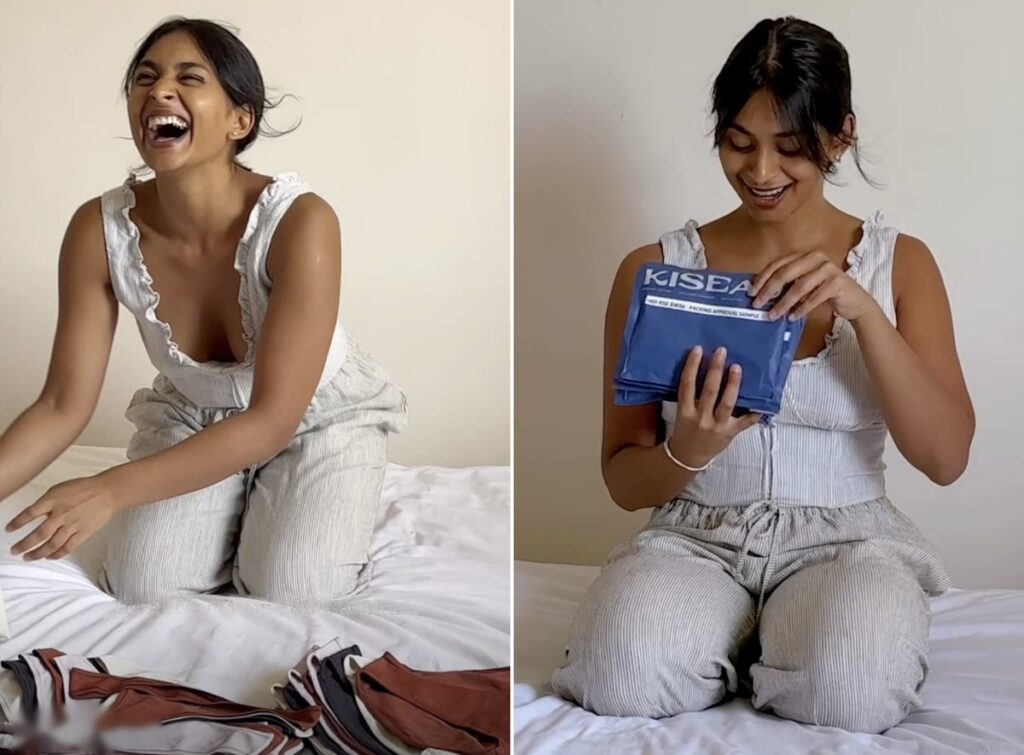
1. Tell us about your path and what led to creating Kiseau.
It started with learning about all of the toxic textile chemicals we’re exposed to as women, and how little transparency there is around the materials that come into contact with our skin.
About five years ago, I was getting into yoga and its underlying principles. Yoga is such an intentional, grounding practice, and I was disheartened to learn that so much yoga clothing is made from plastics and finishes associated with endocrine disruption and other health concerns. I went down a rabbit hole questioning the contradiction between such a sacred, inward practice and the industrial materials we were wearing to participate in it.
At the same time, I was working as an art director and realizing I no longer felt connected to my work. I wanted to put my creativity toward something with more purpose, so I began spending all of my free time researching textiles and developing products.
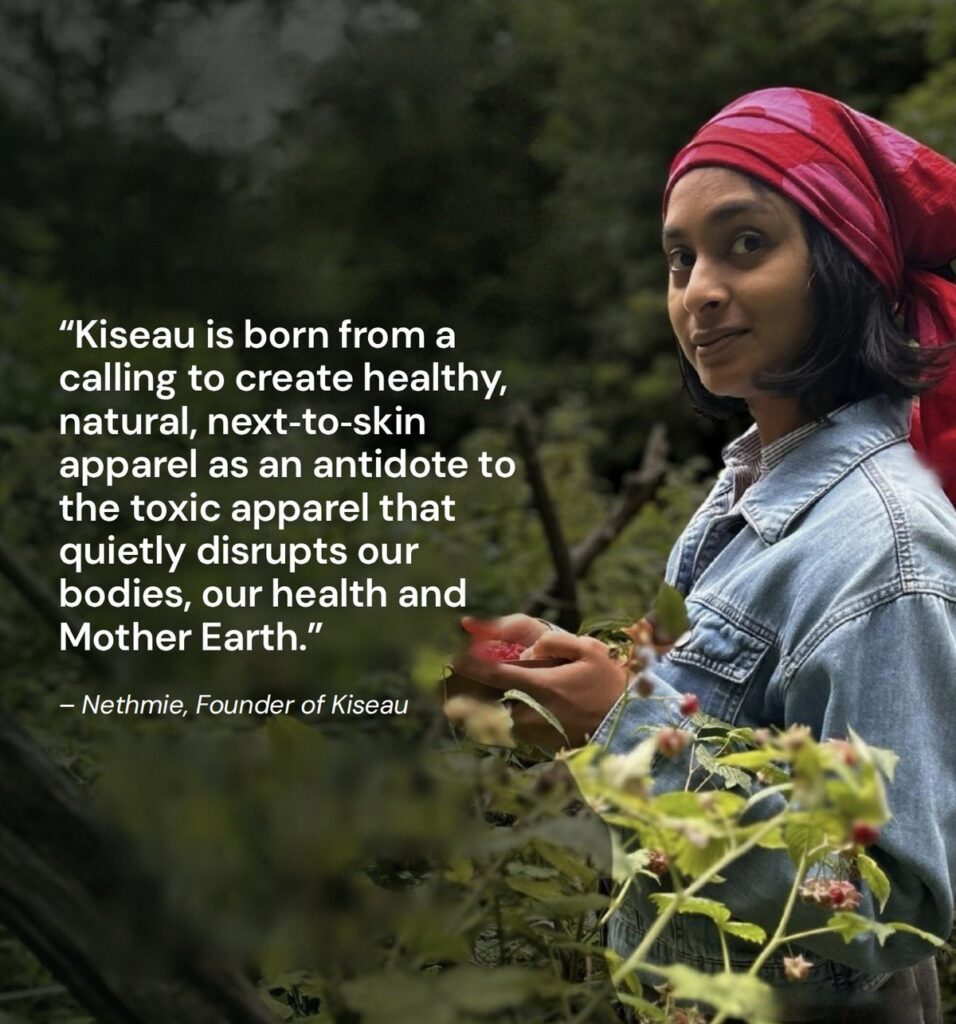
I originally thought I would build an athleisure line, but the deeper I got into it, the more I realized underwear was the place to begin. It sits directly against some of our most intimate skin, so it felt like the most meaningful first layer to rethink.
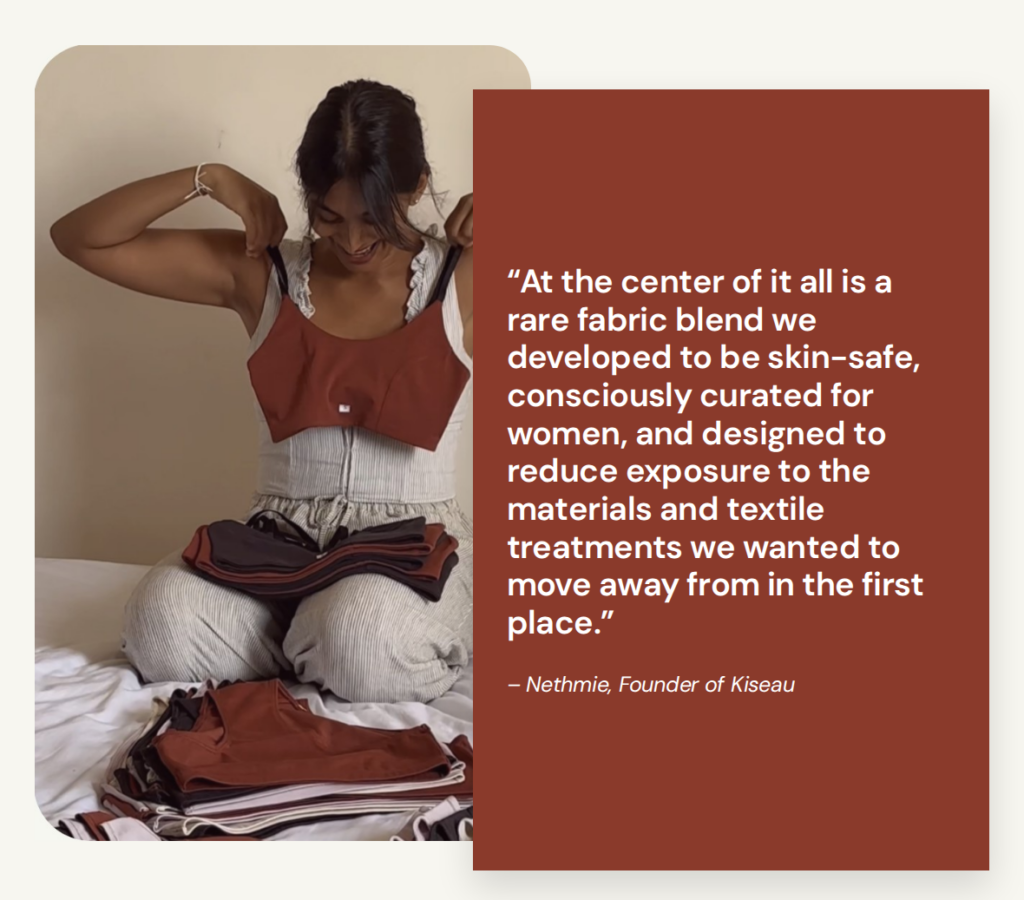
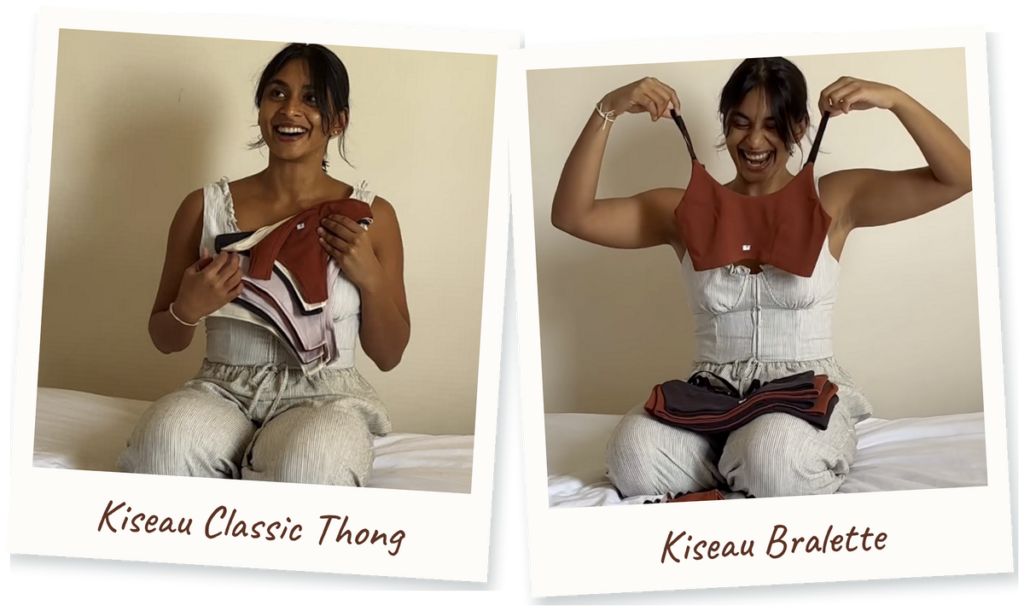
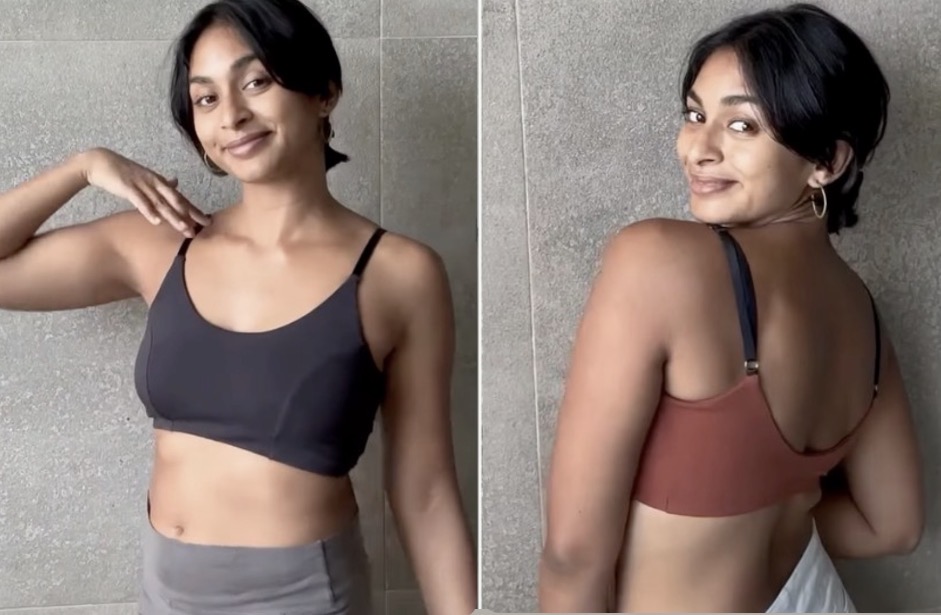
I quit my job at the end of 2024 and committed to building Kiseau. Now, almost two years later, we’ve grown into an underwear brand that women are genuinely loving, and we’ve started expanding into pieces like our yoga bralette. At the center of it all is a rare fabric blend we developed to be skin-safe, consciously curated for women, and designed to reduce exposure to the materials and textile treatments we wanted to move away from in the first place.
2. Walk us through what clean clothing production actually is (and do you feel like brands/consumers are getting it wrong)?
Clean clothing production has many, many nuances, and I think that’s where both brands and consumers can get confused. It isn’t enough to choose one “natural” fiber or have one certification. You have to look at the entire ecosystem of the garment.
It starts with the fiber itself: what it’s made from, where it comes from and how it’s processed. Then you have the fabric mill, the dyeing, the finishing and all of the treatments added along the way. Are there AZO dyes, optical brighteners, bleaches, PFAS or harsh softeners being used?
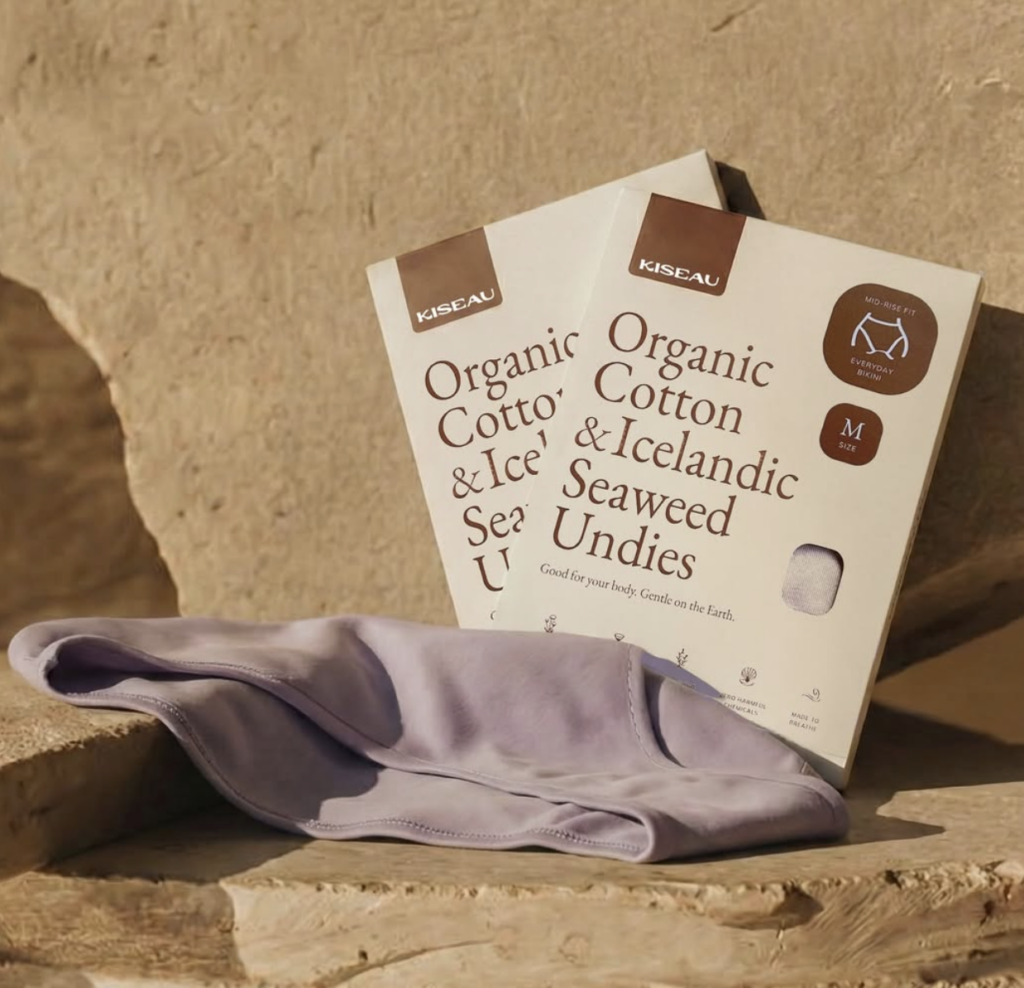
For us, the goal is to avoid harsh chemical treatments wherever possible. We use OEKO-TEX dyes and a gentle enzyme wash to soften our fabric rather than relying on conventional industrial softeners to create that artificial buttery softness. We also look closely at the traceability of not just the main fabric, but also the thread, elastics, labels and trims.
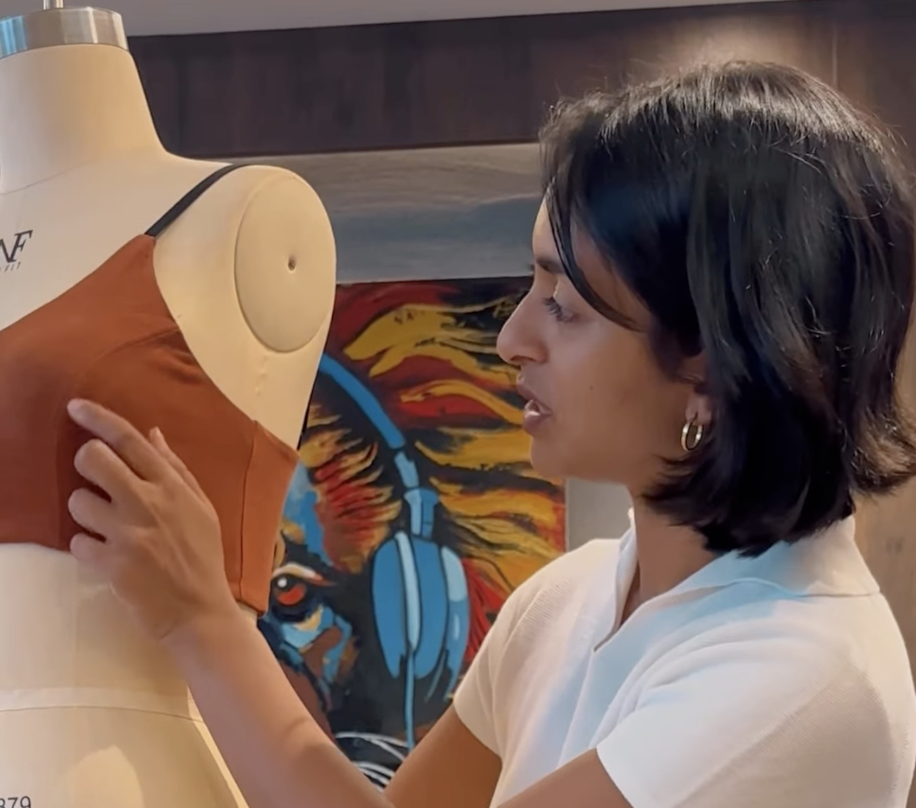
Certification is another layer people don’t always understand. OEKO-TEX or GOTS can apply to the mill, the fabric or the finished garment, and each level requires separate testing, auditing and licensing. So a smaller brand can be using certified materials and responsible suppliers without necessarily having a certification logo on the final garment.
Clean production is about looking at the garment as a whole system. You can use a GOTS organic cotton, but if it’s dyed, softened, finished and assembled with endocrine disrupting chemicals, it cancels out the positives of using natural in the first place.
“Clean” clothing isn’t one fiber, one label or one certification. It’s the accumulation of hundreds of decisions throughout the supply chain.
I think that’s the biggest misconception. “Clean” clothing isn’t one fiber, one label or one certification. It’s the accumulation of hundreds of decisions throughout the supply chain.
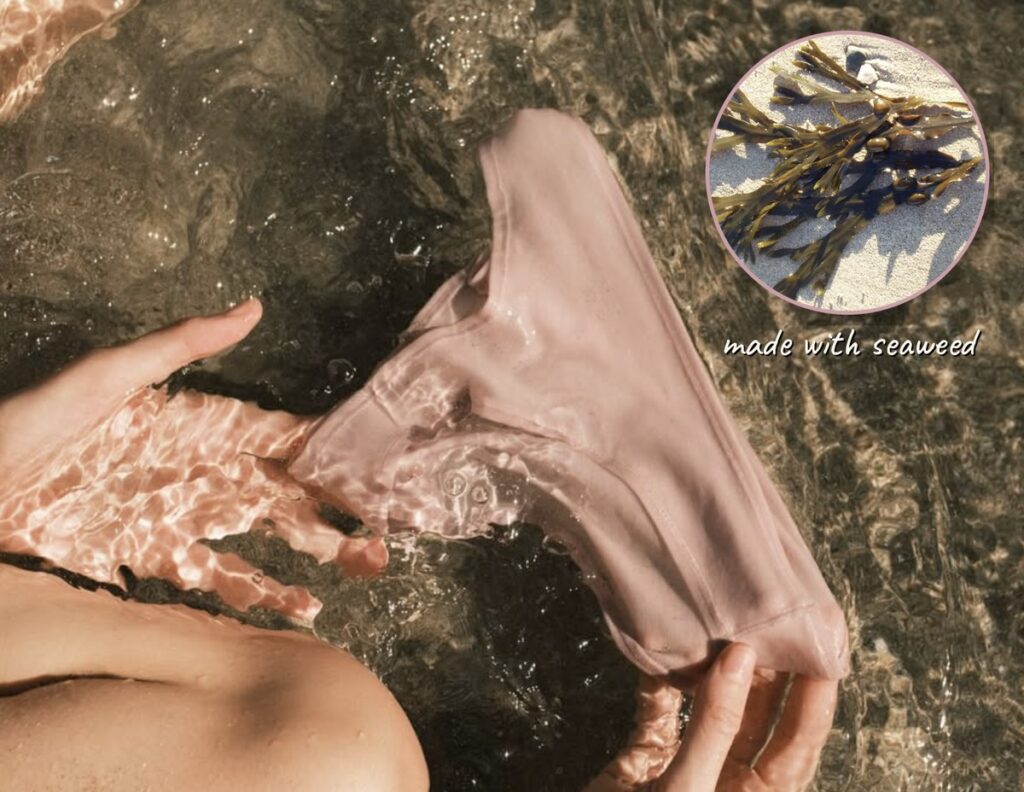
3. I’ve seen seaweed used often in skincare, but rarely in clothing. I love that it brings in an element that comes from, quite literally, the origin of life. Why this ingredient specifically?
There’s a beautiful concept in Ayurveda called Ayurvastra, which looks at fabrics as something that can interact with the body and energy, to soothe and heal. When I started doing R&D, it was important to me that our fabric had substance. I wanted it to have some kind of infusion that could give something back to the skin.
Seaweed made so much sense. I’ve always loved the ocean, marine minerals and skincare, and I’ve always found marine plants really fascinating. When I discovered SeaCell, it just felt like the right fit for an island girl from Sri Lanka to bring something from the ocean into a product where you’d never expect to find it.

When I discovered SeaCell, it just felt like the right fit for an island girl from Sri Lanka to bring something from the ocean into a product where you’d never expect to find it.
That’s where “wear your skincare” comes from. Seaweed naturally carries antioxidants, minerals and vitamins, and SeaCell has also been studied for its antioxidant properties. For us, it felt like a way to take a basic fabric blend and make it much more interesting, especially in the underwear space.
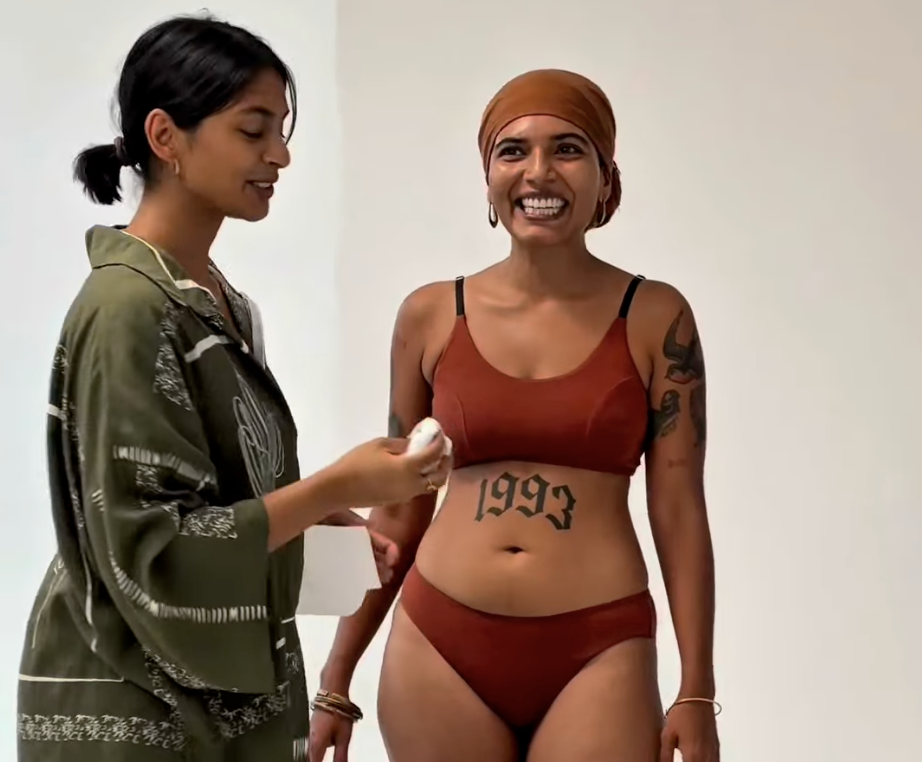
4. The relationship you have with your Sri Lankan artisans/partners is unique to Kiseau. What has it been like reconnecting with your roots in this way and what have you learned along the way?
I lived in Sri Lanka until I was 10, and I remember growing up hearing that so much intimate garment manufacturing happened there. As a kid, obviously, I never really thought much of it.
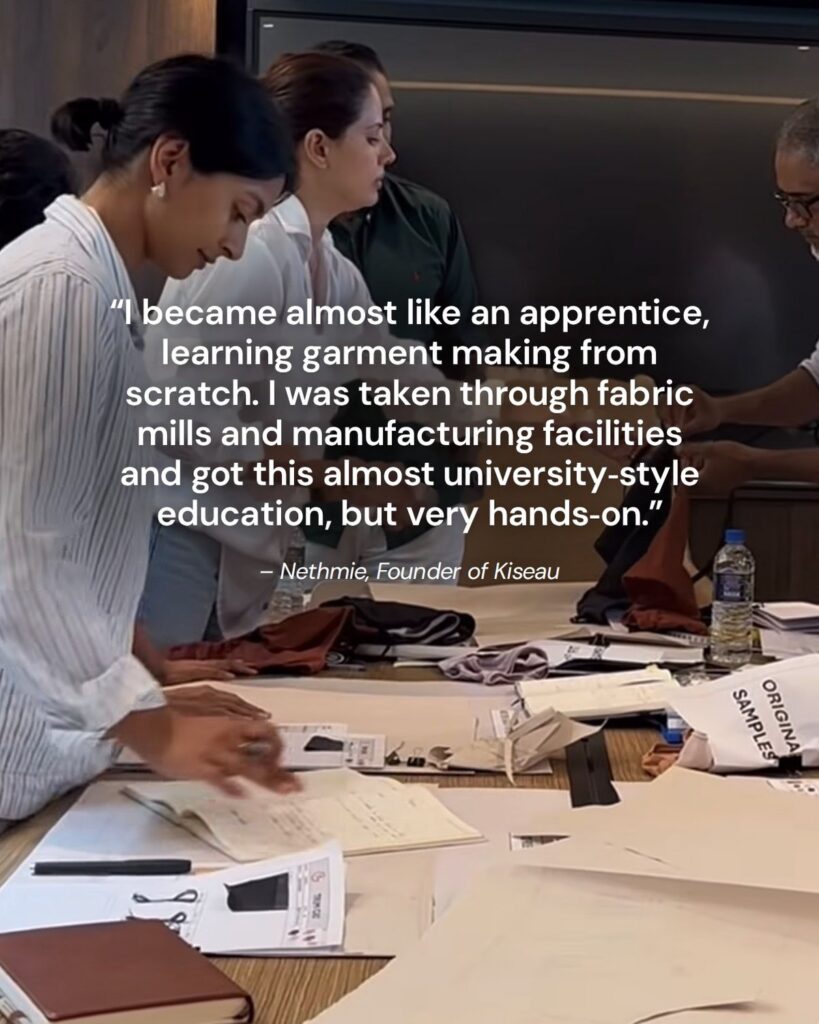
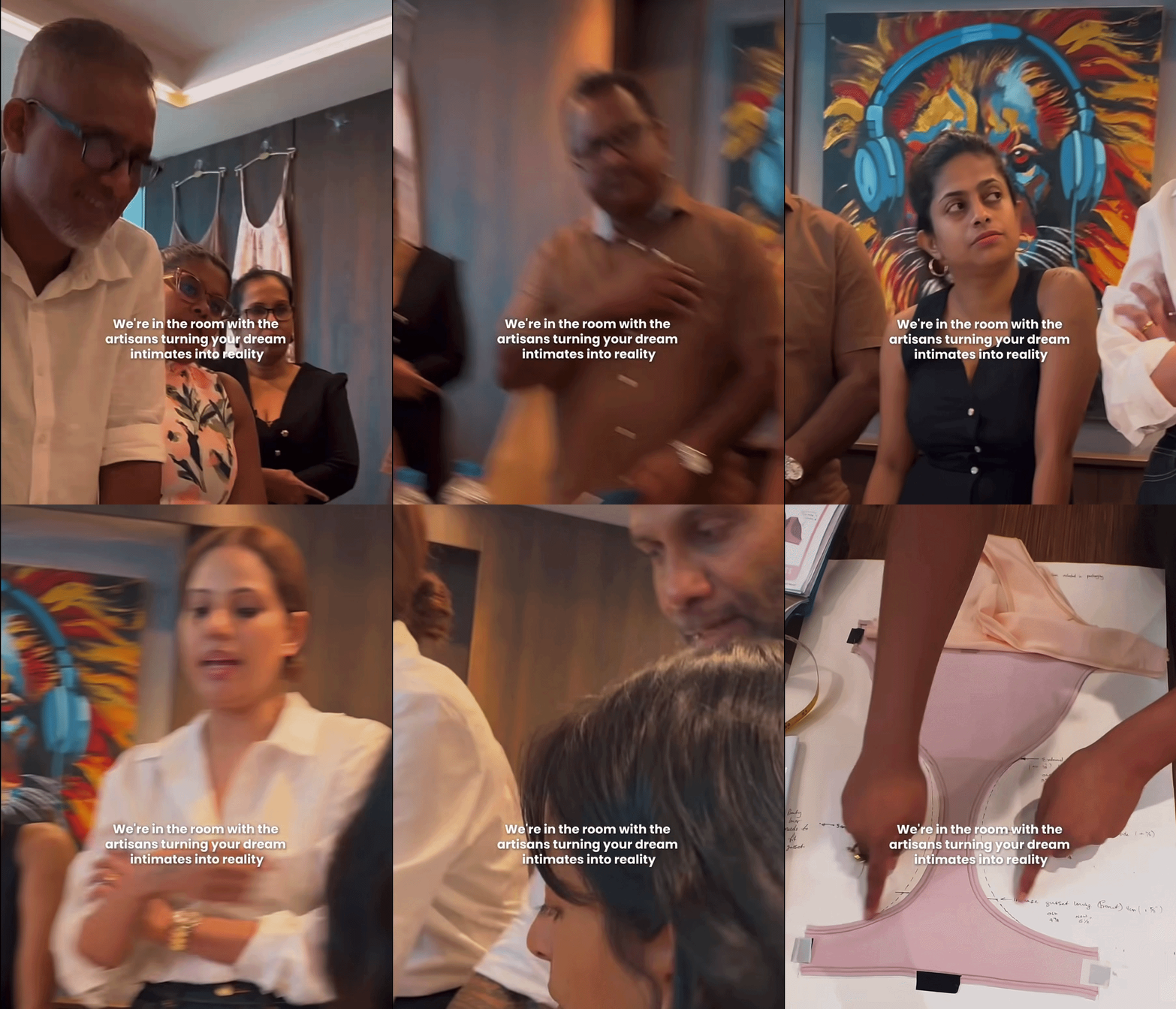
When I started exploring the idea of building an underwear brand, I reached out to family and friends and eventually found a mentor who took me under his wing. I became almost like an apprentice, learning garment making from scratch. I was taken through fabric mills and manufacturing facilities and got this almost university-style education, but very hands-on.
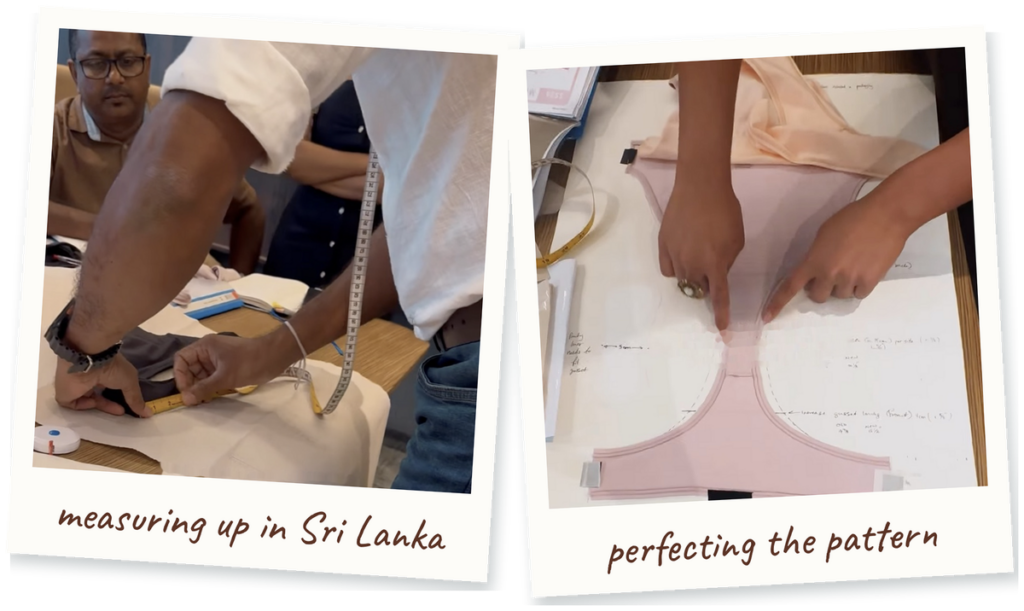
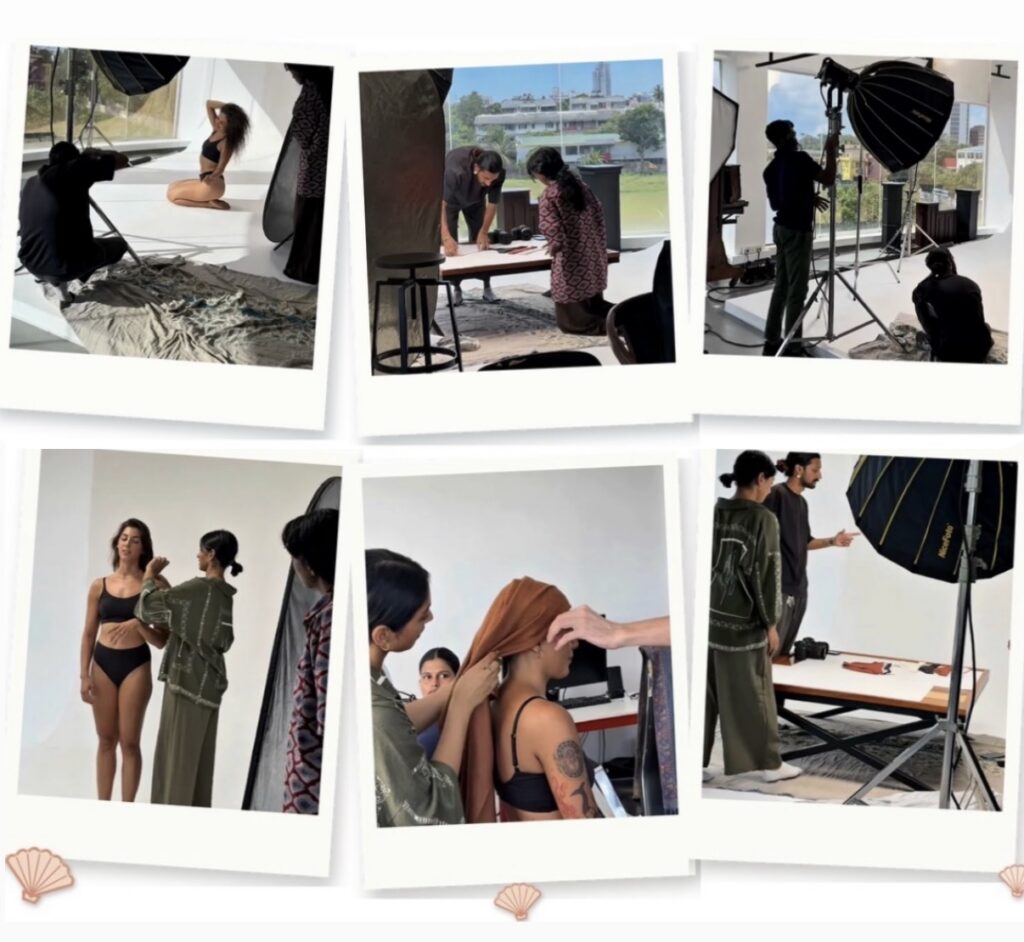
One of the most meaningful parts of working in Sri Lanka has been being able to communicate in our mother tongue. A lot of the artisans and makers aren’t used to working with a local creator or brand owner, especially a woman of the same background building something so connected to an industry that is largely made for export rather than local consumption.
That made the experience feel incredibly rich to me. Being in the studio, speaking directly with everyone and learning from them in person created a kind of connection that I don’t think I would have had otherwise.
5. Natural fabrics feel subversively anti-artificial today. What shifts do you feel need to happen in order for us to return to a healthier relationship with what we wear?
Women are becoming more aware of non-toxic clothing, and more anti-synthetic brands are emerging because there are more and more studies and literature coming out linking unregulated synthetic materials and textile treatments to hormonal disruption, as well as conditions such as PCOS, endometriosis, skin sensitivities and autoimmune issues.
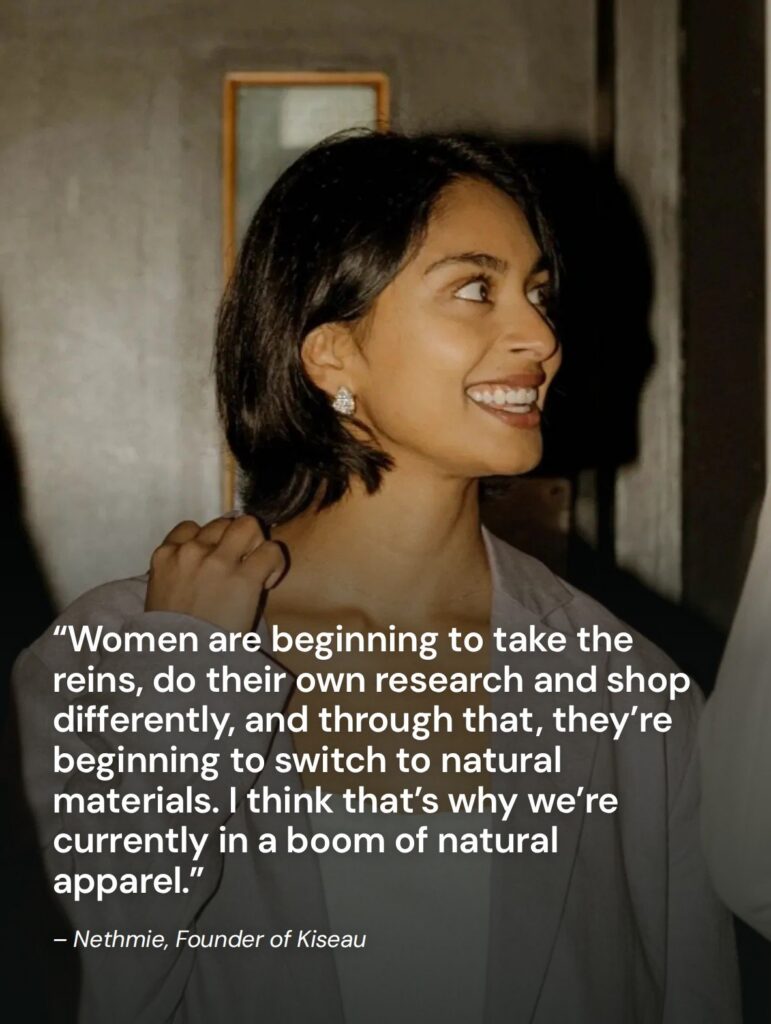
So women are beginning to take the reins, do their own research and shop differently, and through that, they’re beginning to switch to natural materials. I think that’s why we’re currently in a boom of natural apparel. One of the key differentiators natural apparel has against artificial materials is the health and wellness aspect, which, in the West, wasn’t really linked to clothing before.
Though we’re a natural brand, we’re transparent that we still use 7% ROICA V500 in our products, along with conventional elastic in some waistbands. Our goal is to eventually get as close to 100% natural as possible, but this is the reality for most natural brands right now.
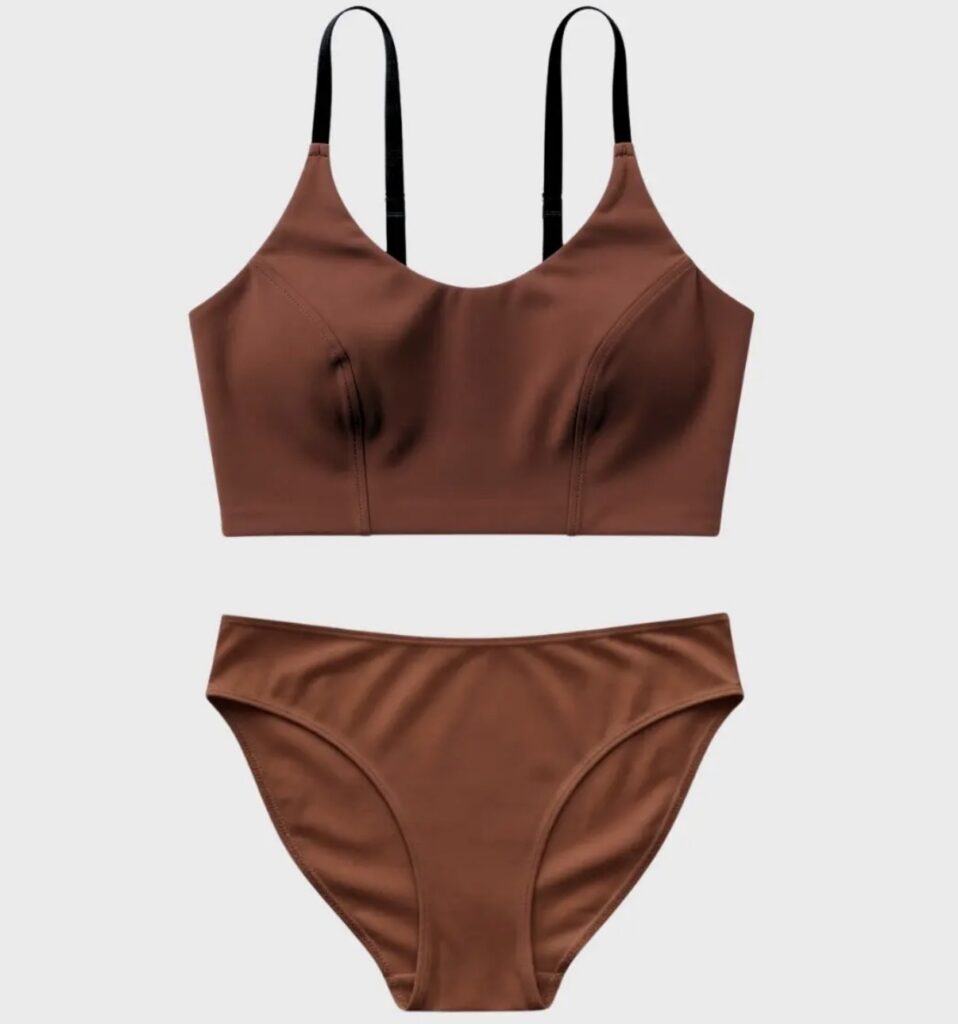
The challenge is that the technology and infrastructure just aren’t fully there yet. A lot of natural or lower-impact alternatives either aren’t commercialized, aren’t widely accessible, or don’t yet perform the way a garment needs them to.
There’s also a cost issue. Natural fabrics are still significantly more expensive than synthetics, which are extremely cheap and easy to produce. That makes natural clothing feel inaccessible to a lot of people.
But it’s also a bit of a cycle. Natural clothing is expensive partly because demand is still relatively low, so plastic continues to dominate. The more people are able to support natural materials, the more demand grows, and hopefully that helps bring costs down over time and makes natural clothing more accessible to the everyday person.
Natural clothing is expensive partly because demand is still relatively low, so plastic continues to dominate. The more people are able to support natural materials, the more demand grows…
6. For someone reading this who may be managing a hormonal condition, what would you want to tell them about their clothes?
There is a lot of clothing out there that really doesn’t belong on our bodies, from the materials it’s made from to the finishes, dyes and everything in between. These are nuances people often don’t think about until they begin experiencing symptoms.
Try to eliminate as many synthetic products as possible, starting with fake leather, fake fur, acrylic-heavy pieces and extremely water-resistant clothing.
A lot of the women who shop with us experience hormonal conditions and autoimmune issues, and they often say they only began detoxing their life and its full ecosystem after getting sick.
The preventative advice I would give is to look through your wardrobe and see how many pieces you have from Shein and other fast-fashion companies. Try to eliminate as many synthetic products as possible, starting with fake leather, fake fur, acrylic-heavy pieces and extremely water-resistant clothing.
There is a lot of clothing out there that really doesn’t belong on our bodies, from the materials it’s made from to the finishes, dyes and everything in between.
It gets especially difficult with winter clothes because so much of it is synthetic, so even I’m still navigating that. It’s really about changing your wardrobe incrementally. No one can start from scratch overnight because it becomes overwhelming. Start with your next-to-skin layers and see if you can get to something like 90% natural materials. That’s a benchmark I use for myself.
In summer, of course, it becomes much easier with linen and other 100% natural materials.
More than anything, I would pay attention to how you actually feel in your clothes. When you really tune into the nuances of what you’re wearing, your body tells you whether something feels safe and comfortable or not. I think developing that awareness is almost a superpower, sometimes even more than just reading the label.
7. What’s something about running Kiseau that’s been harder than you expected?
I used to celebrate the small wins in life, and I still do in my personal life. It’s something I take deep pride in, but for some reason, it’s been much harder to do that when it comes to my own business. There’s always this feeling that you need to one-up yourself.
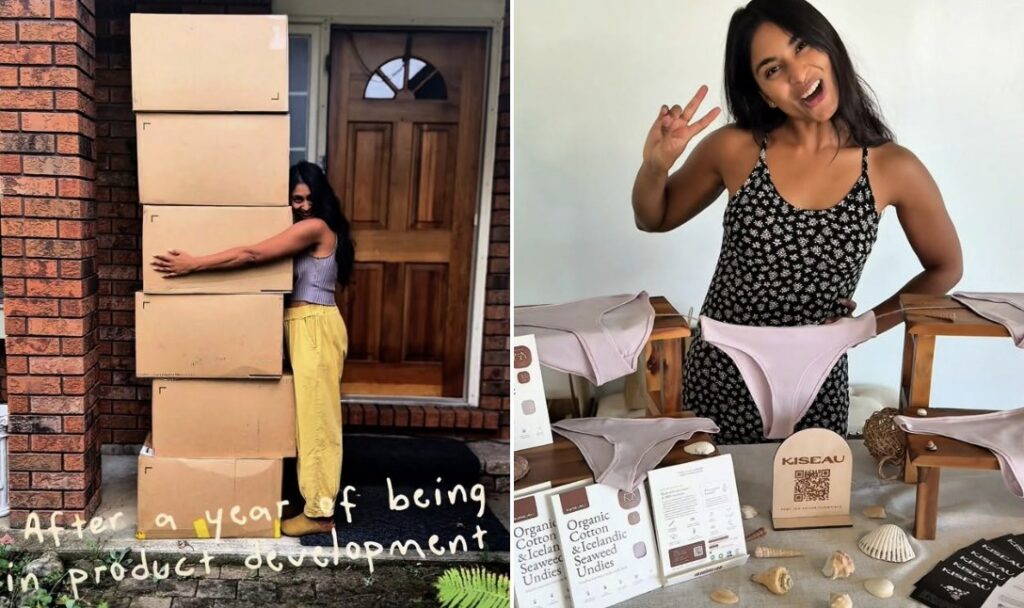
I’ve pretty much surpassed all the goals I had when I first started the business. If you knew me two years ago and showed me where I am now, I would be so freaking proud of myself. I think I just want to bring more of that excitement and celebration into the everyday wins, because when you’re deep in operations and running the company, it’s really easy to miss them.
I think it’s the accumulation of those little wins that creates a successful company, but also a positive experience in building a healthy brand that people can feel outwardly. That’s definitely something I’m working on: applying more of my personal values and the way I move through life to Kiseau too.
8. What brands or people inspire you the most?
I’m really inspired by brands in the alternative-material space that are innovating with mushrooms and other plant-based materials, like pineapple fabrics and mango leaf fabrics.
There are so many novel concepts coming from really small makers who are trying to commercialize incredibly inventive technologies that could eventually replace plastic…
There are so many novel concepts coming from really small makers who are trying to commercialize incredibly inventive technologies that could eventually replace plastic and some of the conventional fabrics we’ve become used to.
I find that space really inspiring, but also exciting, because I’d love for Kiseau to work with some of these makers in the future.
9. Tell us what you’re excited about. Is there anything currently in the pipeline you can share? What’s your vision for Kiseau in 2040?
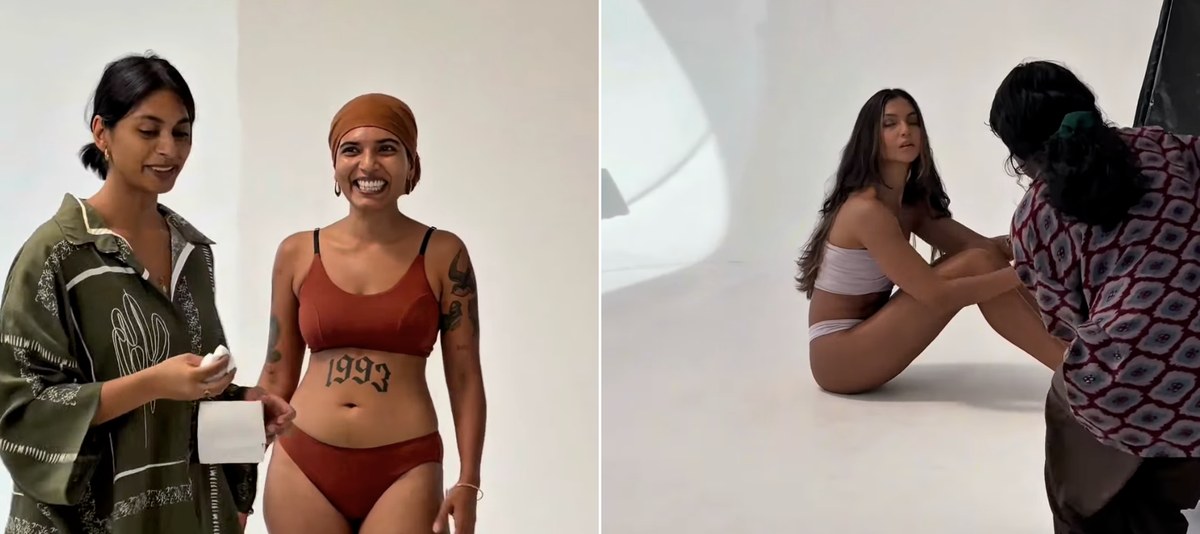
Oh my gosh, yes. I’m so excited to launch our boy shorts, which are coming very soon. We’re also planning a natural beachwear and swimwear line, which is something that really lights me up. I’m so excited to share that side of Kiseau with everyone.
It’s hard to know what the world will look like in 2040, but I know what I want to build. I want Kiseau to be the brand people think of when they want to wear clothes they feel safe and beautiful in.
The same way certain brands have become synonymous with categories like athleisure, I want Kiseau to be front of mind when people think about feeling good, feeling beautiful, and feeling safe in what they wear.

10. Is there anything you want to say that you feel isn’t talked about enough or that people wouldn’t know from simply reading through Kiseau’s website?
If there’s one thing I want people to know, it’s that Kiseau’s number one dedication is to keep the experience human in a world that’s becoming increasingly cold and transactional.
I don’t think a lot of people realize that Kiseau is completely self-funded and run by my partner and I. You might see an ad, click through from Google, and enter Kiseau’s world without realizing that it’s this small, loving, slowly growing brand that’s only been in market for a year.
If there’s one thing I want people to know, it’s that Kiseau’s number one dedication is to keep the experience human in a world that’s becoming increasingly cold and transactional.
When we say we’re building a safe space, it’s not just about the product. It’s also about how people feel when they interact with us and step into our world. We want that experience to always feel warm, thoughtful, and deeply human.
11. Last but not least, what are you currently loving right now? Could be a beauty product, local food spot, book – anything!
This is extremely random, but I’ve fallen into a complete rabbit hole of making rice paper recipes. Desserts, pastries, crispy chips, dumplings, pies, spring rolls, brekkie dishes, and everything in between.
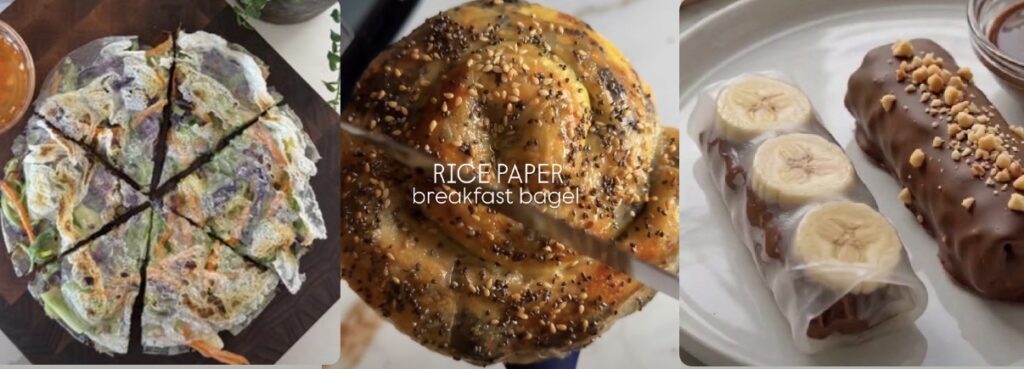
It’s become my newfound obsession, and I genuinely don’t think I’ve ever consumed this much rice paper in my life. My recent trip to Vietnam may have wonderfully influenced the whole thing.
Related posts:

My Honest Sky & Sol Tallow Review (I tried 4 bestsellers!)
My Brutally Honest Lume Deodorant Review (sadly negative)
Best Body Oils in Clean Beauty I've Tried
I tried the Best Body Butters in Clean Beauty
I tried 20 OSEA products (here's my no-nonsense review)
I Tried Clearstem Skincare (My No BS Review)
Andrea is a clean beauty expert born in Los Angeles, California with 10 years of experience in natural skincare and organic living. She writes for Organic Beauty Lover using her expertise to guide readers in choosing the best natural products. Andrea graduated from the University of Southern California’s Marshall School of Business and has worked at NBC Universal, Four Seasons Hotels and Resorts, and The Travel Corporation while freelancing for small businesses. As a multi-citizen, she considers herself a global citizen of the world, belonging nowhere and everywhere, and has lived across Europe, US, Asia and South America. She currently resides in Orange County since 2026 and loves yoga, coffee and exploring the desert. Connect with her @organicbeautylover.
JOIN OUR NEWSLETTER! No spam ever.








Leave a Reply